Best clinic for acne scars in Dubai. Dermatology-led combination protocols at our JVC clinic.
Specialist acne scar treatment at our Jumeirah Village Circle (JVC) clinic, walking distance from Circle Mall. DHA-licensed consultant dermatologists treating all acne scar types — ice pick, boxcar, rolling, hypertrophic, keloid — with personalised combination protocols. Particular expertise for Fitzpatrick IV-VI skin types.
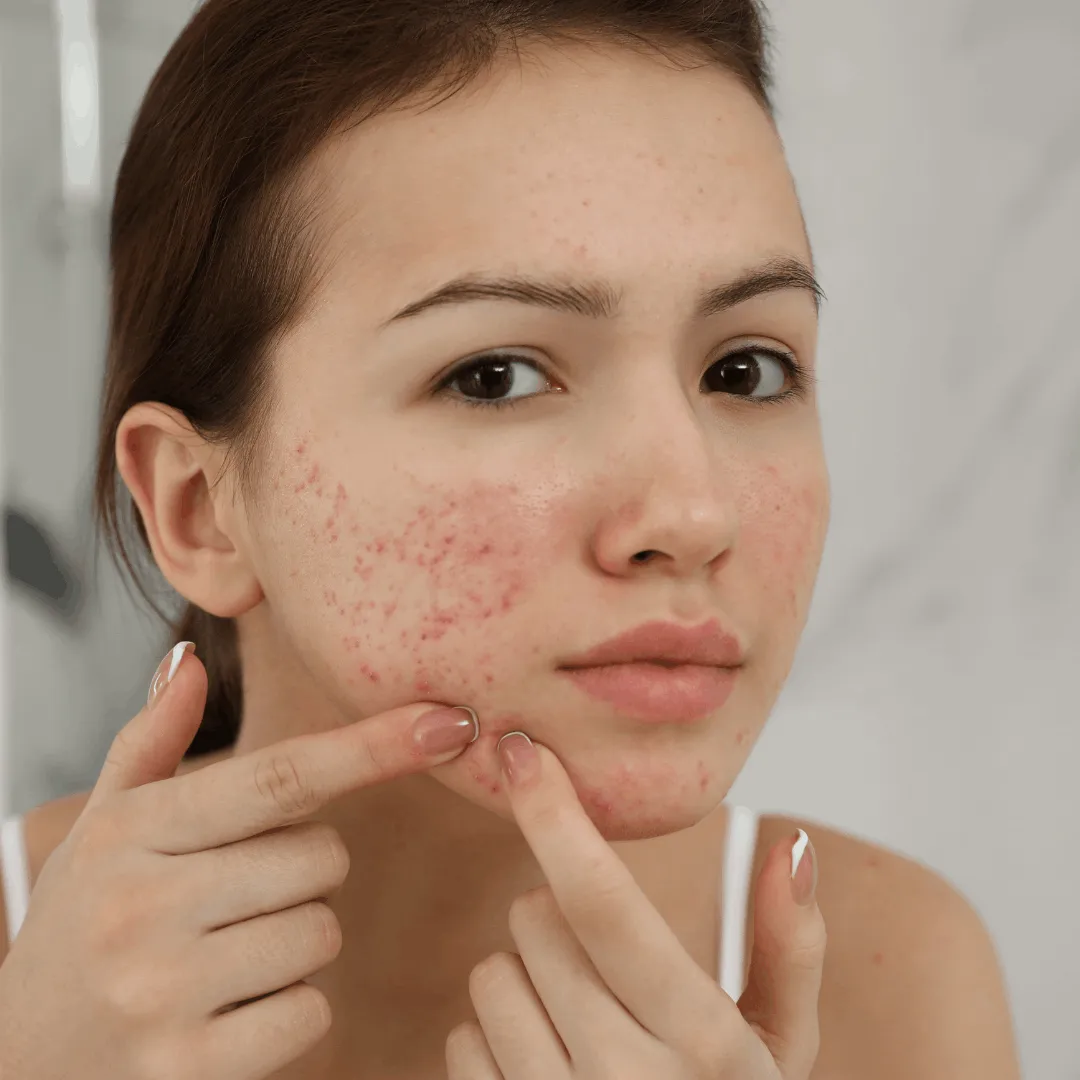
COMBINATION PROTOCOLS MATTER
The most common reason for disappointing acne scar outcomes is single-treatment approaches. Ice pick scars respond well to TCA cross and fractional laser; rolling scars respond to subcision and microneedling; effective treatment requires combining modalities matched to your specific scar types.
THE QUICK ANSWER
Acne scar treatment at Vedara Care, in one paragraph.
Acne scar treatment at Vedara Care Polyclinic in Jumeirah Village Circle (JVC), Dubai — walking distance from Circle Mall — is specialist dermatology-led scar treatment delivered by DHA-licensed consultant dermatologists with substantial expertise across all Fitzpatrick skin types (I-VI). We treat all acne scar types: atrophic scars (ice pick, boxcar, rolling); hypertrophic and keloid scars; and post-inflammatory hyperpigmentation (PIH). Our combination protocols address multiple scar types typically present in the same patient — microneedling with PRP, subcision, fractional lasers, TCA cross, dermal fillers, chemical peels, and topical treatments. Skin-type-safe protocols are particularly critical for Fitzpatrick IV-VI skin types, where wrong treatment produces hyperpigmentation worse than original scarring. A series of 6-12 sessions over 6-12 months is typical for substantial improvement; complete resolution is rare for severe scarring, and honest realistic framing supports informed decisions. Patients travel from across Dubai for specialist acne scar care.
Medically reviewed by Dr. Sarah Al-Mansoori, MD, DHA-Licensed 2509266 · Last updated June 2026
Why acne scars are different from acne — and why treatment approach matters.
Understanding your scar types guides effective treatment. Not all scars respond to the same approach.
Acne scars represent permanent structural damage to the skin following inflammatory acne. Different scar types require different treatment approaches — one-size-fits-all treatment produces disappointing outcomes.
How acne scars form
During inflammatory acne, damage to skin structure occurs. Some scars result from collagen loss (atrophic scars appearing as depressions); some result from excess collagen response (hypertrophic and keloid scars appearing as raised areas); post-inflammatory hyperpigmentation results from melanin response to inflammation rather than true structural scarring.
Why scar treatment differs from acne treatment
Active acne requires medical treatment addressing inflammation and bacteria. Established scars require procedural treatment addressing structural changes — different clinical challenge, different treatment approaches, different specialist expertise. Patients with both active acne and scarring require sequential treatment: control acne first, then address scarring.
Why skin type matters critically
Fitzpatrick skin type fundamentally affects safe treatment selection. Lighter skin (I-III) tolerates a broad range including aggressive fractional lasers. Darker skin (IV-VI — dominating Dubai demographic) requires careful selection — aggressive treatments produce post-inflammatory hyperpigmentation worse than original scarring.
Why combination protocols produce superior outcomes
Different scar types coexist in most patients. Combining modalities addresses multiple scar aspects: subcision breaks tethered rolling scars; microneedling stimulates collagen; PRP adds growth factors; fractional laser addresses texture; TCA cross treats deep ice pick scars specifically; fillers restore volume; peels address surface pigmentation.
Realistic outcomes
Substantial improvement achievable for most patients — often 50-80% improvement over 6-12 months of combination treatment. Complete resolution rare for severe scarring — realistic framing prevents disappointment. Early scars often respond better than long-established scars. Patient adherence to sun protection substantially affects outcomes.
"The difference between disappointing acne scar treatment and transformative outcomes comes down to accurate scar type identification and combination protocols matched to your specific scars and skin type."
ACNE SCAR TYPES — CROSS SECTION
Atrophic scars (below surface) — respond to subcision, microneedling, laser
Raised scars (above surface) — respond to intralesional treatments
Fitzpatrick IV-VI: skin-type-safe modality selection critical
The acne scar types we treat at our JVC clinic.
Different scars require different approaches. Accurate identification guides effective treatment selection.
Ice Pick Scars
BEST TREATED WITH:
- TCA cross technique, punch excision for very deep scars, fractional laser for surrounding texture
Boxcar Scars
BEST TREATED WITH:
- Fractional laser, medical microneedling with PRP, chemical peels for shallow scars, subcision for deeper scars
Rolling Scars
BEST TREATED WITH:
- Subcision (breaks tethering fibers), microneedling with PRP, radiofrequency microneedling, fractional laser
Hypertrophic Scars
BEST TREATED WITH:
- Intralesional corticosteroid injections, silicone therapy, laser treatments, specific topical protocols
Keloid Scars
BEST TREATED WITH:
- Intralesional corticosteroid injections, cryotherapy, laser treatments (carefully selected), pressure therapy
Post-Inflammatory Hyperpigmentation
BEST TREATED WITH:
- Topical treatments (retinoids, tyrosinase inhibitors), chemical peels, skin-type-safe lasers, sun protection
Post-Inflammatory Erythema
BEST TREATED WITH:
- Vascular lasers (pulsed dye laser, KTP), IPL, topical treatments, time
Mixed Scar Patterns
BEST TREATED WITH:
- Comprehensive combination protocols targeting each scar type with appropriate modality
How we combine treatments for superior acne scar outcomes.
Not single-modality treatment — personalised combinations matched to your specific scars and skin type.
Subcision — foundational for rolling scars
Specialised technique breaking fibrous tethering causing rolling scars. Instrument inserted beneath scar to release tethering. Immediate improvement often visible. Series required for optimal results. Often combined with PRP or same session.
Medical microneedling with PRP
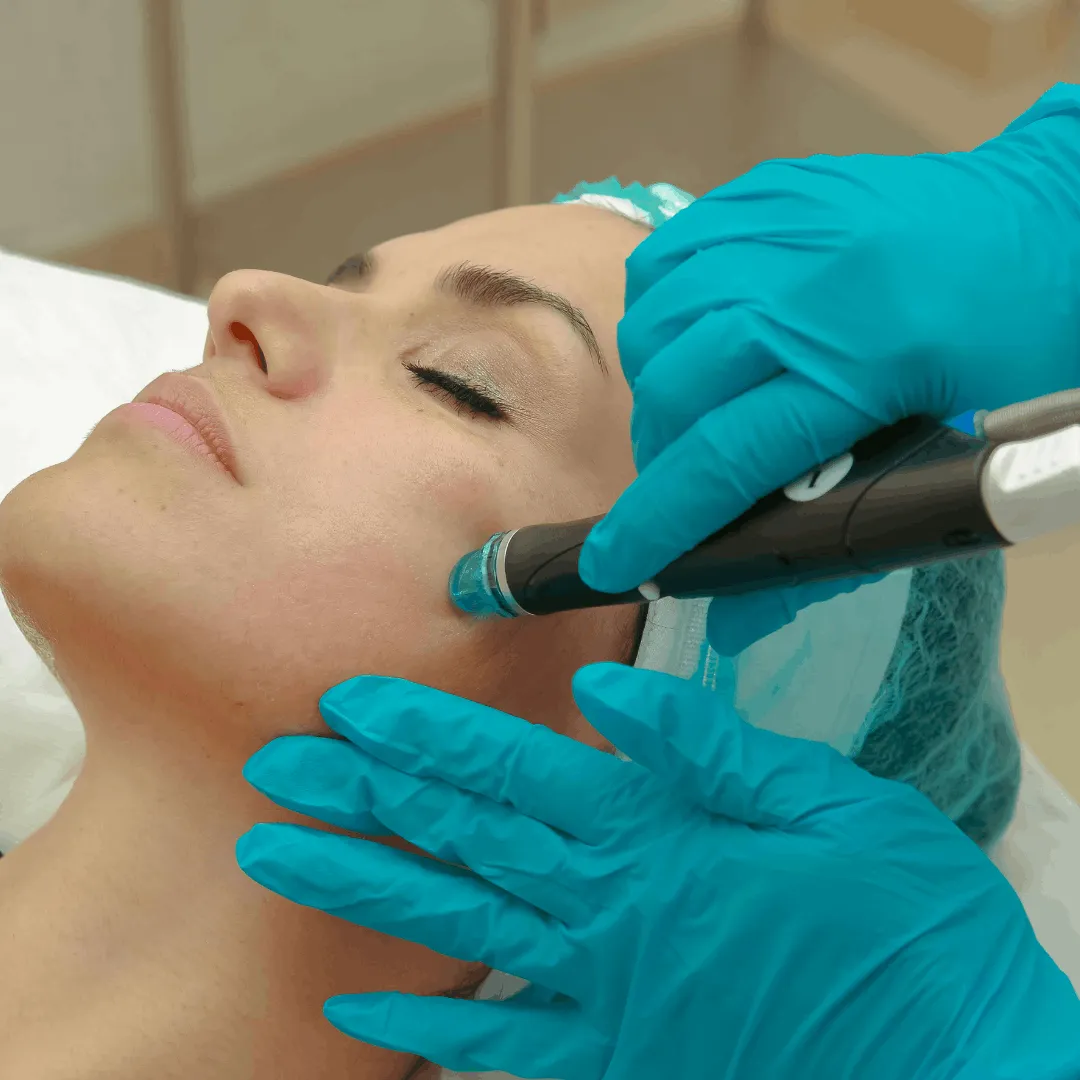
Controlled micro-injuries stimulating collagen production combined with growth factors from patient's own platelets. Progressive improvement over series. Suitable across skin types including Fitzpatrick IV-VI. Series of 4-6 sessions typical.
Fractional laser resurfacing
Fractional non-ablative or ablative lasers create controlled micro-injuries stimulating substantial skin renewal. Effective for texture, boxcar scars, and mild-moderate rolling scars. Skin-type-safe selection critical — some fractional lasers not appropriate for Fitzpatrick IV-VI.
TCA cross technique for ice pick scars
Specialised application of high-concentration TCA specifically into ice pick scars. Different from full-face TCA peel — targeted application producing focal renewal. Effective for scar type otherwise difficult to treat. Series required. Requires specialist expertise.
Dermal fillers for volume restoration
Hyaluronic acid or other fillers restore volume in deeper atrophic scars — particularly effective for boxcar scars with volume loss and some rolling scars. Immediate visible improvement. Non-permanent — requires maintenance. Sometimes combined with subcision.
Chemical peels for pigmentation and surface texture
Specific peel formulations address post-inflammatory hyperpigmentation and mild surface texture. Skin-type-specific selection (mandelic acid particularly for darker skin). Series required. Part of comprehensive combination rather than standalone treatment for structural scars.
Topical treatments as foundation
Prescription topical treatments support all procedural approaches: retinoids for cellular turnover and collagen; tyrosinase inhibitors for pigmentation; sun protection foundational for preventing worsening and maintaining results. Skincare foundation supports procedural outcomes.
Personalised protocol design
Comprehensive consultation identifies your specific scar types, skin type, treatment goals, and constraints. Personalised protocol combines appropriate modalities in appropriate sequence over 6-12 months typically. Progress documented photographically. Plan adjusted based on response.
COMBINATION PROTOCOL ELEMENTS
Structural interventions
Renewal treatments
Foundation
Typical protocol structure
For darker skin (Fitzpatrick IV–VI):
What acne scar treatment can and cannot achieve.
Honest framing helps informed decisions about substantial aesthetic investment.
Assessment & Foundation
Months 0-1
Comprehensive consultation identifying specific scar types, skin type, treatment goals. Foundation optimisation begins (skincare, sun protection, any medical prep). First treatments may begin. Patient education central — sustained treatment produces results.
Active Treatment Sequence
Months 1-6
Regular combination treatments. Progressive improvement building. Some patients notice improvements by month 2-3; substantial changes typically by month 6. Photography documentation captures progression. Treatment plan adjusted based on response.
Peak Results & Assessment
Months 6-9
Substantial visible improvement typically apparent. Photography comparison shows dramatic changes. Best photographic comparison typically this phase. Assessment of response and remaining concerns. Some patients continue additional treatments.
Maintenance & Sustained Results
Year 1+
Ongoing maintenance for sustained results. Periodic booster treatments as needed. Continued sun protection and skincare foundation. Some patients pursue additional treatments as new concerns emerge or as tolerance for downtime allows.
Timelines describe typical patterns with combination treatment. Individual variation substantial based on scar severity, scar types, skin type, treatment adherence, sun protection consistency, and individual response.
What treatment CAN achieve
- ✓Substantial improvement in most patients (50-80% over 6-12 months)
- ✓Dramatic texture and tone improvement
- ✓Substantial visible reduction in scar prominence
- ✓Sustained results with maintenance
- ✓Effective combination approaches for multiple scar types coexisting
What treatment CANNOT achieve
- —Complete resolution of severe scarring
- —Permanent results without maintenance
- —Results comparable to unblemished skin for severe cases
- —Single-session dramatic improvement
- —Treatment of active acne (requires medical treatment first)
Why Vedara Care is Dubai's specialist choice for acne scar treatment.
For patients evaluating providers — what distinguishes our approach.
Dermatology-Led Care
Combination Protocol Expertise
Fitzpatrick IV-VI Safety Expertise
Full Modality Range
Honest Realistic Framing
Comprehensive Support
Real acne scar treatment outcomes with dermatology-led care.
"Ice pick and boxcar scars on my cheeks for 10 years after severe teenage acne. Previous treatments at aesthetic clinics provided minimal improvement. Vedara's approach was completely different: comprehensive assessment identifying specific scar types on my Fitzpatrick IV skin, combination protocol including TCA cross for ice pick scars, subcision for rolling scars, medical microneedling with PRP for texture, and appropriate topical foundation. Over 8 months of treatment: substantial transformation. The specialist scar-type-specific approach made all the difference previous providers had not achieved."
Female patient, 28, Fitzpatrick IV
Ice Pick and Boxcar Scars · 8-Month Combination Programme · Downtown Dubai · February 2026
"Rolling acne scars on my cheeks affecting my confidence for 15 years. Multiple previous treatments producing modest improvement at best. Vedara identified rolling scars as tethered requiring subcision — an approach previous providers had not offered. Combination protocol: subcision series, medical microneedling with PRP, dermal filler for volume restoration in deepest areas. Over 10 months: a transformation my previous providers said was not achievable. The specific technical expertise for tethered scars made outcomes possible I had given up on."
Male patient, 35
Rolling Acne Scars · 10-Month Combination Programme · Dubai Marina · January 2026
"Post-inflammatory hyperpigmentation from teenage acne on my Fitzpatrick V skin — years of dark marks affecting my appearance. Previous laser treatments elsewhere produced additional hyperpigmentation worse than original scarring. Vedara identified my situation as pigmentation rather than true scarring — a different treatment approach entirely. Over 6 months: substantial improvement without any complications. The skin-type-specific expertise addressing pigmentation rather than treating as generic scarring made outcomes possible."
Female patient, 30, Fitzpatrick V
Post-Inflammatory Hyperpigmentation · 6-Month Programme · Al Barsha South · March 2026
4.9
Stars on Google
1200+
Acne scar patients treated
I-VI
Fitzpatrick expertise
Full
Combination protocol capability
Consultant dermatologists for acne scar treatment at our JVC clinic.
DHA-licensed consultant dermatologists with substantial acne scar expertise across all Fitzpatrick skin types. Not aestheticians alone — medically qualified specialists with combination protocol expertise, complication management capability, and comprehensive scar type recognition. Female and male dermatologists available. Multiple languages.

Dr. Sarah Al-Mansoori

Dr. Priya Nair

Dr. Omar Hassan

Dr. Fatima Al-Rashid
What acne scar treatment at our JVC clinic costs.
Initial acne scar consultation with scar mapping (60 minutes)
AED 750
Follow-up consultation
AED 350
Photography documentation session
AED 200
Microneedling with PRP (per session)
From AED 1,200
Microneedling package (6 sessions)
From AED 6,000
Subcision procedure (per session)
From AED 1,500
TCA cross treatment (per session)
From AED 900
Fractional laser session
From AED 1,800
Laser package (3-6 sessions)
From AED 4,500
Dermal filler for atrophic scars (per ml)
From AED 800
Chemical peel session (for pigmentation/texture)
From AED 600
Peel package (6 sessions)
From AED 3,000
Comprehensive 6-month scar treatment programme
From AED 9,000
Comprehensive 12-month scar treatment programme
From AED 15,000
Medical-grade skincare (monthly supply)
From AED 350
What patients ask about acne scar treatment.
For related conditions and treatments:
WhatsApp usVISIT OUR CLINIC
Vedara Care Polyclinic, Jumeirah Village Circle, Dubai
NEARBY LANDMARKS
- ✓Walking distance from Circle Mall
- ✓3 min from FIVE Jumeirah Village Hotel
- ✓5 min from JSS Private School
- ✓Free patient parking
- ✓Access from Sheikh Mohammed Bin Zayed Road and Al Khail Road
- ✓Serving JVT, Al Barsha South, Sports City, Motor City, Arjan, Dubai Hills, Marina, Downtown, Palm Jumeirah, Mirdif
DISTANCE FROM DUBAI COMMUNITIES
READY TO ADDRESS YOUR ACNE SCARS?
Comprehensive consultation is the starting point.
Whether you have ice pick scars requiring TCA cross, rolling scars requiring subcision, boxcar scars requiring laser and microneedling, post-inflammatory hyperpigmentation requiring peels and topicals, or mixed scar patterns requiring combination protocols — comprehensive consultation identifies your specific situation and designs a personalised approach. DHA-licensed consultant dermatologists at our JVC clinic near Circle Mall provide thorough scar assessment, honest realistic outcome framing, and sustained partnership throughout multi-month treatment programmes. Same-week appointments typically available.
Initial consultation from AED 750 · Walking distance from Circle Mall, JVC · DHA-licensed consultant dermatologists · 1200+ acne scar patients treated · Fitzpatrick I-VI expertise · Full combination protocol capability · Female and male dermatologists · Multiple languages · Comprehensive treatment programmes
EXPLORE FURTHER
Related conditions and treatments
Acne Treatment
For active acne requiring medical treatment before or alongside scar treatment.
Learn moreChemical Peel
Deep dive on chemical peel formulations for pigmentation and texture.
Learn moreSkin Rejuvenation
Comprehensive multi-modal aesthetic dermatology umbrella.
Learn moreDermatology Clinic
Our complete dermatology department at JVC Dubai.
Learn more