Tennis elbow treatment in Dubai. Evidence-based loading protocols. Most patients have never played tennis.
Specialist tennis elbow treatment at our Jumeirah Village Circle (JVC) clinic, walking distance from Circle Mall. DPT-qualified physiotherapists treating lateral epicondylalgia using evidence-based progressive loading protocols, eccentric and isometric exercise prescription, manual therapy, and shockwave therapy for chronic cases.
220+
Patients treated
Most 'tennis elbow' patients have never played tennis.
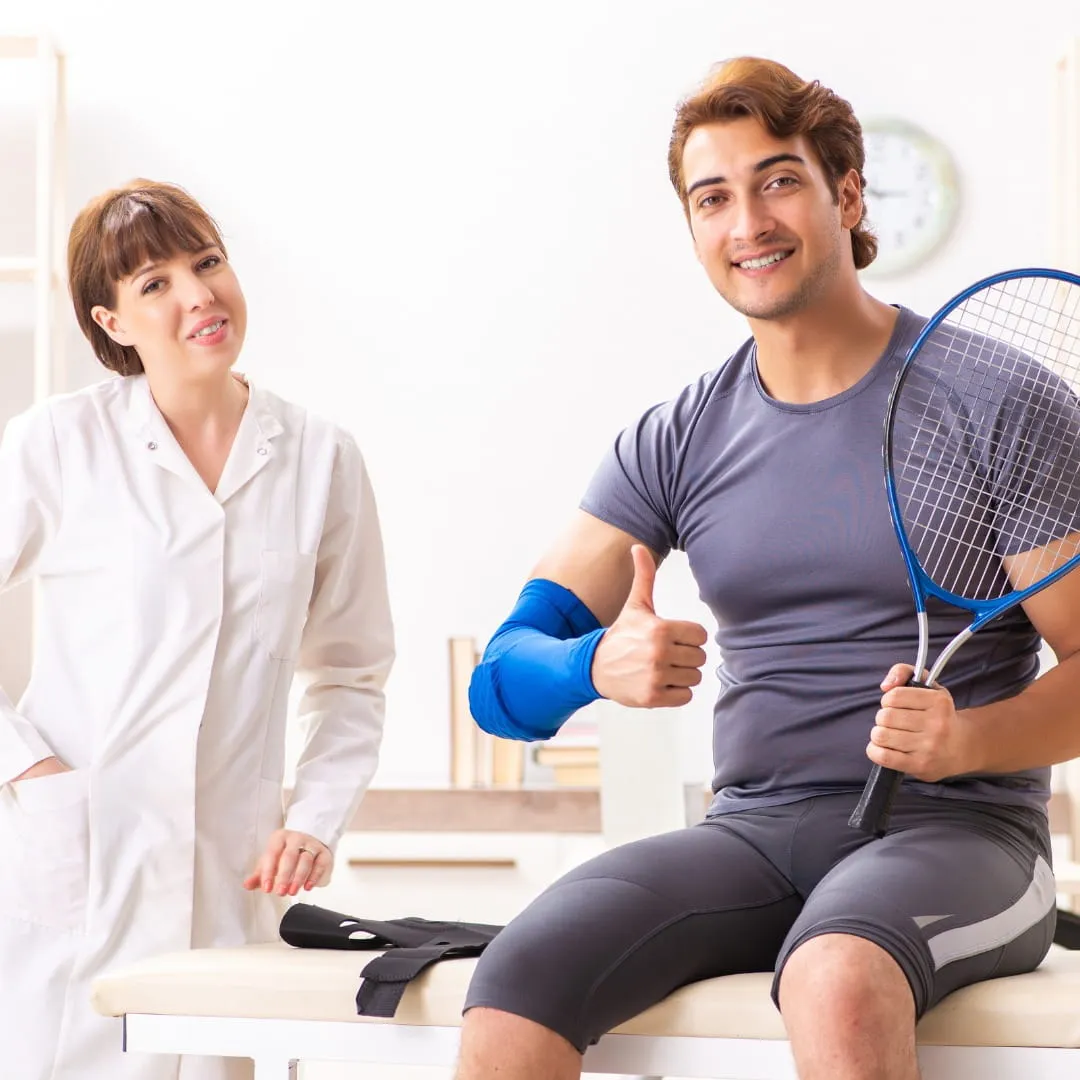
The condition is actually lateral epicondylalgia — a tendinopathy at the outer elbow from any repetitive gripping or wrist extension activity. Office work, padel, gym training cause it. Specific evidence-based loading protocols resolve it.
THE QUICK ANSWER
Tennis elbow treatment at Vedara Care, in one paragraph.
Tennis elbow treatment at Vedara Care Polyclinic in Jumeirah Village Circle (JVC), Dubai — walking distance from Circle Mall — is evidence-based specialist treatment delivered by DPT-qualified physiotherapists. Tennis elbow (formally lateral epicondylalgia, sometimes called lateral epicondylitis) is a tendinopathy of the common extensor tendon at the outer elbow, affecting the muscles that extend the wrist and fingers. Despite the name, most tennis elbow patients have never played tennis — the condition develops from any repetitive gripping or wrist extension activity. Common Dubai triggers: padel (very significant in our patient population), office mouse use and prolonged gripping, gym training (deadlifts, pull-ups, rows), tennis, manual work, childcare, and many daily activities. Our approach combines evidence-based progressive loading protocols (eccentric and isometric exercises — the gold standard treatment), manual therapy for associated muscle and joint dysfunction, activity modification and ergonomic guidance, dry needling, shockwave therapy for chronic cases (12+ weeks of symptoms), and patient education for sustainable self-management. We avoid cortisone injections as first-line treatment given current evidence showing worse long-term outcomes. Most patients see substantial improvement within 12–24 weeks. Patients travel to our JVC clinic from across Dubai. Insurance direct-billing with seven major insurers.
Medically reviewed by Dr. Sarah Al-Rashid, DPT, DHA-Licensed 2509266 · Last updated June 2026
What tennis elbow actually is — and why the name is misleading.
Most patients with tennis elbow have never played tennis. Understanding what is actually happening — and what is not — guides effective treatment.
Tennis elbow, formally called lateral epicondylalgia, is a tendinopathy affecting the common extensor tendon at the outer (lateral) elbow. This tendon is the attachment point for the muscles that extend the wrist and fingers — particularly the extensor carpi radialis brevis (ECRB), the muscle most commonly involved. The name 'tennis elbow' persists from historical association with the condition, but it substantially misleads modern patients.
Why most tennis elbow patients have never played tennis
The condition affects anyone who performs repetitive wrist extension or sustained gripping activities. In our Dubai patient population, the actual triggers are: padel (extremely common — the overhead and gripping patterns produce high rates), office work (sustained mouse use, prolonged keyboard activity, holding pens or phones), gym training (deadlifts, pull-ups, rows, heavy gripping load), manual work (construction, carpentry, mechanics), childcare (repeated lifting of children, carrying car seats), cooking (chopping, mixing, gripping), music (guitar, drums, certain instruments). Tennis is responsible for perhaps 5% of our tennis elbow patients.
What is actually happening in the tendon
Modern understanding of tendinopathy has evolved substantially. Older terminology used 'epicondylitis'(suggesting inflammation), but current research shows the condition is primarily a degenerative process at the cellular level rather than inflammatory. The tendon collagen structure deteriorates, the cells producing new collagen become dysfunctional, and the tendon becomes more vulnerable to load. This matters for treatment — anti-inflammatory approaches alone do not address the underlying problem. Active loading protocols are needed to stimulate proper tendon remodelling.
The Dubai-specific patterns we see
Dubai's demographics produce specific tennis elbow patterns. The padel explosion has dramatically increased lateral epicondylalgia presentations — the sport's specific overhead and gripping patterns are particularly causative. Office workers with sustained mouse use and prolonged screen time develop classic patterns from chronic low-level loading. Gym training culture (CrossFit, F45, weightlifting) produces tennis elbow from heavy gripping demands. The combination of multiple contributors is common — many patients have office work plus padel plus gym training, with cumulative loading exceeding tissue tolerance.
Why the condition is so frustrating
Tennis elbow has earned a reputation as a stubborn condition. Several factors explain this: (1) onset is usually gradual, often unrecognised until pain becomes substantial — meaning tissue damage is already established when patients seek care, (2) the activities that trigger it are typically essential (work, exercise, daily activities) and difficult to fully avoid, (3) generic 'rest' approaches often fail because tendons need calibrated loading to remodel properly, (4) generic strengthening exercises often miss the specific loading patterns needed, (5) recovery takes longer than patients expect — 12–24 weeks for full resolution is normal, not exceptional.
Why the right treatment makes such a difference
Tennis elbow responds excellently to specific evidence-based treatment. Progressive eccentric and isometric loading protocols stimulate proper tendon remodelling. Manual therapy addresses associated muscle and joint dysfunction. Activity modification reduces excessive loading without forbidding all activity. Shockwave therapy provides additional stimulus for chronic cases. Patient education enables sustainable self-management. The treatment is not exotic — but it is specific. Generic physiotherapy with 'elbow exercises' often fails; specific tendinopathy protocols often succeed.
Tennis elbow is one of the most stubborn conditions treated with the wrong approach — and one of the most responsive to specific evidence-based loading protocols. The treatment matters more than the diagnosis.
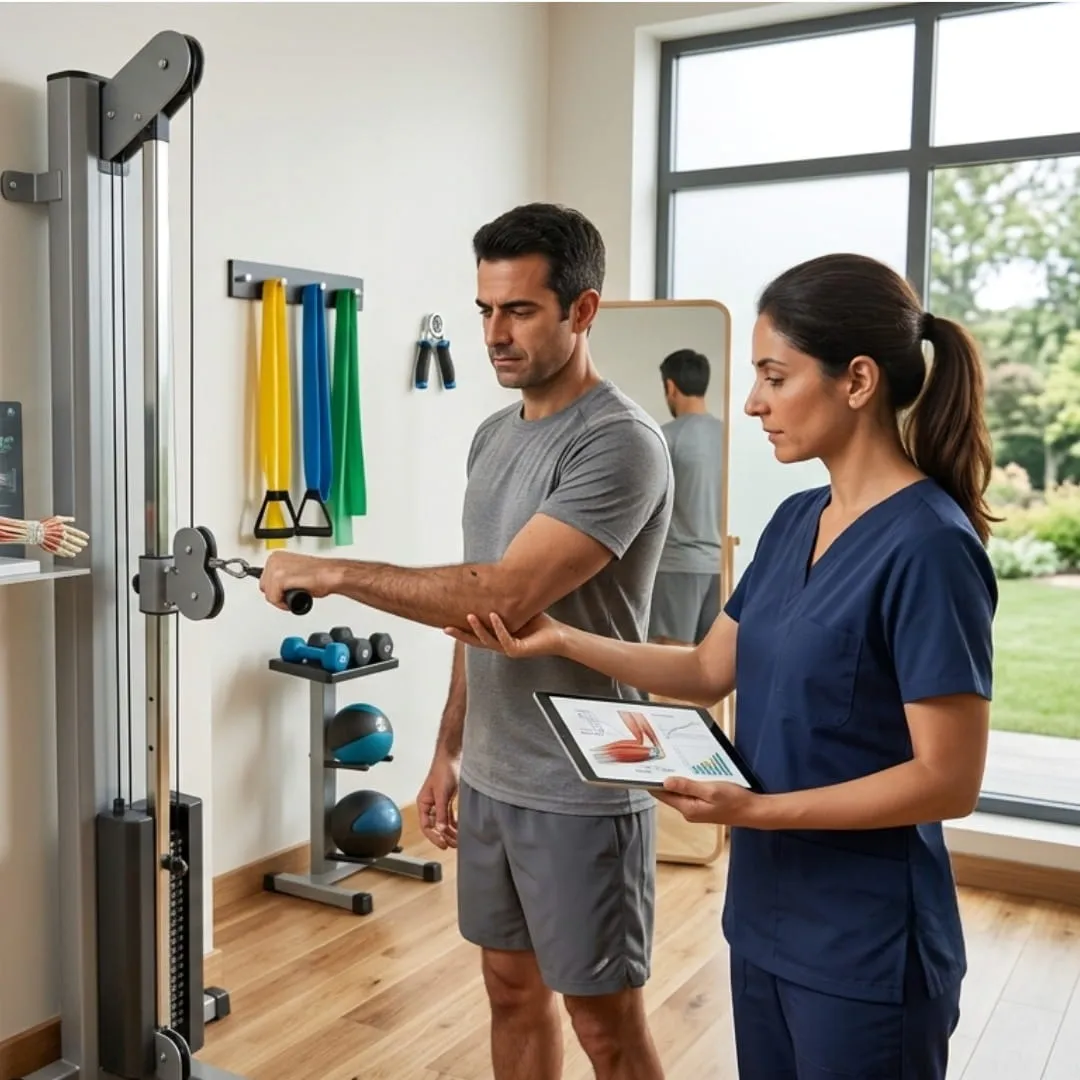
Key anatomy
Common Triggers
What actually causes tennis elbow in our Dubai patients.
Most patients can identify the specific contributing activities. Understanding your triggers guides activity modification during recovery.
Padel
The single most common trigger we see at our Dubai clinic. Padel's specific patterns produce high rates of tennis elbow: overhead serving and smashing, sustained gripping during long rallies, the wrist extension required for many shots. Most padel-related tennis elbow develops over weeks of regular play, often after increases in playing frequency.
Office Work (Sustained Mouse / Keyboard Use)
Prolonged mouse use is the second most common trigger. Sustained gripping of the mouse, repeated clicking patterns, awkward forearm positioning, and prolonged keyboard typing all contribute. Often presents in office workers in their 30s–50s. Pattern recognition matters: weekend warriors may attribute pain to weekend activities when the underlying driver is weekday office work.
Gym Training (Pulling Movements)
Heavy gripping demands in gym training — deadlifts, pull-ups, rows, farmer's carries, dumbbell work. Pull-up programmes are particularly causative. CrossFit and high-volume strength training produce patterns through cumulative gripping load. Often patients are otherwise asymptomatic until a training intensification.
Tennis (The Namesake)
The original namesake group, though now a minority of cases. Backhand technique is the traditional culprit, particularly one-handed backhand with late ball contact. Modern racquet technology and two-handed backhands have reduced incidence. Still common in dedicated tennis players, particularly those playing 3+ times weekly.
Manual Work and Trades
Construction workers, mechanics, carpenters, painters, electricians — sustained gripping with vibrating tools, repeated wrist extension activities, heavy lifting with gripping demands. Often chronic patterns developed over years of occupational exposure. Treatment combined with work modification when possible.
Childcare Activities
Parents of young children — particularly mothers in the first 1–2 years of childcare — develop tennis elbow from repeated lifting of children, carrying car seats, prolonged baby holding, breastfeeding positioning. Sometimes called 'mother's elbow' in this demographic.
Other Racquet and Hitting Sports
Squash, badminton, racquetball, table tennis — all produce tennis elbow patterns through repetitive wrist activity. Less common in Dubai than padel-related cases but still meaningful. Cricket players (bowlers and batsmen) and golfers occasionally present — though golfers more commonly develop medial epicondylalgia (golfer's elbow).
Other Activities and Idiopathic
Some patients have no clear single trigger — combinations of activities accumulating over time. Cooks and chefs from repetitive chopping. Musicians from sustained playing. Climbers from gripping demands. Patients with diabetes have increased prevalence. Some patients have bilateral involvement suggesting systemic factors.
Your specific trigger may involve multiple of these — that is normal. Accurate trigger identification during assessment guides effective activity modification →
Evidence-based tennis elbow treatment — what works and what does not.
Tennis elbow treatment has evolved substantially. Modern evidence-based protocols produce meaningfully better outcomes than older approaches.
Tennis elbow treatment is one of the areas where evidence-based modern protocols differ significantly from older clinical practice. Patients arriving at specialist care often have received treatments that current evidence does not support, or have missed the treatments that do work.
Eccentric and isometric loading — the gold standard
Specific tendon-loading protocols are the most evidence-supported treatment for tennis elbow. Eccentric exercises (lowering phase under load) stimulate tendon remodelling. Isometric exercises (held contractions) provide pain relief and tendon stimulus. Specific protocols (Stanish, Tyler twist, isometric wrist extension holds) have strong evidence bases. The exercises must be specific — generic strengthening rarely produces the same results. The exercises must be progressed appropriately — too little produces no stimulus, too much produces aggravation.
Comprehensive initial assessment
The first session is comprehensive — typically 60 minutes including detailed history identifying triggers, specific examination tests (Cozen's test, Mill's test, Maudsley's test), grip strength assessment, range of motion testing, neurological screening to rule out cervical involvement (referred pain from neck can mimic tennis elbow), assessment for comorbid conditions (carpal tunnel, golfer's elbow, shoulder issues), and ergonomic discussion.
Manual therapy for associated dysfunction
Tennis elbow often involves associated dysfunction beyond the tendon itself — restricted radial head mobility, scar tissue at the lateral epicondyle, muscle tension in the forearm extensors, sometimes cervical spine contribution. Manual therapy addresses these factors and creates conditions for the loading protocols to work effectively. Mulligan mobilisation with movement (MWM) techniques have specific evidence for tennis elbow.
Dry needling for associated muscle patterns
Dry needling addresses chronic muscle tension patterns in the forearm extensors that often accompany tennis elbow. Particularly useful for chronic cases with significant muscle guarding. The fine needle technique releases trigger points and reduces protective muscle tension. Combined with loading protocols rather than used alone.
Shockwave therapy for chronic cases
For chronic tennis elbow (symptoms more than 12 weeks despite appropriate conservative care), shockwave therapy has good evidence. Both focused and radial shockwave can be effective. Typically 3–6 sessions weekly. Stimulates tendon healing response and can produce substantial improvement in chronic cases that have plateaued. Combined with continued loading protocols rather than used in isolation.
Activity modification — calibrated, not complete rest
The traditional advice to 'rest completely' is incorrect for tennis elbow. Complete rest leads to deconditioning and slower recovery. The correct approach is calibrated activity modification — continuing activities that do not aggravate the tendon, reducing or modifying activities that do. Specific guidance depends on your activities and triggers. Most patients can continue most of their normal activities with appropriate modifications.
What we recommend against — and why
Cortisone injections — Short-term pain relief but worse long-term outcomes per multiple research studies. Higher recurrence rates and longer overall recovery.
Complete immobilisation — Slows recovery rather than accelerating it.
Anti-inflammatory medications alone — May provide symptom relief but do not address underlying tendon changes.
Generic exercises without specific loading — Common in non-specialist physiotherapy; produces mediocre outcomes.
"Pushing through pain" — Aggravates the condition; calibrated loading respects pain limits.
The treatments that produce the best long-term outcomes for tennis elbow are not the most aggressive — they are the most specific. Loading protocols matched to your tendon's current capacity produce sustainable recovery.
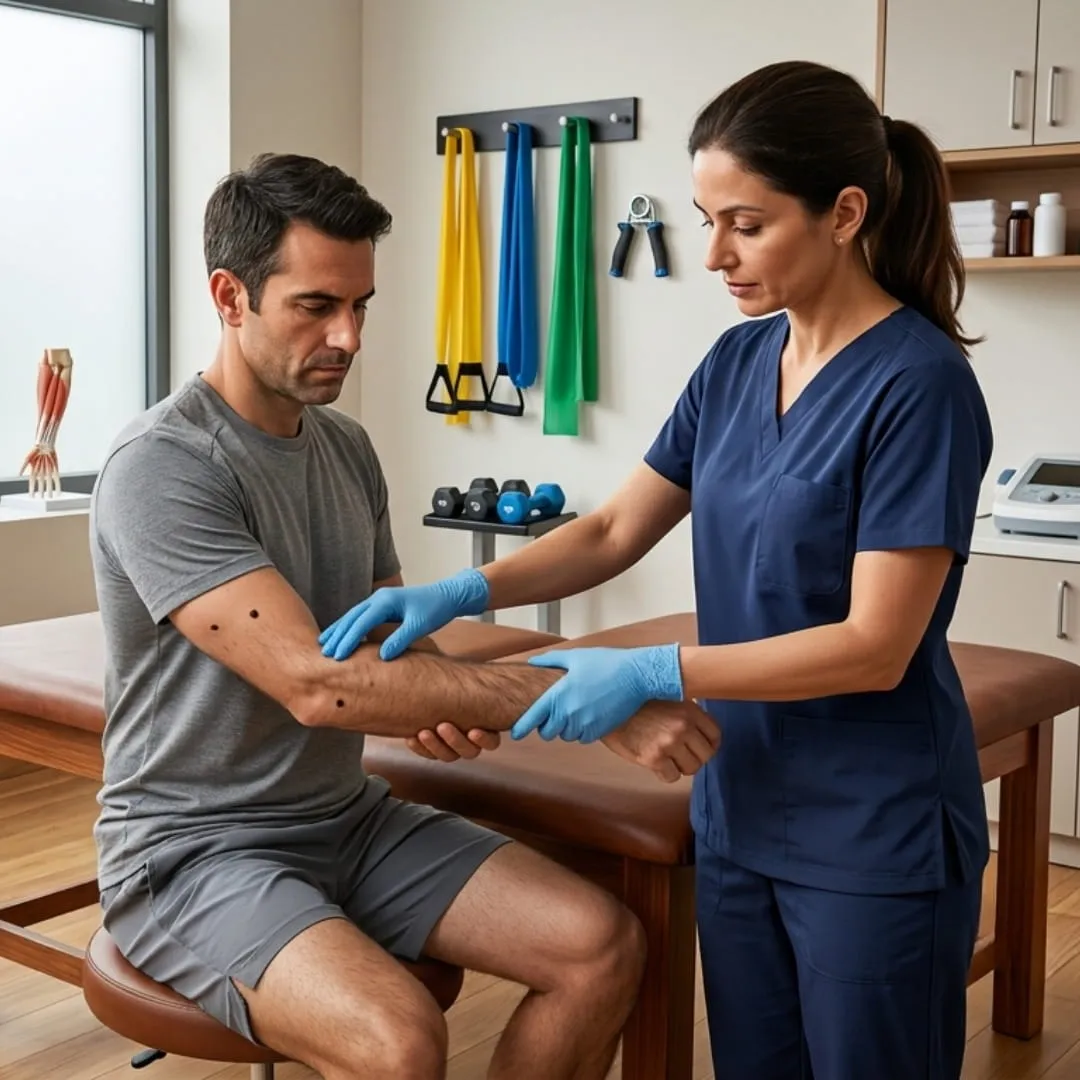
EVIDENCE-BASED PROTOCOLS
Eccentric and isometric loading protocols are the gold standard for lateral epicondylalgia. The Tyler twist (Theraband eccentric) and isometric wrist extension holds have the strongest evidence bases. Protocols must be specifically prescribed and progressed.
Realistic Recovery
How long does tennis elbow take to resolve?
Tennis elbow recovery is measured in months, not weeks. Honest realistic expectations help you stay engaged with treatment.
Tennis elbow recovery follows reasonably predictable patterns based on factors including symptom duration before treatment, severity of presentation, compliance with the loading protocols, and successful activity modification. The phases below represent typical patterns based on research evidence and our clinical experience treating 220+ tennis elbow patients.
Initial response
Weeks 1–4Initial pain reduction begins within 2–4 weeks of starting appropriate treatment. Manual therapy and isometric exercises typically produce noticeable but partial symptom improvement. Activity modification helps prevent further aggravation. Most patients are not yet substantially better but feel they are on the right path.
Active loading progression
Weeks 4–12Eccentric loading protocols are progressed as tolerance builds. Symptom improvement continues, often significantly. Many patients see substantial improvement in daily activities by week 8–12. Some patients may have flare-ups as load is progressed — this is normal and managed by appropriate adjustment.
Strengthening and return
Weeks 12–20Continued loading with progression to higher demands. Return to sport (padel, tennis) typically begins in this phase with modified intensity. Return to all gym training. Most patients have resolved substantially in this phase.
Maintenance and prevention
Months 5–6Full return to all activities. Maintenance loading programme continues to maintain tendon resilience. Identifying and addressing factors that contributed to initial development. Most patients are discharged from active treatment in this phase.
For chronic cases (6+ months before treatment)
Patients with chronic tennis elbow typically require longer treatment courses — often 6–9 months for full recovery. Shockwave therapy is more frequently used. Outcomes remain excellent but timelines are extended.
Why Patience Matters
Tendon tissue remodels slowly. The loading protocols need 12–24 weeks to produce structural change in the tendon.
Common mistakes
What works
Should you have a cortisone injection for tennis elbow?
Cortisone (corticosteroid) injections are commonly offered for tennis elbow. Current evidence suggests they are typically not the right choice. This is an important conversation to have before deciding on injection.
What the evidence shows
Multiple high-quality research studies (including systematic reviews and meta-analyses) consistently show that cortisone injections for tennis elbow produce short-term pain relief but worse long-term outcomes than physiotherapy alone. Patients who receive cortisone injections often feel substantially better at 6 weeks compared to physiotherapy patients — but by 12 weeks and beyond, the cortisone patients have worse outcomes, higher recurrence rates, and longer overall recovery times.
Why the short-term relief is misleading
Cortisone reduces inflammation and provides immediate symptom relief. This feels like rapid improvement. However, cortisone also impairs collagen production in the tendon — meaning the underlying tendon problem worsens while the symptoms feel better. Patients often return to full activity feeling fine, only to experience recurrence when the cortisone effect wears off and the now-weaker tendon cannot handle the load.
When cortisone might be appropriate
In specific limited circumstances cortisone can be considered: severe acute pain preventing engagement with any treatment, specific time-pressured situations (important competition or career commitment) where short-term relief is essential, and as part of a broader treatment plan when other approaches have failed. Even in these cases, the patient should understand the long-term tradeoff. Cortisone is not a treatment for the underlying condition — it is symptomatic relief that often makes the underlying condition worse.
If you have already had cortisone
Patients who have had cortisone injections still benefit substantially from physiotherapy. The treatment approach remains the same — evidence-based loading protocols, manual therapy, activity modification, sometimes shockwave for chronic cases. Recovery may take slightly longer than for patients without prior injections, but outcomes are still excellent.
Cortisone at 6 weeks
Better
Short-term relief
Physio at 6 weeks
Building
Tendon remodelling
Cortisone at 12 months
Worse
Higher recurrence
Physio at 12 months
Better
Sustained recovery
Based on multiple systematic reviews and meta-analyses
Real tennis elbow recoveries.
Padel-related tennis elbow for eight months. Generic physiotherapy at another clinic with no progress. Cortisone injection that worked for six weeks then came back worse. Vedara identified the specific loading deficits and started evidence-based progressive protocols. Sixteen weeks of structured treatment combined with shockwave therapy. Returned to competitive padel. The honest conversation about why cortisone was the wrong approach was the turning point.
Rajan M.
Chronic Padel Tennis Elbow · 16-Week Programme
Sports City resident · February 2026
Office worker, mouse-related tennis elbow developing over a year. Tried various braces, anti-inflammatories, and generic exercises without progress. Vedara identified the specific contributing patterns and provided structured eccentric loading protocols plus ergonomic adjustments. Twelve weeks to substantial improvement, sixteen weeks to full resolution. Still using the maintenance exercises two years later, no recurrence.
Sarah K.
Office Worker Tennis Elbow · 16-Week Programme
Dubai Marina resident · January 2026
Gym training tennis elbow from CrossFit programming. Tried backing off for months without improvement. Vedara taught me how to actually train through the recovery rather than avoid loading. Specific eccentric protocols, modified training, gradual return to full programming. Fourteen weeks to full recovery. The 'training around' approach was completely different from previous physio that just said to stop.
James M.
Gym Training Tennis Elbow · 14-Week Programme
JVC resident · March 2026
4.9 ★
Google Rating
220+
Tennis elbow patients treated
86%
Substantial improvement within 16 weeks
Physiotherapy specialists for tennis elbow at our JVC clinic.

Dr. Sarah Al-Rashid, DPT
Lead tendinopathy specialist with 9 years focused on lateral epicondylalgia. Extensive padel and office worker patient experience.

James Whitfield, DPT, MSc
Sports physiotherapist specialising in tendinopathy and upper limb conditions. CrossFit and gym training patient expertise.

Dr. Nadia Hassan, DPT
Office worker tendinopathy and ergonomic rehabilitation specialist. Arabic-speaking practice covering JVC and surrounding communities.

Tom Ashford, MCSP, DPT
Chronic tendinopathy and shockwave therapy specialist. Ten years treating lateral epicondylalgia from sport and occupational causes.
What tennis elbow treatment at our JVC clinic costs.
Initial tennis elbow assessment (60 minutes)
AED 450
Follow-up physiotherapy session (45–60 minutes)
AED 350
Dry needling (add-on per session)
AED 150
Shockwave therapy session (chronic cases)
AED 400
Acute tennis elbow programme (8–10 sessions, 8–12 weeks)
AED 2,800
Standard tennis elbow programme (12–16 sessions, 12–20 weeks)
AED 4,200
Chronic tennis elbow programme with shockwave (16–20 sessions + shockwave)
AED 6,500
Padel-specific return-to-sport programme
AED 3,600
Ergonomic workplace assessment (office workers)
AED 550
Insurance direct-billing with Daman, AXA, Allianz, Oman Insurance, Now Health, Bupa, and MetLife. Tennis elbow physiotherapy is well-covered by Dubai insurance plans with medical justification. Extended programmes and shockwave therapy may require pre-authorisation, which we handle on your behalf. WhatsApp your insurance card before booking for specific coverage confirmation.
What tennis elbow patients ask before booking.
For general physiotherapy questions, see our main physiotherapy page.
Ask a QuestionVISIT US
Where tennis elbow treatment happens at Vedara Care JVC.
NEARBY LANDMARKS
- ✓Walking distance from Circle Mall
- ✓ 3 minutes from FIVE Jumeirah Village Hotel
- ✓ 5 minutes from JSS Private School
- ✓ Free patient parking available
DISTANCE FROM DUBAI COMMUNITIES
Ready to Address Your Tennis Elbow?
Most tennis elbow resolves with evidence-based loading protocols.
If you have tennis elbow — from padel, office work, gym training, tennis, or any other activity — appropriate evidence-based treatment substantially improves your recovery. The first step is a comprehensive tennis elbow assessment at our JVC clinic. We confirm the diagnosis, identify your specific contributing factors, design an evidence-based treatment plan with realistic timeline, and start treatment the same session. Same-week appointments typically available.
Initial assessment from AED 450 · Walking distance from Circle Mall, JVC · 220+ tennis elbow patients treated · Shockwave therapy available · Insurance direct-billing
EXPLORE FURTHER
Related services and conditions
Sports Injury Physiotherapy
For broader sports-related injuries including elbow issues — padel, tennis, gym training, racquet sports.
Learn morePhysiotherapy in JVC
Our complete physiotherapy department — all conditions including tendinopathies.
Learn moreShoulder Pain Physiotherapy
Related upper limb condition — many tennis elbow patients have associated shoulder involvement requiring comprehensive assessment.
Learn moreNeck Pain Physiotherapy
Related condition — cervical involvement can refer pain to the elbow, sometimes mimicking tennis elbow.
Learn more