Knee pain physiotherapy in Dubai. Most knee pain responds to the right treatment.
Specialist knee pain physiotherapy at our Jumeirah Village Circle (JVC) clinic, walking distance from Circle Mall. DPT-qualified physiotherapists treating runner's knee, meniscus injuries, ACL recovery, IT band syndrome, patellar tendinopathy, knee osteoarthritis, and the full range of knee conditions. Most knee pain — even with concerning MRI findings — responds excellently to evidence-based physiotherapy.
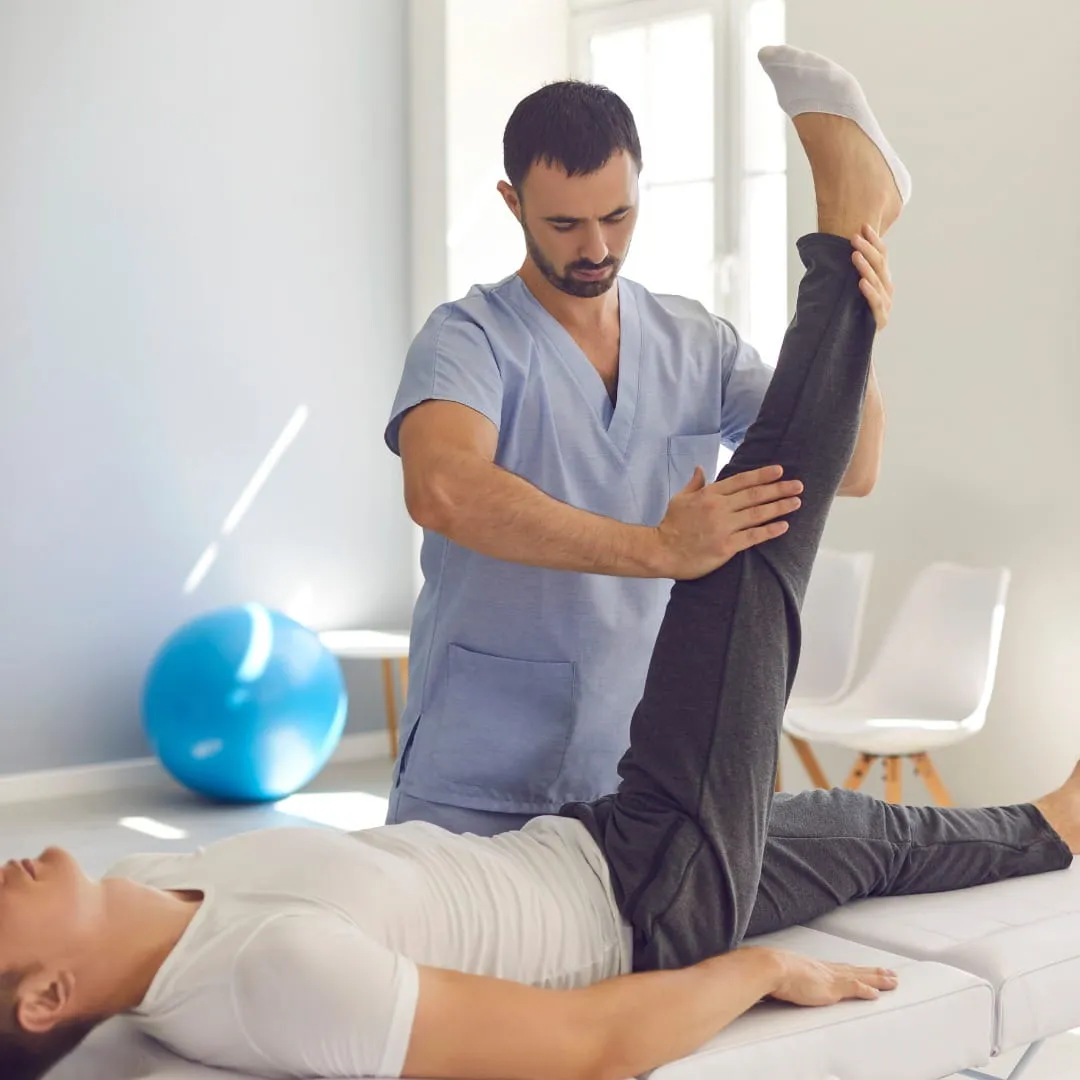
Most knee pain does not need surgery.
Research consistently shows most knee pain — including many cases with concerning imaging — responds excellently to physiotherapy.
THE QUICK ANSWER
Knee pain physiotherapy at Vedara Care, in one paragraph.
Knee pain physiotherapy at Vedara Care Polyclinic in Jumeirah Village Circle (JVC), Dubai — walking distance from Circle Mall — is evidence-based specialist treatment delivered by DPT-qualified physiotherapists. Knee pain has multiple distinct causes: patellofemoral pain syndrome (runner's knee), meniscus injuries (often without surgery), ligament injuries (MCL, ACL, LCL), iliotibial band syndrome, patellar tendinopathy (jumper's knee), knee osteoarthritis, Osgood-Schlatter disease, and post-injury conditions. Our approach combines accurate diagnosis, evidence-based manual therapy, specific exercise prescription, biomechanical analysis, dry needling, and patient education. Initial assessment from AED 350; structured knee pain programmes from AED 2,800. Patients travel to our JVC clinic from across Dubai. Insurance direct-billing with seven major insurers.
Medically reviewed by Dr. Priya Sharma, DPT, DHA-Licensed 2509266 · Last updated June 2026
Why knee pain is so common — and so often misunderstood.
Knee pain has many distinct causes that look similar at first but require different treatment. Understanding what is actually happening matters enormously.
The knee is one of the most complex joints in the body — bearing weight, allowing both stability and substantial range of motion, integrating ligaments, tendons, cartilage, menisci, and bone structures that must work together precisely. When something disrupts this complex system, pain results. But the cause of that disruption varies enormously between patients with seemingly similar symptoms.
The same symptoms, different causes
Front of knee pain when going down stairs could indicate patellofemoral pain syndrome, patellar tendinopathy, fat pad irritation, or early knee osteoarthritis. Accurate diagnosis is foundational — generic 'knee exercises' produce mediocre outcomes when the underlying cause is not addressed.
Why imaging often misleads
MRI findings frequently mislead patients about knee pain. Research consistently shows that meniscus tears, cartilage changes, and other abnormalities appear on imaging in many people without any knee pain at all — 30–50% of pain-free volunteers have visible meniscus findings on MRI. Effective treatment addresses dynamic factors, not just imaging findings.
The Dubai active population factor
Dubai has an unusually active expat population — running clubs, gym culture, padel explosion, recreational sports across communities. Our patient population reflects this — most knee pain we see is in active people who want to return to their activities.
The age factor
Knee pain affects all ages but in different patterns. Adolescents present with growth-related conditions (Osgood-Schlatter). Adults aged 25–45 most commonly have overuse injuries and tendinopathies. Adults 45–65 increasingly present with degenerative changes. Treatment approach calibrates to age, activity demands, and life stage.
Why most knee pain responds to physiotherapy
The vast majority of knee pain has dynamic components — movement patterns, muscle balance, biomechanics, training load — that respond to appropriate physiotherapy. Even conditions with clear structural components (meniscus tears, partial ligament injuries, osteoarthritis) typically have substantial dynamic factors. Most patients can avoid surgery with appropriate conservative care.
"The knee that has an MRI finding does not always have pain. The knee that has pain does not always have an imaging finding. Treatment must address what is actually happening — not just what shows up on a scan."
SPECIFIC KNEE CONDITIONS
The different knee conditions we treat at our JVC clinic.
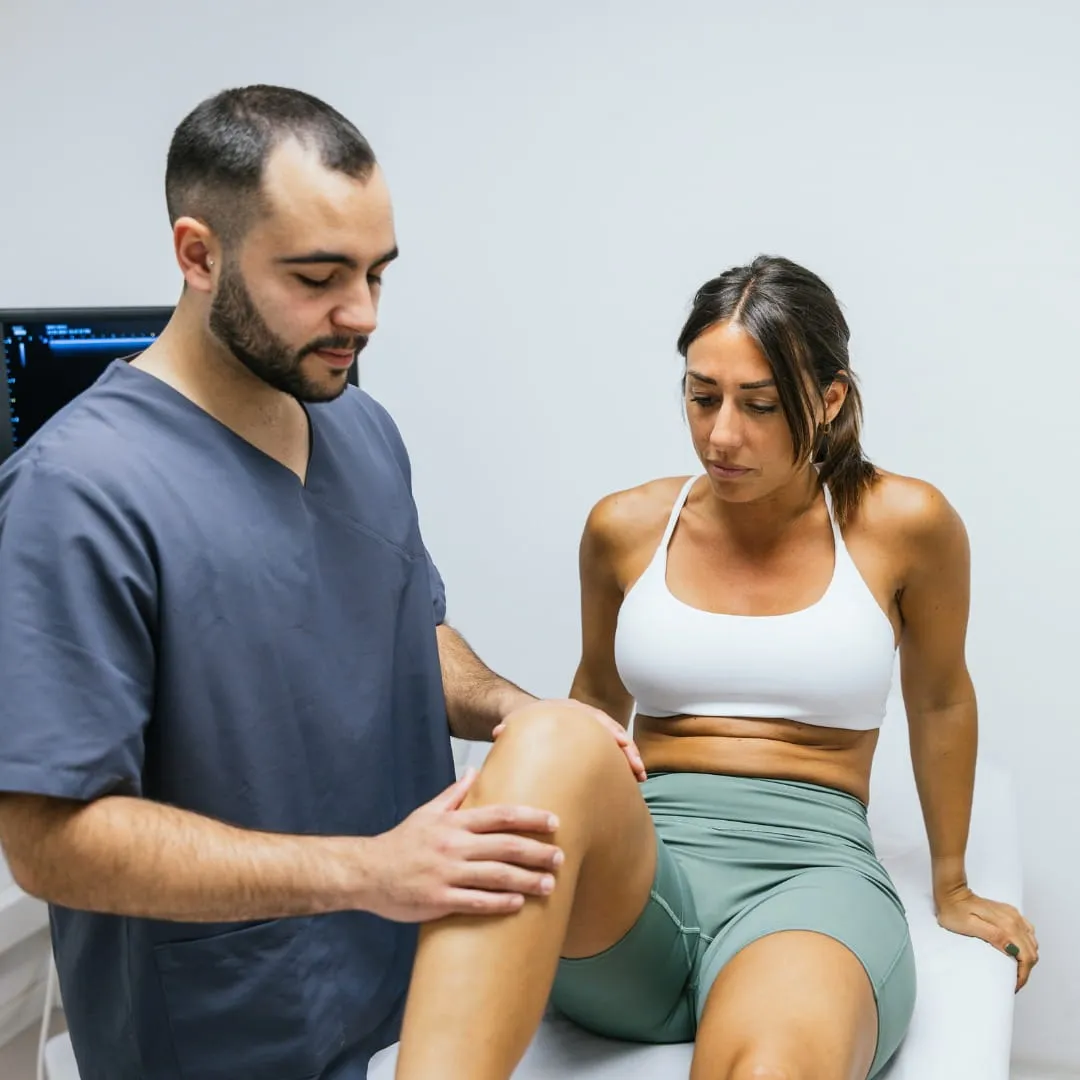
Accurate diagnosis is the foundation of effective treatment. These are the most common knee conditions we see at our clinic.
Patellofemoral Pain Syndrome (Runner's Knee)
Pain at the front of the knee, particularly with stairs, squatting, prolonged sitting, or after running. The most common knee pain presentation we see at the clinic. Responds to specific exercise protocols addressing hip strength, foot mechanics, and movement patterns.
Typical patient: Runner, recreational athlete, or active person
Meniscus Injuries
Damage to the meniscus cartilage — degenerative tears in older patients, traumatic tears in younger patients. Many meniscus tears do not require surgery as effective as surgery for many tear types.
Typical patient: Athletic injury (younger) or gradual onset (older)
ACL Injuries
Anterior cruciate ligament injury — partial tears, complete tears, or post-reconstruction recovery. ACL reconstruction recovery typically requires 9–12 months, but conservative management appropriate for some partial tears.
Typical patient: Sport-related injury, padel, football, basketball, skiing
MCL & LCL Ligament Injuries
Collateral ligament injuries on the inside (MCL) or outside (LCL) of the knee. Most heal with appropriate conservative management — bracing during early healing, progressive rehabilitation, gradual return to activity.
Typical patient: Contact sport injury, padel, football, gym injuries
IT Band Syndrome
Lateral knee pain in runners and cyclists. Treatment addresses the underlying hip and core factors driving the IT band tension, not just the IT band itself. Foam rolling alone rarely resolves IT band syndrome.
Typical patient: Runner, cyclist, walking enthusiast, gym training
Patellar Tendinopathy (Jumper's Knee)
Pain at the patellar tendon below the kneecap. Common in jumping sports, padel, and gym training. Eccentric loading protocols are evidence-based first-line treatment. Shockwave therapy when appropriate
Typical patient: Jumping sport athlete, padel player, gym enthusiast
Knee Osteoarthritis
Degenerative changes in the knee joint affecting articular cartilage. Physiotherapy is the evidence-based first-line treatment. Strength training, weight management, and activity modification often substantially reduce symptoms.
Typical patient: Middle-aged or older patient, gradual onset, worse with activity
Quadriceps & Hamstring Tendinopathies
Pain at the muscle-tendon junctions around the knee. Both respond to progressive loading protocols. Common in older athletes and after periods of training intensification.
Typical patient: Active patient with overuse pattern, sports return after time off
Pes Anserine Bursitis
Pain on the inside of the knee below the joint line — often confused with meniscus issues. Treatment combines manual therapy, addressing biomechanical contributors, and progressive loading.
Typical patient: Runner, swimmer, gym training, sometimes diabetic patients
Osgood-Schlatter Disease
Growth-related condition in adolescent athletes — pain and prominence at the tibial tuberosity below the knee. Common in adolescents during growth spurts, particularly in jumping and running sports.
Typical patient: Adolescent athlete, often in football, basketball, padel academies
Post-Surgical Knee Conditions
Rehabilitation after knee surgery — meniscectomy, meniscus repair, ACL reconstruction, knee replacement, arthroscopic procedures. Coordinated with operating surgeon. Specific protocols depending on procedure. Learn more on our post-surgical rehabilitation page.
Typical patient: Post-surgical patient, often coordinated with international surgeons
Other Knee Conditions
Including: knee bursitis, fat pad irritation, plica syndrome, patellar instability and dislocation, post-traumatic conditions. Less common but important conditions requiring specific approaches.
Typical patient: specific assessment required
Not sure which condition applies? Book an assessment for accurate diagnosis →
KNEE PAIN BY SPORT
Common knee pain patterns in Dubai's active population.
Different sports produce different knee pain patterns. Understanding the sport-specific pattern guides effective treatment.
Running
Patellofemoral pain syndrome, IT band syndrome, patellar tendinopathy, runner's knee. Often related to training load increases, surface changes, footwear factors, or biomechanical patterns. Gait analysis is part of our assessment.
Gym Training (F45, CrossFit, HIIT)
Patellar tendinopathy, patellofemoral pain, meniscus injuries, ACL injuries from jumping/landing, quadriceps tendinopathy. Often related to training intensity progressions, technique issues, or movement pattern factors.
Padel
Meniscus injuries, MCL strains, lateral movement patterns producing patellofemoral pain, sudden direction changes producing ACL stress. Padel's specific lateral movement pattern produces distinctive knee injury patterns.
Football & Futsal
ACL injuries, meniscus injuries, MCL strains, contact-related contusions, sudden cutting injuries. Higher acute injury rates than non-contact sports. Sport-specific rehabilitation includes change-of-direction training.
Cycling
Patellofemoral pain (often related to bike fit), IT band syndrome, anterior knee pain. Bike fit assessment often resolves many cycling-related knee issues. We provide bike fit guidance alongside treatment.
Recreational Sports & Activity
Tennis, volleyball, basketball — jumping-related patellar issues; hiking, walking — patellofemoral pain, IT band syndrome. Treatment approach calibrated to specific sport demands and return-to-activity goals.
For comprehensive sports injury treatment, see our sports physiotherapy page →
THE APPROACH
How we actually treat knee pain at our JVC clinic.
Effective knee pain treatment starts with accurate diagnosis. Generic "knee exercises" rarely resolve knee pain because the underlying cause varies enormously between patients. Our approach starts with identifying what is actually happening, then applying treatment matched to your specific condition.
Comprehensive initial assessment
The first session is typically 60 minutes — detailed history, specific orthopaedic tests for knee conditions, movement screening, gait analysis where relevant, strength and flexibility assessment, and review of any imaging. The assessment identifies your specific knee condition and the contributing factors driving it.
Manual therapy when indicated
Hands-on manual therapy — joint mobilisation, soft tissue work, manual stretching, manipulation where appropriate — provides effective symptom relief and addresses restricted areas. Manual therapy creates a window for active rehabilitation to be more effective.
Condition-specific exercise prescription
The most evidence-supported intervention for knee pain is structured exercise — but specific exercise for your condition, not generic 'knee exercises.' Patellofemoral pain responds to hip strengthening. Tendinopathies require eccentric loading protocols. Each condition has its own evidence-based exercise approach.
Biomechanical analysis and movement assessment
Many chronic knee conditions have underlying biomechanical contributors — hip weakness driving knee valgus, foot pronation affecting alignment, gait patterns producing repetitive stress. Our assessment includes biomechanical analysis appropriate to your activity demands.
Dry needling for chronic muscle patterns
For chronic muscle tension patterns — particularly chronic quadriceps tension, IT band-related muscle patterns, calf tension affecting knee mechanics — dry needling is effective at releasing trigger points and reducing protective muscle guarding.
Modalities where evidence supports
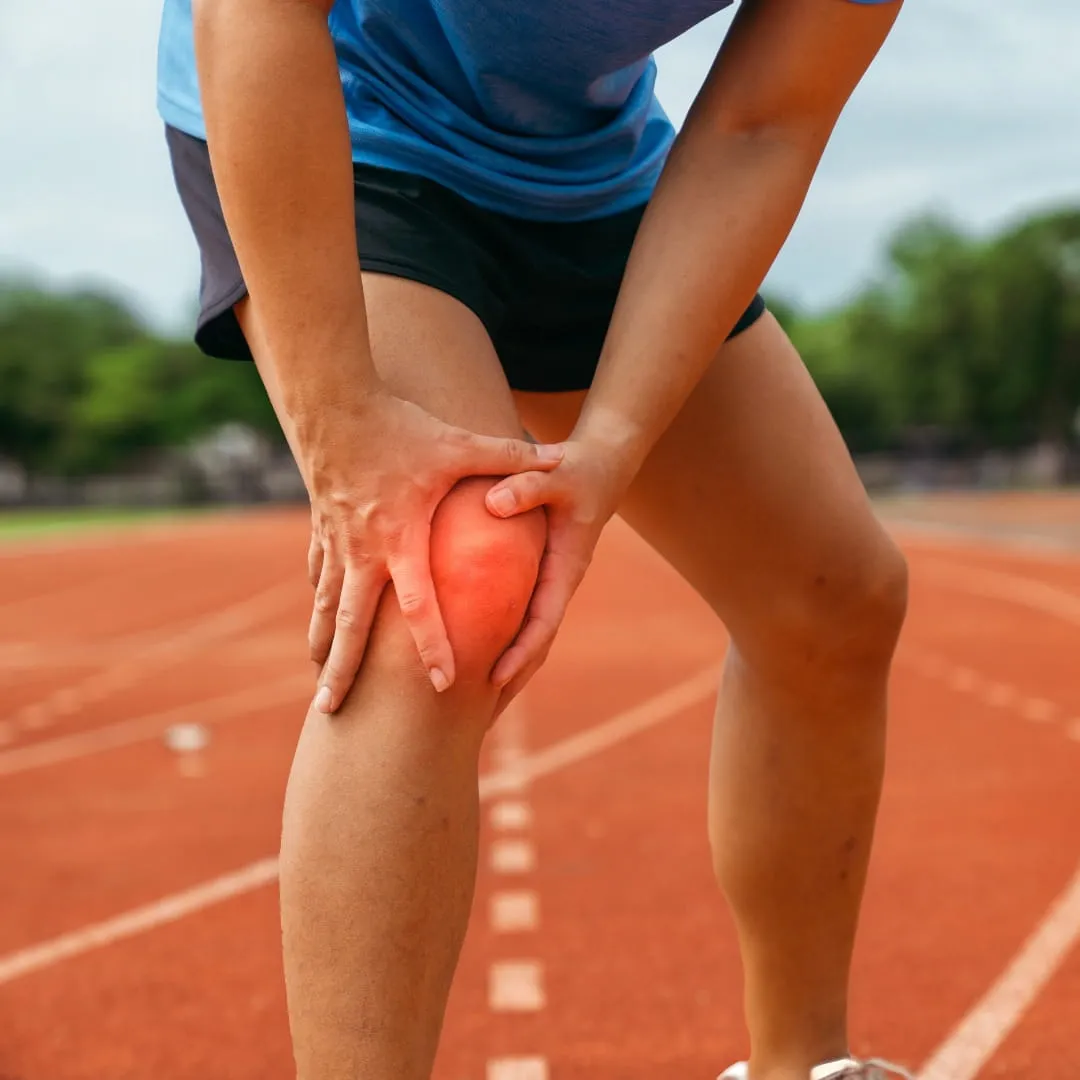
Shockwave therapy is evidence-based for chronic patellar tendinopathy. IFC and TENS for pain modulation. We do not use modality-heavy treatment that creates passive dependency — modalities support active rehabilitation, not replace it.
Patient education and self-management
Understanding your knee condition substantially improves outcomes. We explain what is happening, why specific treatments work, expected recovery timeline, what activities are safe, what to avoid, and how to prevent recurrence.
“Generic knee exercises produce generic outcomes. Treatment matched to your specific condition produces meaningfully better results.”
Our treatment toolkit
Recovery timelines by knee condition.
Different knee conditions have different recovery timelines. Honest expectations help you stay engaged with treatment.
| Condition | Acute Phase | Full Recovery | Risk Factor |
|---|---|---|---|
| Patellofemoral Pain Syndrome | 4-8 weeks | 8–16 weeks | Hip strength compliance |
| Meniscus injury (non-surgical) | 6-12 weeks | 12–24 weeks | Activity modification compliance |
| MCL Grade 1–2 strain | 4–8 weeks | 8–16 weeks | Return to sport timing |
| ACL reconstruction recovery | 0–12 weeks | 9–12 months | Return-to-sport criteria adherence |
| IT band syndrome | 6–10 weeks | 10–16 weeks | Hip strength + training load |
| Patellar Tendinopathy | 8–12 weeks | 12–24 weeks | Loading progression discipline |
| Knee Osteoarthritis | 8–12 weeks initial | Ongoing management | Exercise compliance, weight |
| Osgood-Schlatter disease | 4–8 weeks | Ongoing through growth | Sport modification compliance |
| Quadriceps/Hamstring tendinopathy | 6–12 weeks | 12–20 weeks | Loading progression |
| Post-meniscectomy | 4–8 weeks | 12–16 weeks | Activity progression |
| Post-meniscus repair | 8–16 weeks | 6–9 months | Restrictions adherence |
| Pes anserine bursitis | 4–8 weeks | 8–12 weeks | Biomechanical correction |
These timelines represent typical patterns. Your specific timeline depends on condition severity, when treatment starts, compliance with home programmes, return-to-activity goals, age and overall health, and underlying contributing factors. At initial assessment, you receive a specific timeline estimate for your situation.
Real knee pain recoveries.
Patellofemoral pain for two years. Tried multiple things including generic strengthening exercises. Vedara identified specific hip weakness pattern driving my knee issues. Twelve weeks of structured treatment combining manual therapy and specific exercises. Returned to running pain-free. Three years on, still running, no recurrence.
Sarah K.
Patellofemoral Pain Syndrome
12-Week Programme · Dubai Marina · February 2026
MRI showed a meniscus tear. Orthopaedic surgeon recommended surgery. Vedara recommended trying physiotherapy first given the type of tear. Twelve weeks of structured rehabilitation, fully returned to padel and gym training. Surgery completely avoided. The honest conversation about when surgery is and is not needed was invaluable.
Rajan M.
Meniscus Injury
12-Week Conservative Programme · Sports City · January 2026
Knee osteoarthritis at 58. Significant imaging changes, considering knee replacement. Vedara's physiotherapy programme over six months combined with weight management substantially reduced my symptoms. Walking comfortably, playing tennis again, surgery deferred indefinitely. Honest about realistic expectations — not 'cured' but substantially improved.
James M.
Knee Osteoarthritis
6-Month Programme + Ongoing · Dubai Hills · March 2026
4.9 ★
Google Rating
350+
Knee Patients Treated
87%
Substantial Improvement in 12 Weeks
Most
Patients Avoid Surgery
Physiotherapy specialists for knee pain at our JVC clinic.

Dr. Priya Sharma, DPT
Specialises in sports knee rehabilitation and running biomechanics with 8 years of clinical experience.

Dr. Ahmed Al Rashid, DPT, MSc
Expert in knee osteoarthritis management and ACL reconstruction rehabilitation protocols.

Dr. Sarah Mitchell, DPT
Certified in dry needling with particular expertise in tendinopathy management and gym-related knee injuries.

Dr. Rahul Mehta, DPT, CSCS
Combines physiotherapy with strength and conditioning expertise for complete knee rehabilitation.
What knee pain physiotherapy at our JVC clinic costs.
Initial knee pain assessment (60 minutes)
AED 350
Follow-up physiotherapy session (45–60 minutes)
AED 250
Running gait analysis (90 minutes)
AED 450
Same-day urgent assessment (acute knee injury)
AED 380
Dry needling (add-on per session)
AED 80
Shockwave therapy session (chronic tendinopathies)
AED 300
Acute knee injury package (8 sessions over 4–6 weeks)
AED 1,800
Chronic knee pain programme (12 sessions over 6–8 weeks)
AED 2,800
Extended knee programme (24 sessions over 12–16 weeks)
AED 5,200
Knee osteoarthritis ongoing care (per session)
AED 250
ACL rehabilitation programme (40–60 sessions over 9–12 months)
AED 9,800
Insurance direct-billing with seven major insurers including Daman, AXA, Allianz, Oman Insurance, Now Health, Bupa, and MetLife. Knee pain physiotherapy is well-covered by most Dubai insurance plans with medical justification. WhatsApp your insurance card to +971 55 573 6312 before booking for specific coverage confirmation.
What knee pain patients ask before booking.
For general physiotherapy questions, see our main physiotherapy page.
Ask a QuestionWhere knee pain physiotherapy happens at Vedara Care JVC.
Vedara Care Polyclinic
Al Barsha South Fourth, Binghatti Azure, Shop -4, Jumeirah Village Circle (JVC), Dubai, UAE
Clinic Hours
Monday - Sunday: 9:00AM to 10:00PM
Contact
+971 55 573 6312
booking@vedaracare.ae
Circle Mall
5 min walk
FIVE JV Hotel
3 min drive
JSS School
5 min drive
Our JVC clinic has dedicated physiotherapy treatment rooms, manual therapy plinths, a full rehabilitation gym with strength training equipment for knee rehabilitation, dry needling and shockwave therapy equipment, modern modalities, gait analysis capability, and accessibility for patients with limited mobility.
Book Knee Pain AssessmentReady to Address Your Knee Pain?
Most knee pain responds to the right treatment.
Whether you have acute injury, chronic ongoing issues, or are considering whether you might need surgery — the first useful step is a comprehensive knee pain assessment at our JVC clinic. We provide accurate diagnosis, condition-specific treatment plan, realistic timeline expectations, and honest discussion about treatment options. Same-week appointments typically available; same-day for acute injuries.
Initial assessment from AED 350 · JVC · 350+ knee patients treated · Insurance direct-billing · Most patients avoid surgery with appropriate care · Walking distance from Circle Mall
EXPLORE FURTHER
Related services and conditions
Shoulder Pain Physiotherapy
Comprehensive shoulder pain treatment for rotator cuff, impingement, and other shoulder conditions — our sister pillar page.
Learn moreSports Injury Physiotherapy
For sports-related knee injuries — ACL, meniscus, padel injuries, running injuries. Sport-specific protocols.
Learn morePhysiotherapy in JVC
Our complete physiotherapy department — all specialisations including knee conditions.
Learn morePost-Surgery Rehabilitation
For patients post-knee surgery — meniscectomy, meniscus repair, ACL reconstruction, knee replacement. Coordinated with operating surgeon.
Learn moreArthritis Integrated Care
For knee osteoarthritis patients interested in integrated Ayurveda + physiotherapy care. Optional pathway combining traditional and conventional approaches.
Learn more