Psoriasis treatment in JVC, Dubai. Specialist care including modern biologic treatments for lasting improvement
Specialist psoriasis treatment at our Jumeirah Village Circle (JVC) clinic — walking distance from Circle Mall. DHA-licensed consultant dermatologists treating all psoriasis presentations, including chronic plaque, scalp, nail, guttate, inverse, pustular, palmoplantar, and psoriatic arthritis considerations. Comprehensive care from topicals through modern biologic treatments (adalimumab, secukinumab, ustekinumab, ixekizumab, guselkumab, risankizumab) that have transformed outcomes.
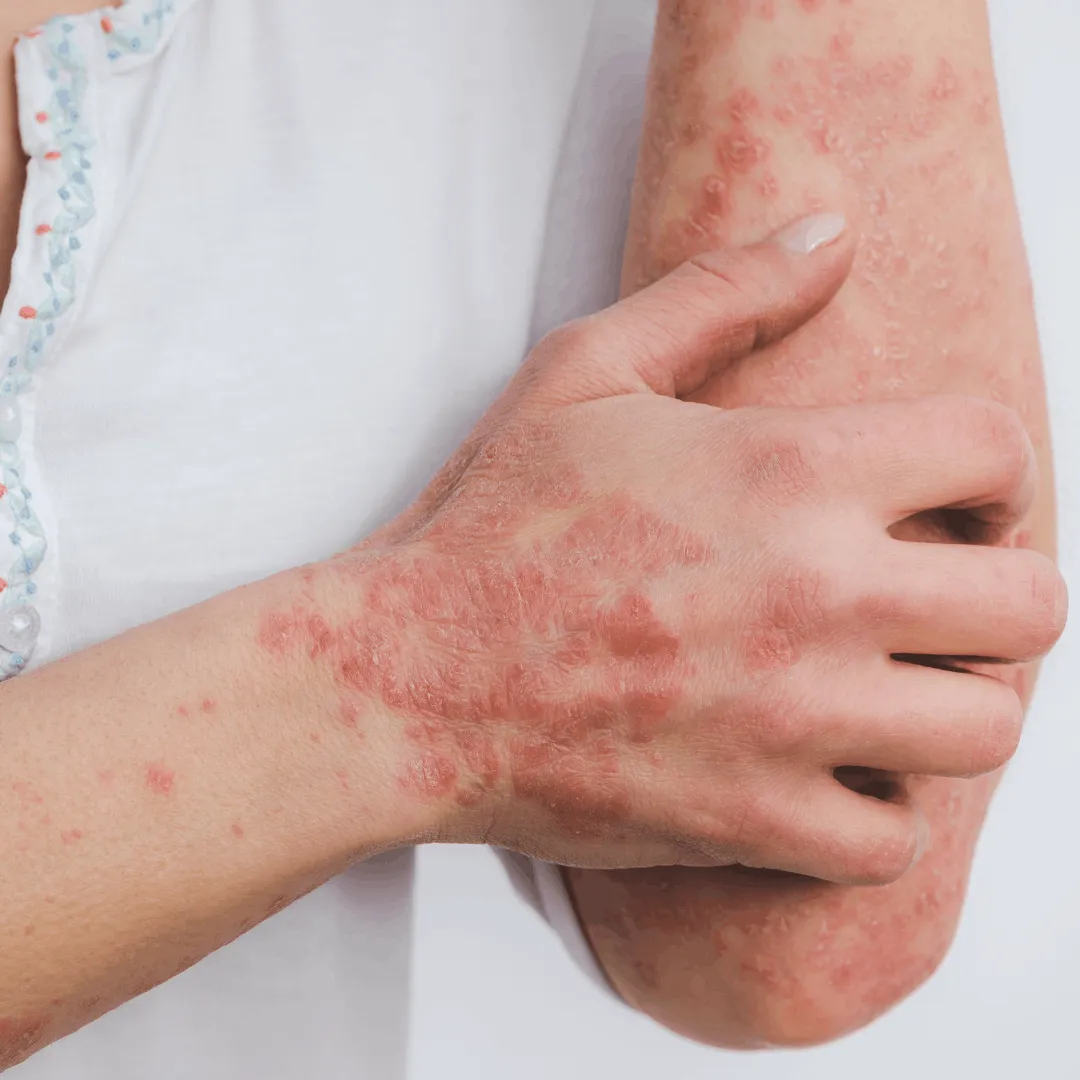
Modern psoriasis treatment is transformative.
The last decade has transformed psoriasis treatment. Modern biologic medications targeting specific inflammatory pathways achieve outcomes — clear or nearly clear skin — that were previously not possible.
THE QUICK ANSWER
Psoriasis treatment at Vedara Care, in one paragraph.
Psoriasis treatment at Vedara Care Polyclinic in Jumeirah Village Circle (JVC), Dubai — walking distance from Circle Mall — is specialist evidence-based dermatology care delivered by DHA-licensed consultant dermatologists with substantial expertise across all psoriasis presentations. We treat: chronic plaque psoriasis (the most common form), scalp psoriasis, nail psoriasis, guttate psoriasis, inverse psoriasis, pustular psoriasis, palmoplantar psoriasis, and considerations for psoriatic arthritis. Our approach combines comprehensive assessment (skin, nails, joints, associated systemic conditions), evidence-based topical treatments, phototherapy where available, oral systemic treatments (methotrexate, cyclosporine, acitretin, apremilast), and modern biologic treatments — including TNF inhibitors (adalimumab, etanercept), IL-17 inhibitors (secukinumab, ixekizumab), IL-23 inhibitors (guselkumab, risankizumab, tildrakizumab), and IL-12/23 inhibitor (ustekinumab). Realistic framing: well-controlled psoriasis with clear or nearly clear skin is achievable for most patients with modern treatments. Sustained partnership approach with regular follow-up. Medical psoriasis treatment is covered by most insurance with appropriate justification. Patients travel to our JVC clinic from across Dubai for specialist psoriasis care.
Medically reviewed by Lead Consultant Dermatologist, MD, DHA-Licensed 2509266 · Last updated July 2026
What psoriasis actually is — and why modern treatment has transformed outcomes.
Understanding psoriasis as autoimmune condition rather than skin problem guides effective treatment selection and realistic expectations.
Psoriasis is a chronic autoimmune condition primarily affecting the skin but with systemic implications. Understanding the underlying immune dysfunction — not just the skin manifestations — guides effective treatment.
The autoimmune basis
Psoriasis is fundamentally an immune-mediated condition where the immune system produces excess inflammation in the skin. Specific inflammatory pathways involving T-helper 17 cells, interleukin 17 (IL-17), interleukin 23 (IL-23), and tumour necrosis factor alpha (TNF-α) drive the characteristic skin changes. This immunological understanding transformed treatment — modern biologic medications target these specific pathways rather than broadly suppressing immunity like older treatments. Genetic predisposition plays a substantial role; environmental triggers activate the condition in susceptible individuals.
The accelerated skin cell turnover
Normal skin cells mature and shed over approximately 28 days. In psoriasis lesions, this process accelerates dramatically to 3–5 days — immature skin cells accumulate faster than they can be shed. Understanding this accelerated turnover explains why topical treatments containing vitamin D analogs (regulating skin cell maturation) work effectively.
Common triggers requiring identification
Multiple factors can trigger or worsen psoriasis: stress (well-established trigger, particularly relevant in expatriate lifestyle), infections (streptococcal throat infections particularly trigger guttate psoriasis), skin injury (Koebner phenomenon), medications (beta blockers, lithium, antimalarials), alcohol, smoking, weather changes, and hormonal changes. Identifying your specific triggers guides practical management.
Psoriasis as systemic condition — beyond the skin
Recognition of psoriasis as systemic rather than purely skin condition transformed care. Associated conditions requiring awareness: psoriatic arthritis (affects approximately 30% of psoriasis patients), cardiovascular disease risk, metabolic syndrome, depression and anxiety, and inflammatory bowel disease. Comprehensive assessment considers these dimensions.
Dubai-specific factors affecting psoriasis
Dubai environment presents specific considerations: sun exposure (moderate UV often improves psoriasis), climate effects (heat and humidity affect variably), expatriate stress patterns, access to modern biologic treatments, and cultural clothing patterns affecting psoriasis distribution in some patients.
Why psoriasis is chronic — but well-controlled today
Psoriasis is a chronic condition without permanent cure in most cases. However, modern treatments — particularly biologic medications — achieve outcomes previously not possible: clear or nearly clear skin, sustained improvement, dramatic quality-of-life improvement. Patients who have lived with substantial psoriasis for years often achieve transformative improvement with modern specialist care.
"The last decade transformed psoriasis treatment. Patients who have lived with substantial psoriasis for years often achieve clear or nearly clear skin with modern biologic treatments — outcomes previously thought impossible."
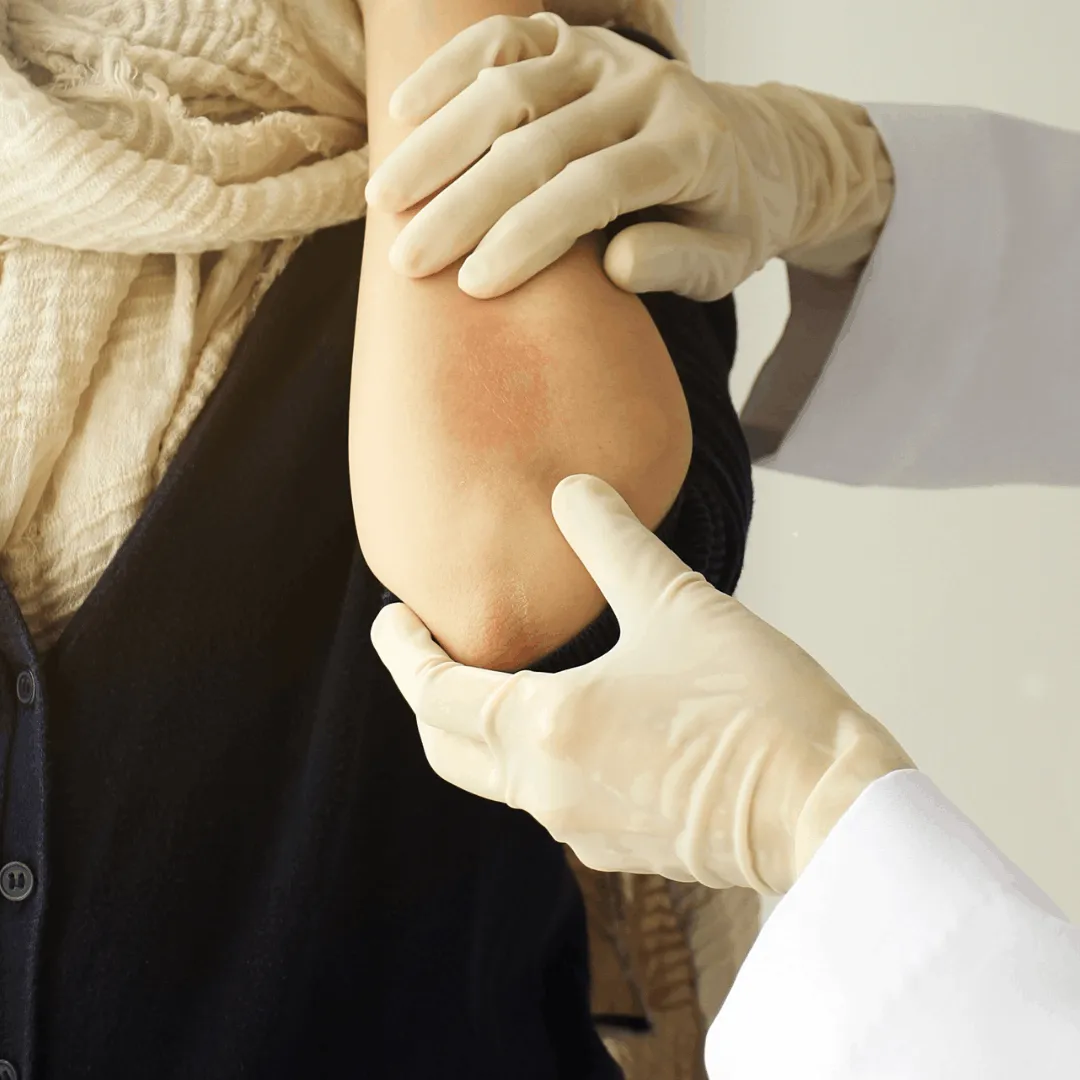
INFLAMMATORY PATHWAYS
The psoriasis presentations we treat at our JVC clinic.
Different psoriasis types have different patterns and treatment considerations. Accurate diagnosis guides effective treatment selection.
Chronic Plaque Psoriasis
Typical presentation:
- Well-demarcated red plaques with silvery scaling on elbows, knees, scalp, lower back
Scalp Psoriasis
Typical presentation:
- Thick scaling on scalp, sometimes extending beyond hairline
Nail Psoriasis
Typical presentation:
- Nail pitting, discoloration, thickening, separation — often multiple nails affected
Guttate Psoriasis
Typical presentation:
- Multiple small round lesions distributed over trunk and limbs, often after infection
Inverse (Flexural) Psoriasis
Typical presentation:
- Smooth red patches in skin folds — armpits, groin, under breasts
Pustular Psoriasis
Typical presentation:
- Sterile pustules on red background, localised or widespread
Palmoplantar Psoriasis
Typical presentation:
- Thickened scaling on palms and soles, sometimes with cracks and pustules
Erythrodermic & Severe Psoriasis
Typical presentation:
- Extensive skin involvement, systemic symptoms, substantial quality-of-life impact
The evidence-based treatments we use for psoriasis.
Foundation — moisturisation and skincare
Regular moisturiser application addresses barrier compromise and helps reduce scaling. Emollients applied multiple times daily. Coal tar-containing moisturisers can provide additional benefit. Gentle skincare avoiding irritants that trigger the Koebner phenomenon. Foundation supports all other treatments.
Topical treatments
Cornerstone for mild-moderate psoriasis and adjunctive for severe. Topical corticosteroids — matched potency to location and severity. Vitamin D analogs (calcipotriol, calcitriol) — regulate skin cell maturation, often combined with corticosteroids. Calcineurin inhibitors — particularly useful for facial and flexural psoriasis. Coal tar preparations, salicylic acid, and newer topical agents. Combination and rotation strategies optimise outcomes.
Phototherapy where available
Established treatment approach. Narrow-band UVB phototherapy — standard for moderate psoriasis; typically 2–3 sessions weekly for 8–12 weeks. PUVA therapy — combining psoralen with UVA; effective but with more monitoring requirements. Excimer laser — targeted phototherapy for limited psoriasis. Phototherapy can be excellent option for moderate psoriasis avoiding systemic treatments.
Oral systemic treatments
For moderate-severe psoriasis inadequately controlled with topicals. Methotrexate — established option; requires monitoring for liver and blood count effects. Cyclosporine — rapid onset for severe flares; typically shorter-term use. Acitretin — oral retinoid; useful particularly for pustular and palmoplantar psoriasis. Apremilast — oral PDE4 inhibitor; well-tolerated generally; useful for moderate psoriasis.
Biologic treatments — the transformation
Modern biologics have revolutionised psoriasis treatment. Targeting specific inflammatory pathways, they achieve outcomes previously not possible. TNF-α inhibitors: adalimumab (Humira), etanercept (Enbrel), infliximab (Remicade). IL-17 inhibitors: secukinumab (Cosentyx), ixekizumab (Taltz), brodalumab. IL-23 inhibitors: guselkumab (Tremfya), risankizumab (Skyrizi), tildrakizumab (Ilumya). IL-12/23 inhibitor: ustekinumab (Stelara). Many patients achieve clear or nearly clear skin.
Comprehensive assessment for systemic implications
Psoriasis is a systemic condition. Comprehensive assessment includes psoriatic arthritis screening, cardiovascular risk assessment, metabolic syndrome screening, mental health awareness, and lifestyle counselling (alcohol, smoking, stress management, weight management). Comprehensive approach beyond skin treatment.
Your Treatment Plan
MODERN BIOLOGIC ACCESS
- TNF-α inhibitors
- IL-17 inhibitors
- IL-23 inhibitors
- IL-12/23 inhibitors
- Insurance authorisation support
REALISTIC TIMELINES
How psoriasis treatment progresses over time.
Modern treatment has transformed psoriasis outcomes. Understanding realistic timelines and sustained management guides commitment to effective treatment.
Comprehensive Assessment & Initiation
WEEKS 0-4
Thorough consultation identifying psoriasis type, severity, and associated conditions (particularly psoriatic arthritis screening). Treatment plan initiated including topical treatments, lifestyle recommendations, phototherapy consideration, or systemic treatment discussion. For patients starting biologics: insurance authorisation process, patient education, and first doses begin.
Achieving Control
WEEKS 4-16
Steady improvement for most patients with treatment matched to disease severity. Topical therapies usually show gradual improvement over several weeks. Systemic treatments typically demonstrate benefit within 8–12 weeks. Biologic therapies often provide significant improvement between 12–16 weeks, with many patients achieving clear or nearly clear skin. Treatment adjustments are made according to individual response.
Optimising & Sustaining Control
MONTHS 4-12
Well-controlled psoriasis is achieved for many patients receiving appropriate treatment. Care transitions from active control to long-term maintenance. Patients using biologic therapies continue regular monitoring for treatment effectiveness and safety while maintaining improvements in skin symptoms and quality of life. Associated conditions are also monitored throughout this phase.
Sustained Long-Term Care
YEAR 1 ONWARDS
Long-term partnership with your dermatologist continues through regular follow-up visits and treatment reviews. Some patients remain on maintenance treatment, while others require adjustments depending on disease activity. Ongoing monitoring helps maintain disease control, minimise flare-ups, monitor medication safety, and support long-term skin health and overall wellbeing.
These timelines describe typical treatment patterns. Individual progress varies depending on psoriasis type, severity, chosen treatment approach, adherence, and individual response. The strongest predictor of long-term success is consistent partnership with a specialist dermatologist, appropriate treatment selection, and realistic expectations regarding chronic disease management.
Real psoriasis outcomes with specialist care.
"Chronic plaque psoriasis for 15 years, affecting substantial areas of my body. Multiple previous treatments providing partial improvement at best. The consultation was thorough — comprehensive assessment including joint evaluation identified mild psoriatic arthritis I had not connected. Started on IL-17 inhibitor. Within 4 months, dramatic improvement — clearer skin than I had in 15 years. Joint symptoms improved. Quality of life transformed. The access to modern treatments combined with specialist expertise completely changed my life."
MALE PATIENT, 47
Chronic Plaque Psoriasis with Psoriatic Arthritis · Biologic Treatment
Downtown Dubai · February 2026
"Severe scalp and nail psoriasis for years, socially isolating despite being a professional adult. Vedara's assessment identified extent of nail involvement I had not appreciated as connected to my scalp condition. Started biologic treatment addressing both. Progress remarkable: scalp cleared substantially over 3-4 months, nails improving over 8-10 months. Confidence at work transformed. The specialist recognition of nail psoriasis as significant condition warranting systemic treatment made the difference previous providers had not addressed."
FEMALE PATIENT, 38
Severe Scalp and Nail Psoriasis · Biologic Treatment
Dubai Marina · January 2026
"Palmoplantar psoriasis affecting my ability to work in healthcare with hand-intensive requirements. Vedara's approach was comprehensive: identified aggravating factors including stress and specific occupational exposures, initiated appropriate systemic treatment with monitoring, coordinated with occupational health for practical modifications. Substantial improvement over 6 months allowing sustained professional practice. The combination of specialist medical care and practical occupational support made the difference."
FEMALE PATIENT, 44
Palmoplantar Psoriasis · 8-Month Programme
Al Barsha South · March 2026
4.9 / 5.0
Google Rating
400+
Psoriasis Patients Treated
Full Range
Modern Biologic Treatments
Comprehensive
Systemic Assessment
Consultant dermatologists for psoriasis treatment at our JVC clinic.
Psoriasis treatment is delivered by DHA-licensed consultant dermatologists with substantial expertise across all psoriasis presentations, all Fitzpatrick skin types, and modern treatment approaches including biologics. Female and male dermatologists available. Languages: Arabic, English, Hindi, Urdu.

Dr. Sarah Al-Rashidi, MD
Specialist expertise in moderate-severe psoriasis and biologic treatment initiation. Extensive experience with psoriatic arthritis screening.

Dr. Priya Menon, MD
Expertise in autoimmune dermatology with substantial experience treating diverse skin types including Fitzpatrick IV–VI.

Dr. Khaled Hassan, MD
Specialist in phototherapy protocols and oral systemic treatments. Extensive experience in psoriasis with scalp and nail involvement.
What psoriasis treatment at our JVC clinic costs.
Initial psoriasis consultation with comprehensive assessment (45–60 min)
AED [X]
Follow-up consultation
AED [X]
Treatment monitoring visit
AED [X]
Comprehensive systemic assessment (psoriatic arthritis, cardiovascular risk)
AED [X]
Nail psoriasis specific assessment
AED [X]
Topical treatment prescription and education
AED [X]
Phototherapy course (where available)
From AED [X]
Oral systemic treatment monitoring
From AED [X]/month
Biologic treatment consultation and initiation
Consultation required
Biologic treatment ongoing monitoring
From AED [X]/month
Comprehensive 6-month psoriasis management programme
From AED [X]
Comprehensive 12-month programme with systemic support
From AED [X]
What patients ask about psoriasis treatment.
For broader dermatology questions, see our dermatology clinic page.
Ask Our Team on WhatsAppVISIT US
Where psoriasis treatment happens at Vedara Care JVC.
NEARBY LANDMARKS
- ✓Walking distance from Circle Mall
- ✓3 minutes from FIVE Jumeirah Village Hotel
- ✓5 minutes from JSS Private School
- ✓Free patient parking
- ✓Easy access from Sheikh Mohammed Bin Zayed Road & Al Khail Road
DISTANCE FROM DUBAI COMMUNITIES
READY TO TRANSFORM YOUR PSORIASIS?
Clear or nearly clear skin is achievable. Let us help you get there.
Whether you have chronic plaque psoriasis affecting substantial areas of your body, scalp or nail psoriasis with cosmetic impact, palmoplantar psoriasis affecting your work, or you are considering modern biologic treatments after inadequate previous therapy — comprehensive specialist consultation is the right starting point. Same-week appointments typically available at our JVC clinic.
Initial consultation from AED [X] · Walking distance from Circle Mall, JVC · DHA-licensed consultant dermatologists · 400+ psoriasis patients treated · Access to full range of modern biologic treatments · Comprehensive systemic assessment · Multiple languages · Insurance direct-billing with biologic authorisation support
EXPLORE FURTHER
Related dermatology services.
Dermatology Clinic
Our complete dermatology department — full medical and aesthetic services.
Learn moreSkin Concern Navigation
For patients with skin concerns beyond psoriasis — guidance hub for various skin conditions.
Learn moreEczema Treatment
For patients or family members with eczema — different condition with different treatment approach.
Learn moreAyurveda Clinic
Integrated approach — Ayurvedic perspectives complementing modern dermatology for chronic conditions.
Learn more