Laser Skin Tightening in JVC for Firmer, Youthful-Looking Skin
Over time, it’s normal for your skin to become a little less firm as collagen levels naturally decline. You might first notice this around your cheeks, jawline, neck, or under the chin. Laser skin tightening in JVC at Vedara Care Polyclinic offers a non-surgical way to support the skin’s natural collagen process and improve firmness gradually.Every skin is different, so treatment is planned around your skin type, concerns, and level of laxity. It won’t give the same results as a surgical facelift, but it may help create a firmer, smoother, and more refreshed appearance. A consultation helps determine whether laser skin tightening is right for you.
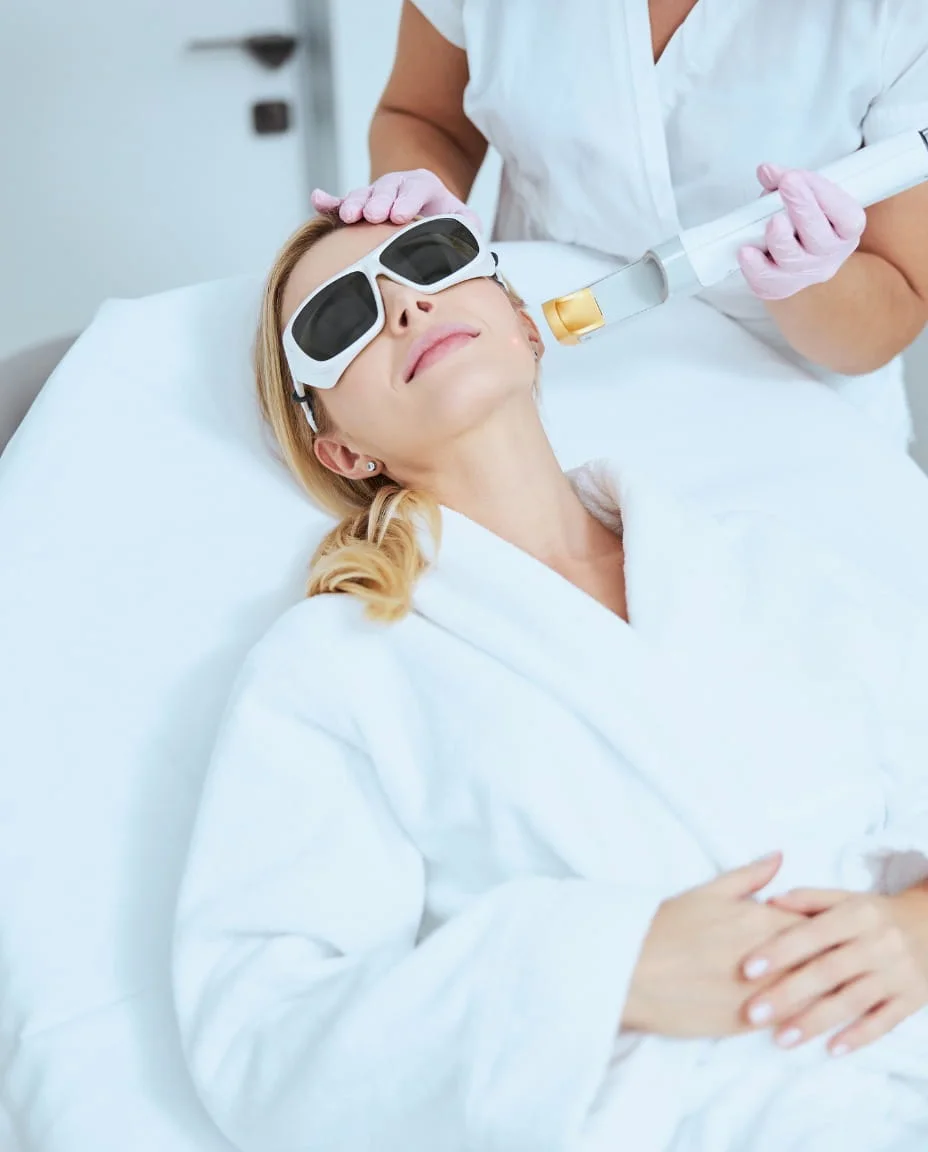
Start With a Skin Tightening Assessment
Every person's skin responds differently to treatment. A professional dermatological assessment helps evaluate skin laxity, texture, treatment goals, and suitability before deciding whether laser skin tightening is appropriate and which treatment approach may be most suitable.
QUICK ANSWER
Laser skin tightening at Vedara Care in JVC, in one paragraph.
Laser skin tightening at Vedara Care uses controlled energy to gently heat targeted layers of the skin beneath the surface. This controlled heating triggers a healing response, prompting the skin to begin remodelling and producing new collagen. Because this is a biological process rather than an instant physical change, the resulting firmness develops gradually — the skin needs time to actually build and organise new collagen fibres following each session. Over the following weeks and months, many patients notice a gradual improvement to skin firmness and texture as this collagen remodelling continues. This is a progressive process, not a single-treatment transformation and it is one of the key reasons setting realistic expectations about what to expect is one of the most important things we discuss. It's worth noting that laser skin tightening is not the same as treatment designed specifically to reduce fat, treat collagen-loss pigmentation and skin firmness; no fat reduction, unless a specific technology designed for that separate purpose is being discussed and confirmed.
UNDERSTANDING SKIN LAXITY
Why laser for skin tightening?
Skin laxity develops gradually and is influenced by several overlapping factors. As we age, natural collagen production slows and existing elastin fibres lose some of their resilience, which reduces the skin's ability to spring back into place. Cumulative sun exposure accelerates this process by breaking down collagen over time — a major reason facial skin often shows laxity before other, less sun-exposed areas of the body. Genetics play a role too: some people naturally retain skin firmness longer than others. Weight fluctuations and other pregnancy experiences can stretch the skin and connective tissue that are fully recover from, and sudden changes in body weight or fat distribution as we age can also make skin appear looser than it once did, even where the skin tissue itself hasn't changed dramatically.
It's worth being clear that skin laxity is not the same thing as volume loss, wrinkles, pigmentation, or skin texture issues — though these different concerns often appear together and can be confused with one another. Volume loss is typically addressed with different approaches; wrinkles sometimes overlap with skin-tightening goals, but deep wrinkles are often a separate concern entirely. Understanding which of these is actually driving what you're noticing in the mirror is the first step toward choosing a treatment that's actually going to help.
AREAS WE ASSESS
Areas that may benefit from skin tightening treatment.
01 — Face
Beyond facial skin firmness
Many patients first notice laxity as an overall softening of facial contour — skin that no longer sits quite as snug across the cheeks or midface. Laser treatment may help support a more defined appearance along this area in patients with mild laxity, though significant jawline and cheek laxity benefits more from a continued or alternative approach discussed during assessment.
02 — Jawline
Defining the lower face
A softened or less defined jawline is one of the most common concerns patients raise. Skin tightening may help support a more defined appearance along this area in patients with mild laxity, though significant jowl formation benefits more from a continued or alternative approach discussed during assessment.
03 — Lower Face
The area encompassing jawline, chin and lower cheeks
The lower face carries a lot of the visible signs of ageing, skin partly because gravity and reduced elasticity only act on this area over time. Treatment here is planned individually factoring in how much laxity is present and how the skin has responded to any previous treatments.
04 — Neck
An area of early skin laxity
Neck skin is thinner than facial skin and often shows laxity earlier. Skin tightening may be appropriate for mild neck laxity, though more significant looseness — sometimes described as 'turkey neck' — may require better to a different approach entirely, which your dermatologist will discuss honestly during consultation.
05 — Cheeks
Mild floss, firmness, and support
Cheek laxity often shows up as a loss of the youthful fullness and firmness that once sat higher on the face. Mild treatment may help support gradual firming in this lower area, though patients with significant volume loss alongside laxity may need a broader conversation about combination approaches.
06 — Around the Eyes
A delicate, thin-skinned area
The skin around the eyes is thinner and more delicate than elsewhere on the face, which means treatment here requires particularly careful energy selection and an experienced hand. [VERIFY TREATMENT AREA] — whether this specific area is offered depends on the technology and protocols in use at the clinic.
07 — Abdomen or Body Areas
Skin laxity beyond the face and neck
Some patients notice laxity on the body following weight change or pregnancy. [VERIFY TREATMENT AREA] for body-area skin tightening availability, as this depends on the specific technology and clinic protocols confirmed by Vedara Care.
08 — Other Areas of Mild Skin Laxity
Additional areas assessed on a case-by-case basis. Beyond the areas listed above, other regions of mild skin laxity may be assessed individually. [VERIFY TREATMENT AREA] for confirmation of which additional areas are currently offered at the JVC clinic.
THE APPROACH
How personalised laser skin tightening differs from a standard treatment
Skin laxity assessment. The degree and specific location of laxity shape the entire treatment plan — mild jawline softening is approached very differently from more established neck laxity.
Skin quality. Texture, elasticity, hydration, the presence of fine lines, and cumulative sun exposure all influence together how well the skin responds to treatment. Skin quality is assessed individually, not as a single variable.
Skin type and pigmentation. Skin tone and pigmentation history are reviewed carefully too, since they directly influence which technologies are safe and appropriate.
Energy selection. The type and intensity of energy used should be matched to your anatomy and skin characterisation rather than applied as a standard setting.we will be confirmed and discussed with you during consultation.
Treatment goals. Mild tightening, improved firmness, better skin texture, and a more defined appearance are related but distinct goals, and your plan is built around which of these matters most to you.
Realistic expectations. Non-surgical tightening usually produces subtle to moderate improvement. It is not designed to replicate the result of a surgical facelift and being upfront about this distinction is part of responsible treatment planning — not a limitation we try to talk around.
HOW LASER SKIN TIGHTENING WORKS
How does laser skin tightening work?
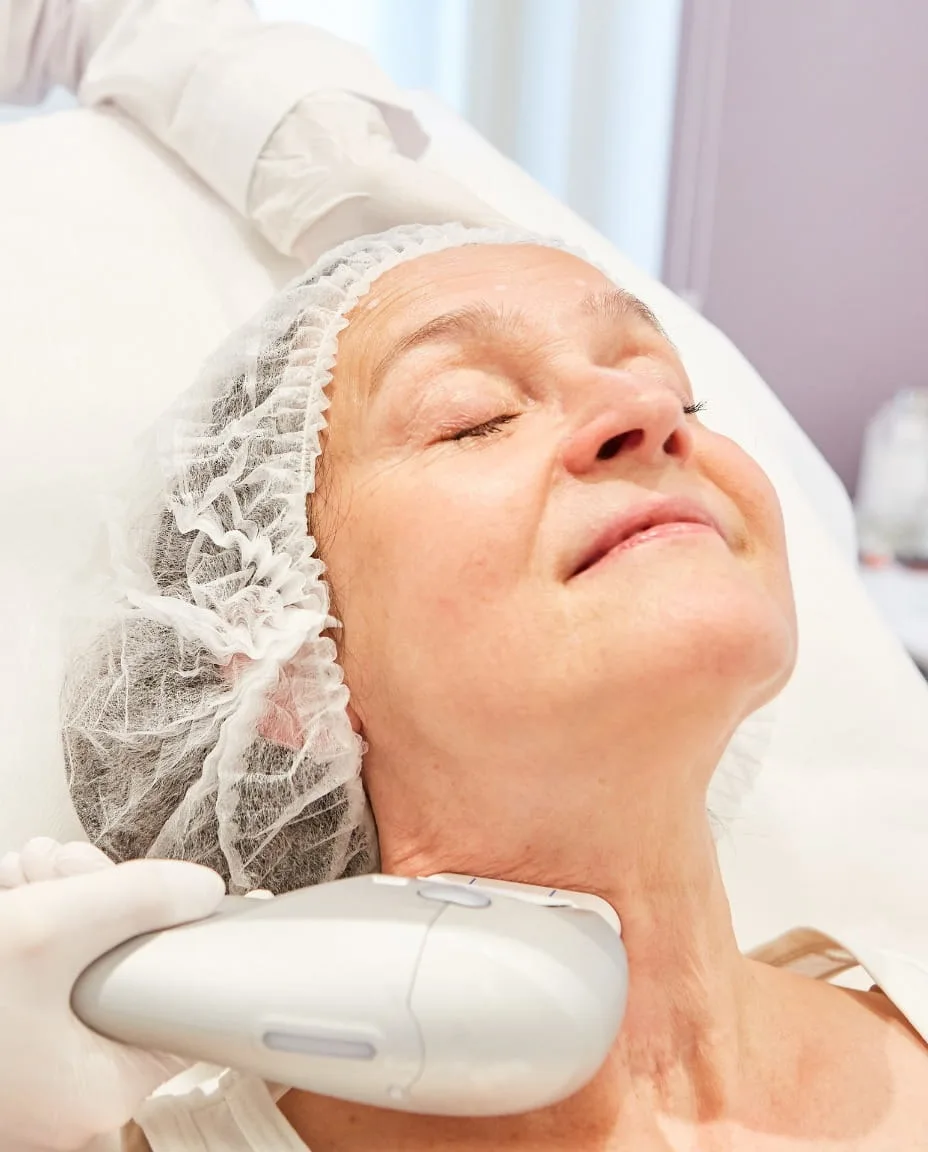
Laser skin tightening uses controlled energy to gently heat targeted layers of the skin beneath the surface. This controlled heating triggers a healing response, prompting the skin to begin remodelling and producing new collagen. Because this is a biological process rather than an instant physical change, the resulting firmness develops gradually — the skin needs time to actually build and organise new collagen fibres following each session.
Over the following weeks and months, many patients notice a gradual improvement to skin firmness and texture as this collagen remodelling continues. This is a progressive process, not a single-treatment transformation and this is one of the key reasons to set realistic expectations — gradual firming across broader facial areas. Results depend on baseline skin quality and the degree of laxity present, and expectations should stay realistic: subtle to moderate improvement, not a dramatic lift.
LASER TECHNOLOGY
Which laser or energy technology may be used?
Skin-tightening technologies vary considerably, and which is appropriate for you depends on your skin laxity, skin tone, the treatment area, the intensity of improvement you're looking for, how much downtime you can accommodate, your medical history, and any previous treatments you've had.
Broadly, fractional laser works on the skin in a controlled pattern that leaves surrounding tissue intact to support faster healing. Non-ablative lasers work beneath the surface without disrupting the outer skin layer as significantly. Radiofrequency and HIFU microfocused-ultrasound energy for skin tightening may also be technologies that some patients discuss alongside or instead of laser, depending on their goals.
What happens during a laser skin tightening session?
1. Consultation and Skin Assessment
Your first visit involves a review of your medical history, your specific skin concerns, any previous cosmetic procedures, your current skincare routine, and any medications that could affect treatment. Your dermatologist will examine your skin directly, review your pigmentation history, and determine whether laser skin tightening — or an alternative — is appropriate for you.
2. Skin Preparation
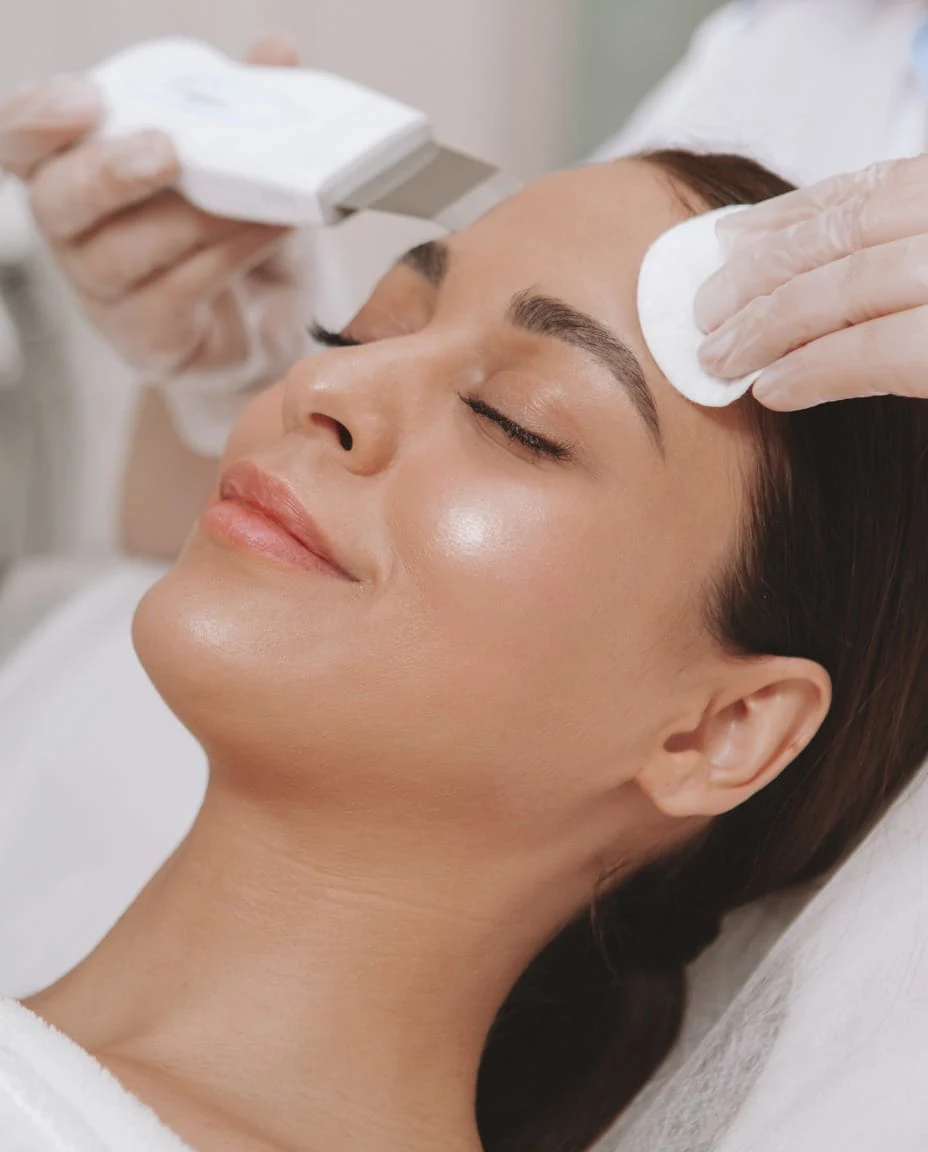
Your skin will be prepared according to your dermatologist's guidance before treatment begins, which may include cleansing the treatment area and, depending on the technology used, applying appropriate comfort measures.
3. Treatment During
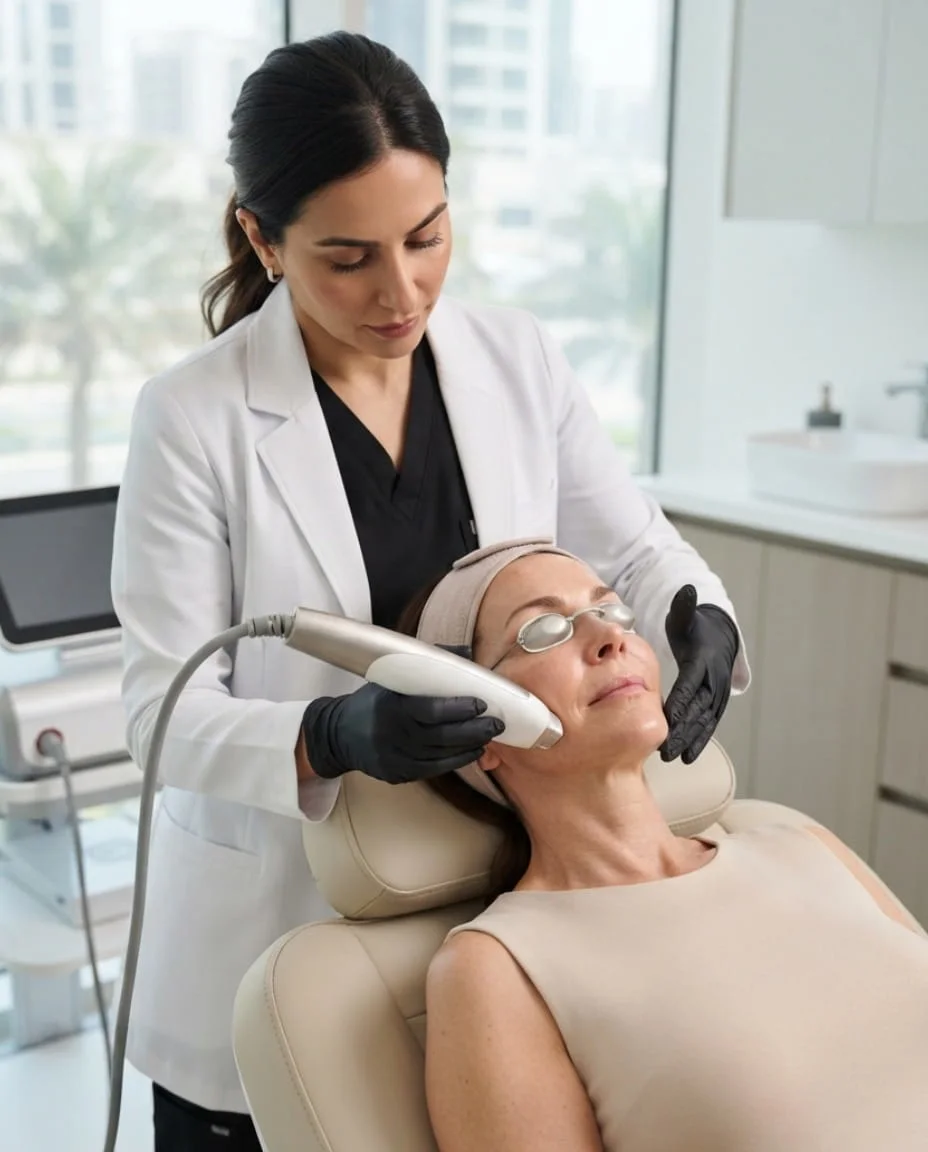
During treatment, you may feel warmth or mild heat sensations as energy is delivered to the treatment area. Cooling or other comfort measures may be used where applicable. Your practitioner will monitor your skin's response throughout the session, adjusting settings as needed.
4. Immediate Aftercare
Some redness, warmth, and mild sensitivity in the treated area is expected immediately after treatment. You'll be given specific skincare and sun protection guidance on sun retention — an especially important consideration in Dubai's climate — along with clear information on what would warrant contacting the clinic.
RECOVERY
Laser skin tightening recovery: what should you expect?
First 24 hours: The treated area is typically warm, slightly red, and mildly sensitive, similar to a light sunburn sensation for most patients.
First few days: Redness and warmth generally begin to settle, though the exact timeline depends on the technology and intensity used.
Following weeks: Skin often continues to feel and look progressively firmer as collagen remodelling develops beneath the surface.
Longer-term: Collagen production can continue developing for several months following treatment, which is part of why full results take time to fully appear.
Recovery timeline is individual — it depends on the technology used, the energy level applied, treatment depth, the area treated, and how your own skin responds. We won't tell you to 'expect zero downtime' because that's not an honest claim for any energy-based skin treatment; your dermatologist will give you a realistic expectation based on your specific plan.
RESULTS
Laser skin tightening results: what can patients realistically expect?
Many patients who respond well will notice a gradual improvement to skin firmness from the treated skin feels and looks, alongside subtle improvements in texture and, in some cases, line firmness. This tends to build progressively as collagen remodelling continues over the weeks and months following treatment, rather than appearing as an instant, dramatic change.
It bears repeating clearly: laser skin tightening does not reproduce the results of a surgical facelift. For patients with significant skin laxity, the improvement achievable through energy-based treatment is inherently more limited than what surgery can address — and that's an honest distinction, not a sales caveat. Results also vary meaningfully between individuals depending on skin quality, degree of laxity, age, and how the skin responds to treatment.
Longer-term collagen remodelling: Collagen production can continue developing for a number of months following treatment, meaning full results often take time to become fully apparent.
Several weeks later: As collagen remodelling develops, many patients begin noticing subtle improvements in skin firmness and texture.
WHO MAY BENEFIT
Who may be suitable for laser skin tightening?
Patients who tend to be good candidates typically have mild skin laxity, are noticing early signs of softening across the lower or midface, and may also notice early relaxation on the neck or neck. Generally good overall skin health supports a smoother recovery, and — not unimportantly — realistic expectations about what kind of improvement energy-based treatment can offer make for a more satisfying outcome.
Ultimately, suitability isn't something that can be determined from a description alone — it depends on an in-person assessment of your specific skin, laxity, and goals.
WHEN LASER MAY NOT BE THE BEST OPTION
When laser skin tightening isn't suitable for everyone?
Laser skin tightening isn't the right fit for every patient or every degree of laxity. Significant skin laxity or substantial excess skin — particularly around the neck or lower face — often responds better to a surgical consultation than to energy-based treatment alone, and we'll say so honestly if that's what your assessment suggests.
Other situations that need careful evaluation before proceeding include active skin infection, active inflammatory skin conditions, recent tanning or sun exposure, certain medications, pregnancy where relevant, and certain underlying medical conditions. Unrealistic expectations are also worth addressing openly during consultation — if what you're hoping for isn't something energy-based treatment can reasonably deliver, that's a conversation we'd rather have upfront than after treatment.
SAFETY AND SIDE EFFECTS
Laser skin tightening side effects and safety considerations
Common temporary effects following treatment include redness, mild swelling, warmth, tenderness, sensitivity, dryness, and other temporary changes in how the skin looks or feels. These are generally expected and settle within the recovery window discussed with you.
Less common risks can include pigmentation changes, burns, prolonged redness, infection, and — rarely — scarring. We are very upfront about these risks because treatment that goes wrong around skin treatment carries some degree of risk, and understanding this honestly is part of making an informed decision. This is also precisely why treatment should always be performed by appropriately qualified, DHA-licensed professionals who understand how to assess and manage these risks — not applied casually or without proper training.
SKIN TYPE AND PIGMENTATION
Is laser skin tightening safe for darker skin tones?
Skin tone is a genuinely important factor in treatment planning. Some laser technologies carry a greater risk of pigmentation changes in darker skin tones than others, which is why device selection and energy settings need to be approached carefully individually, rather than applied uniformly across all patients. In some cases, a test spot may be considered before full treatment to gauge how the skin responds. Recent sun exposure can also influence pigmentation risk, which is one reason your dermatologist will ask about this during assessment.
COMBINATION TREATMENTS
Can laser skin tightening be combined with other treatments?
Depending on your goals and skin assessment, laser skin tightening may be discussed alongside other treatments such as RF microneedling, standard microneedling, chemical peels, skin boosters, or injectables. Each of these addresses a slightly different concern — texture, hydration, volume, or fine lines — and combining them isn't automatic.
Whether a combination approach makes sense for you depends on your specific skin concerns, timing between treatments, and your dermatologist's overall assessment. We won't recommend multiple procedures as a default; we recommend what your skin assessment actually supports.
NUMBER OF SESSIONS
How many skin tightening sessions might you need?
There's no universal number of sessions that applies to everyone, and treatment plans that promise a specific number upfront should be approached with caution. The number recommended for you depends on your degree of laxity, the technology used, treatment intensity, how your skin responds, your age, the area being treated, and what results you're hoping to achieve.
RESULTS TIMELINE
When will you see results from laser skin tightening?
Immediately after treatment: The treated area typically appears mildly red or warm — this is the skin's initial reaction, not the final outcome.
Early recovery: Over the following days, initial redness and warmth generally settle as the skin begins its healing response.
Several weeks later: As collagen remodelling develops, many patients begin noticing subtle improvements in skin firmness and texture.
Longer-term: Collagen production can continue developing for a number of months following treatment, meaning full results often take time to become fully apparent.
The specific timeline differs, and your dermatologist will discuss a more personalised expectation based on your treatment plan.
PRICING
How does laser skin tightening cost in JVC?
| Service | Price |
|---|---|
| Initial Dermatology consultation | AED[X] |
| Laser skin tightening — face | AED[X] |
| Laser skin tightening — neck | AED[X] |
| Face + neck treatment | AED[X] |
| Follow-up assessment | AED[X] |
| Treatment package | AED[X] |
Cost can depend on the treatment area, the specific technology used, treatment intensity, the number of sessions recommended, and the overall assessment recommendation. A personalised cost estimate will be provided once your assessment is complete.
Everything patients ask before their first visit.
Short, honest answers from our clinical team. Cannot find what you are looking for? WhatsApp us, usually answered in under 15 minutes.
Ask a QuestionLOCATION
At our JVC dermatology clinic
NEARBY LANDMARKS
- ✓Walking distance from Circle Mall
- ✓3 min from FIVE Jumeirah Village Hotel
- ✓5 min from JSS Private School
- ✓Free patient parking
DISTANCE FROM DUBAI COMMUNITIES
Important Information
Medical Disclaimer
This page is for informational purposes only and does not constitute medical advice. All treatments carry risks and benefits that should be discussed with a qualified healthcare professional. Results vary between individuals. Vedara Care Polyclinic is a DHA-licensed facility.
READY TO START?
Start with a professional skin assessment
Treatment planning for skin tightening should always begin with an assessment, not a booking. A proper evaluation looks at your degree of skin laxity, your skin type, whether laser treatment is genuinely suitable for your concerns, which technology may be appropriate, what results you can realistically expect, what recovery might look like for you, the risks involved, and — where relevant — whether an alternative treatment might serve you better.If you've been considering laser skin tightening in JVC, the next step is a conversation with our dermatology team.
RELATED SERVICES AND RESOURCES
Related dermatology treatments and pages
Dermatology in JVC
DHA-licensed dermatology clinic in Jumeirah Village Circle.
Learn moreRF Microneedling
Combination treatment for texture, firmness and collagen.
Learn moreSkin Booster
Injectable hydration for plumper, more radiant skin.
Learn moreChemical Peel
Exfoliating peels for texture, tone and pigmentation.
Learn moreMicroneedling
Collagen induction therapy for skin texture and scars.
Learn moreLaser Treatments
View all laser-based dermatology treatments at Vedara Care.
Learn more