Chronic stress is not a personal failing. It is a clinical condition that responds to clinical treatment.
Authentic Ayurvedic treatment for stress, anxiety, and burnout works at the level of the nervous system itself — not through breathing exercises or self-care platitudes. Structured 3 to 6-month programmes at our Jumeirah Village Circle (JVC) clinic combine Shirodhara, internal medicines for nervous-system restoration, dietary regulation, and lifestyle protocols. Most patients are sleeping better within four weeks. Real change in baseline anxiety usually takes longer.
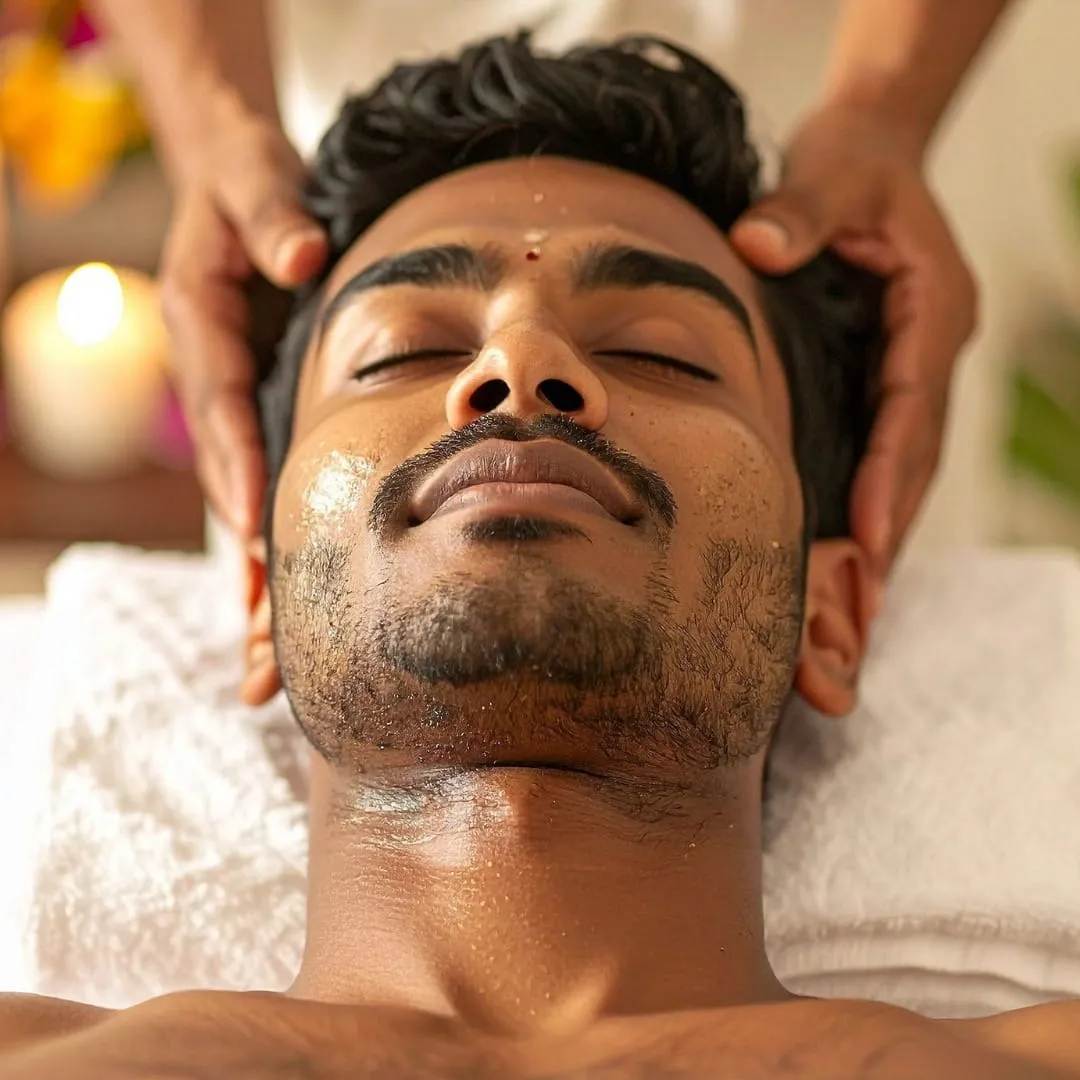
WE DO NOT ASK YOU TO MEDITATE YOUR WAY OUT OF THIS.
Wellness culture often blames patients for not 'managing' their stress. Chronic anxiety is a clinical condition. We treat it as one.
THE QUICK ANSWER
Ayurvedic stress and anxiety treatment in Dubai, in one paragraph.
Ayurvedic treatment for chronic stress, anxiety, and burnout in Dubai is a 3 to 6-month structured medical programme combining Shirodhara (continuous warm medicated oil therapy on the forehead, the classical treatment for nervous-system disorders), Abhyanga (full-body warm oil therapy), dosha-specific herbal medicines (typically including Ashwagandha, Brahmi, Jatamansi, and Shankhapushpi), individualised dietary regulation, and lifestyle protocols addressing sleep, screen patterns, and daily rhythm. At Vedara Care Polyclinic in Jumeirah Village Circle (JVC), Dubai — next to Circle Mall — programmes work alongside psychiatry and psychotherapy where appropriate, never as a replacement. Realistic outcomes: sleep improvement within 2-4 weeks for most patients; baseline anxiety reduction over 8-16 weeks. Initial consultations start from AED 450.
Medically reviewed by Dr. [Lead Ayurvedic Physician], BAMS, MD (Ayurveda), DHA-Licensed 2509266· Last updated May 2026
Chronic stress and anxiety are not the same thing — and the difference matters for treatment.
Modern medicine and classical Ayurveda agree on this much: chronic stress and anxiety are distinct overlapping conditions. They are also biological — not character flaws, not failures to 'manage life better,' nor problems that breathing apps were designed to fix.
Chronic stress is a sustained activation of the body's stress response (the hypothalamic-pituitary-adrenal axis) beyond what is healthy. It produces elevated cortisol, disrupted sleep, impaired digestion, weakened immunity, and over time, structural changes to the nervous system itself. Chronic stress is the body adapting — poorly — to demands that exceed its recovery capacity. It is reversible with structured intervention.
Anxiety is more complex. It includes generalised anxiety disorder (GAD), panic disorder, social anxiety, and various specific anxiety patterns. While anxiety has stress response components, it also involves changes to neurotransmitter systems (GABA, serotonin, norepinephrine) and cognitive patterns that operate somewhat independently of external stress. Severe anxiety often requires medication — and that medication is sometimes a clinical necessity, not a failure of 'natural' approaches.
Burnout — increasingly common in Dubai's high-performance professional environment — is a specific syndrome involving exhaustion, cynicism, and reduced efficacy. It is closer to chronic stress than to anxiety, but has its own treatment patterns.
Ayurvedic treatment addresses all three — but addresses them as the distinct conditions they are. The 6-month programme for chronic stress is different from the programme for panic disorder. Identifying which pattern is primary is the first step at our JVC clinic.
"The patients who get the most relief from our programmes are also the ones who were treated as having a real condition, not a personality problem."

Five distinct patterns — different treatment for each.
The single biggest mistake in alternative medicine for mental health is treating "stress and anxiety" as one condition with one solution. At our JVC clinic, your specific pattern determines your treatment.
Chronic Stress (Cortisol-Dominant)
Often high-performance professionals
Ayurvedic emphasis for this type:
Generalised Anxiety (Vata-Dominant)
Often chronic worriers; agitated patterns
Ayurvedic emphasis for this type:
Burnout (Exhaustion-Dominant)
Often care-givers or secondary trauma populations
Ayurvedic emphasis for this type:
Panic and Acute Anxiety Episodes
Often Vata-Pitta patterns
Ayurvedic emphasis for this type:
Post-Trauma Stress Responses
Complex patterns requiring integrated care
Ayurvedic emphasis for this type:
Most patients have a primary pattern with secondary features — chronic stress with sleep anxiety, burnout with mild generalised anxiety, etc. Pattern identification at consultation is what allows the protocol to actually work. Generic 'Ayurveda for anxiety' approaches address all patterns identically and produce inconsistent outcomes.
Ayurvedic treatment is one component of integrated mental health care — not a replacement for the others.
If You Are on Antidepressants or Anxiolytics
Many of our stress and anxiety patients are on SSRIs (sertraline, escitalopram), SNRIs, benzodiazepines, or beta-blockers — prescribed by their psychiatrist or GP. Ayurvedic treatment is compatible with these medications. We never ask you to stop them. Medication changes are made by your prescribing physician based on bloodwork and clinical progress, never based on Ayurvedic recommendations. We coordinate with your prescriber throughout.
If You Are in Therapy
Therapy — particularly CBT, DBT, trauma-informed therapy, or psychoanalysis — addresses cognitive patterns, beliefs, and emotional processing that Ayurveda cannot directly access. Many of our most successful patients combine Ayurvedic nervous-system restoration with ongoing therapy. The two approaches work on different mechanisms — Ayurveda on the biological substrate, therapy on the cognitive and emotional layer.
If You Have Not Yet Engaged Either
For mild-to-moderate chronic stress and anxiety without trauma history, structured Ayurvedic treatment alone is often sufficient. For moderate-to-severe anxiety, panic disorder, OCD, PTSD, or trauma-related patterns, we will recommend you also engage with a psychiatrist or therapist. Mental health is one of the few areas where doing only one thing is rarely the strongest path.
We are not 'anti-psychiatry,' we are not 'anti-therapy,' we are not 'anti-medication.' We are integrative — and we are honest about what our work can and cannot do. For most patients with chronic stress and anxiety in Dubai, the strongest outcomes come from combining approaches strategically.
Ayurvedic treatment of nervous-system disorders has four pillars.
Shirodhara and Nervous System Therapies
Internal Medicines for Nervous System Restoration
Dietary Regulation for Nervous System Health
Lifestyle, Sleep & Daily Rhythm Protocols
WHAT TO EXPECT
What three to six months of Ayurvedic stress and anxiety treatment at our JVC clinic looks like.
A representative protocol for chronic stress with secondary generalised anxiety. Your specific plan varies based on pattern, severity, and concurrent psychiatric or therapeutic care.
Assessment & Foundation
- 60-minute consultation with BAMS-qualified physician at our JVC clinic
- Detailed history including stress patterns, anxiety, sleep, and current medications
- Pulse diagnosis, dosha assessment, and pattern classification
- Coordination with your psychiatrist or therapist (with consent) if applicable
- Initial herbal medicine protocol begins; sleep and daily rhythm baseline established
- First Shirodhara session at end of month; weekly Abhyanga sessions begin
Expected outcomes: Clear pattern diagnosis, baseline established, treatment plan signed off, initial sleep improvement often visible.
Intensive Shirodhara & Active Treatment
- 7-14 session Shirodhara course (typically 2-3 sessions per week)
- Continued weekly Abhyanga
- Refined herbal protocol based on initial response
- Sleep protocol fully implemented; dietary changes deepened
- Daily rhythm protocols established; mid-month doctor review
Expected outcomes: Substantial sleep improvement for most patients, reduced baseline reactivity, improved daily energy regulation.
Continued Active Treatment
- Mid-programme comprehensive review; refined herbal medicines based on response
- Maintenance Shirodhara (weekly or fortnightly); continued Abhyanga
- Lifestyle protocols becoming sustained habits
- Coordination with psychiatrist if medication adjustments are being considered
Expected outcomes: For chronic stress patients, often substantial improvement — programme may complete here. For anxiety and burnout, continued work needed.
Consolidation
- Reduced clinic visits (every 2 weeks)
- Possible introduction of short Panchakarma (5-7 days) for deep restoration
- Continued internal medicines; long-term lifestyle plan finalising
Expected outcomes: Continued improvement, lifestyle changes feeling natural, possible population medication review with your prescriber.
Refinement
- Maintenance doses of herbal medicines; visits every 2-3 weeks
- Stress and sleep stable for most patients
- Long-term plan documented
Expected outcomes: Baseline anxiety visibly reduced, sleep stable, daily functioning meaningfully improved.
Discharge & Long-Term Plan
- Final comprehensive review; transition to maintenance protocol
- 3-month home herbal course; long-term lifestyle and rhythm plan documented
- 3-month, 6-month, and 12-month follow-up appointments scheduled
- Coordinated handover summary to psychiatrist or therapist if applicable
Expected outcomes: Substantial sustained improvement, clear maintenance protocol, ongoing care plan with appropriate other providers.
Many chronic stress patients complete the programme at month 3 with sustained improvement. Patients with generalised anxiety, burnout, or post-trauma patterns typically need the full 6 months. Patients with severe or long-standing anxiety may need 9-12 months. Your plan is reassessed monthly and adjusted based on response.
THE FOUNDATIONAL TREATMENT
For most patients, sleep changes first. Everything else changes more slowly.
If you have chronic stress or anxiety, you almost certainly have disturbed sleep. The two are biologically linked — poor sleep increases anxiety and chronic stress hormones; chronic anxiety disrupts sleep. The cycle is well-established and is what makes the condition so persistent.
At our JVC clinic, we treat sleep as the foundation — not as a separate condition to address later. The reason is clinical: when sleep improves, the entire nervous-system context for healing changes. Cortisol patterns normalise. Cognitive function returns. The capacity to make other changes (dietary, lifestyle, behavioural) increases.
Most of our patients see meaningful sleep improvement within 2-4 weeks of starting treatment. This is the fastest-changing aspect of stress and anxiety treatment, and it is what gives patients the felt sense that the programme is working — which sustains their adherence to the longer-changing aspects.
Why Shirodhara Specifically Helps Sleep
Shirodhara has measurable effects on the parasympathetic nervous system, melatonin signalling, and sleep architecture. Most patients describe sleep changes after 3-5 sessions — often the first nights of deep sleep in months or years. This is not placebo and is not 'relaxation.' It is a clinical effect on the nervous-system substrate of sleep.
When we refer you elsewhere first — or alongside us.
If you are having thoughts of hurting yourself or others, please contact emergency services (999) or the 24/7 Crisis helpline (800 4673) immediately. Ayurvedic treatment is not for psychiatric crises.
Refer to urgent psychiatric care first if you experience:
- Active suicidal ideation or self-harm
- Symptoms suggesting psychosis (hearing voices, paranoid thinking, delusions)
- Severe panic disorder with daily attacks
- Severe OCD with significant functional impairment
- Active substance addiction
- Severe depression with functional impairment
When Ayurveda is supportive but not primary:
- You have a confirmed psychiatric diagnosis on medication (alongside psychiatry; not instead)
- You are in trauma/re-trauma therapy (alongside the therapy)
- You have major depression (alongside psychiatry — Ayurveda for chronic stress and anxiety, not depression as primary)
- You have bipolar disorder (psychiatry leads; Ayurveda supportive)
- You have severe insomnia with possible sleep apnoea (sleep medicine evaluation first)
- You support ADHD or autism (specialist diagnosis useful; Ayurveda support for)
Mental health is one of the few areas where doing only one thing is rarely the strongest path. Your Ayurvedic doctors at our JVC clinic refer to psychiatry and psychotherapy when appropriate, and our most successful patients are those engaged in multiple modalities working together.
Real stress & anxiety outcomes.
"I had not slept through the night for eighteen months. After the Shirodhara course in month two, I sleep seven hours. Everything else is slowly following."
Sarah G.
Chronic Stress with Insomnia · 6-month programme · JVC District 13 · February 2026
"My psychiatrist agreed to a slow taper of my sertraline only after I had completed three months at Vedara. I am now on a lower dose with better baseline calm than at the higher dose."
James M.
Generalised Anxiety · 6-month integrated programme · Al Barsha South · January 2026
"Burnout after eight years of running my business. Three months at Vedara gave me what twelve weeks of therapy alone had not — my nervous system back."
Priya S.
Professional Burnout · 4-month programme · Dubai South · March 2026
4.9
stars on Google
142
stress and anxiety reviews
88%
reported significant sleep improvement
72%
reported meaningful baseline anxiety reduction
What Ayurvedic stress and anxiety treatment at our JVC clinic costs.
Indicative pricing for our three most-common programmes. Final pricing depends on pattern, severity, and protocol intensity confirmed at consultation.
Initial Assessment
- Comprehensive consultation with BAMS-qualified physician
- Detailed history including stress and anxiety patterns, sleep, current medications
- Pattern identification (which of the five clinical types)
- Pulse diagnosis and dosha assessment
- Written treatment plan with realistic expectations
- Full programme pricing in writing
First step for every stress and anxiety patient — required before any treatment programme
Standard 3-month Stress Programme
- All Initial Assessment components
- 7-14 Shirodhara sessions during active phase (months 1-2)
- Weekly Abhyanga sessions (months 1-2)
- 3 months of pattern-specific herbal medicines
- Sleep, dietary, and lifestyle protocols
- Monthly doctor reviews
- 3-month follow-up after programme
Chronic stress, mild-to-moderate anxiety, burnout, sleep-anxiety patterns. Many patients complete treatment with this programme.
Comprehensive 6-month Anxiety Programme
- All Standard Programme components
- Extended Shirodhara protocols (often 14-21 sessions total)
- Possible Panchakarma component (typically month 3-4)
- Coordination with psychiatrist or therapist throughout
- Extended internal medicines with monthly adjustments
- Comprehensive 6-month follow-up
Generalised anxiety disorder, post-trauma stress patterns, complex anxiety with concurrent psychiatric care
Insurance direct-billing available with seven major insurers. Mental health coverage in Dubai insurance is increasing. WhatsApp us your insurance card before booking to confirm coverage.
What patients ask before starting Ayurvedic stress and anxiety treatment.
For Shirodhara specifically, see the treatment page. For sleep-specific issues, our insomnia condition page covers chronic insomnia in depth.
Ask the Clinical TeamVISIT US
Where stress and anxiety treatment happens at Vedara Care.
Al Barsha South Fourth, Binghatti Azure, Shop -4,
Jumeraih Village Circle (JVC) Dubai
Our JVC clinic has private treatment rooms designed for nervous-system restoration — gentle lighting, sound insulation, temperature-controlled comfort. We allow extended time for consultations and never rush mental health appointments. Female doctors available on request. Walking distance from Circle Mall, easy access from JVC Districts 10, 11, 12, 13, JVT, and Al Barsha South.
THE NEXT STEP
Chronic stress is treatable. The first step is being treated as if you have a condition.
If you have been told to 'manage your stress better,' practice mindfulness, or 'just try yoga' — without anyone actually looking what is happening in your nervous system — that major error is part of why chronic stress and anxiety are so under-treated in Dubai. A 60-minute consultation at our JVC clinic is different. We listen to your specific pattern. We identify the clinical subtype. We provide a structured 3-6 month programme. And we coordinate with your psychiatrist or therapist if that is appropriate. Beginning with honest consultation.
Initial consultation from AED 450 · Walking distance from Circle Mall, JVC · Doctors available 7 days a week · Coordinated with psychiatry · Free clinic parking · Read about Shirodhara
EXPLORE FURTHER
Related pages.
Shirodhara in Dubai →
The signature Ayurvedic treatment for stress, anxiety, and sleep. Full protocol description, oils used, and what to expect.
Learn moreAbhyanga Massage in Dubai →
The foundation of deep relaxation therapy; essential for anxiety programmes to reduce Vata-related nervous system irritability.
Learn morePanchakarma in Dubai →
For severe or long-standing anxiety patterns, intensive Panchakarma over 14-21 days addresses systemic root patterns.
Learn moreOur Ayurveda Clinic in JVC →
The full picture of our Ayurveda department, doctors, and clinic conditions so you feel at home.
Learn more