Hair loss treatment in JVC. Every type of hair loss. Every gender. Honest expectations.
Specialist hair loss treatment at our Jumeirah Village Circle (JVC) clinic, walking distance from Circle Mall. DHA-licensed consultant dermatologists treating male pattern hair loss, female pattern hair loss, postnatal hair loss, alopecia areata, telogen effluvium, and scalp conditions. Comprehensive workup including hormonal evaluation, nutritional assessment, and trichoscopy. Realistic expectations: hair treatment requires months not weeks; most patients see meaningful improvement with structured intervention.
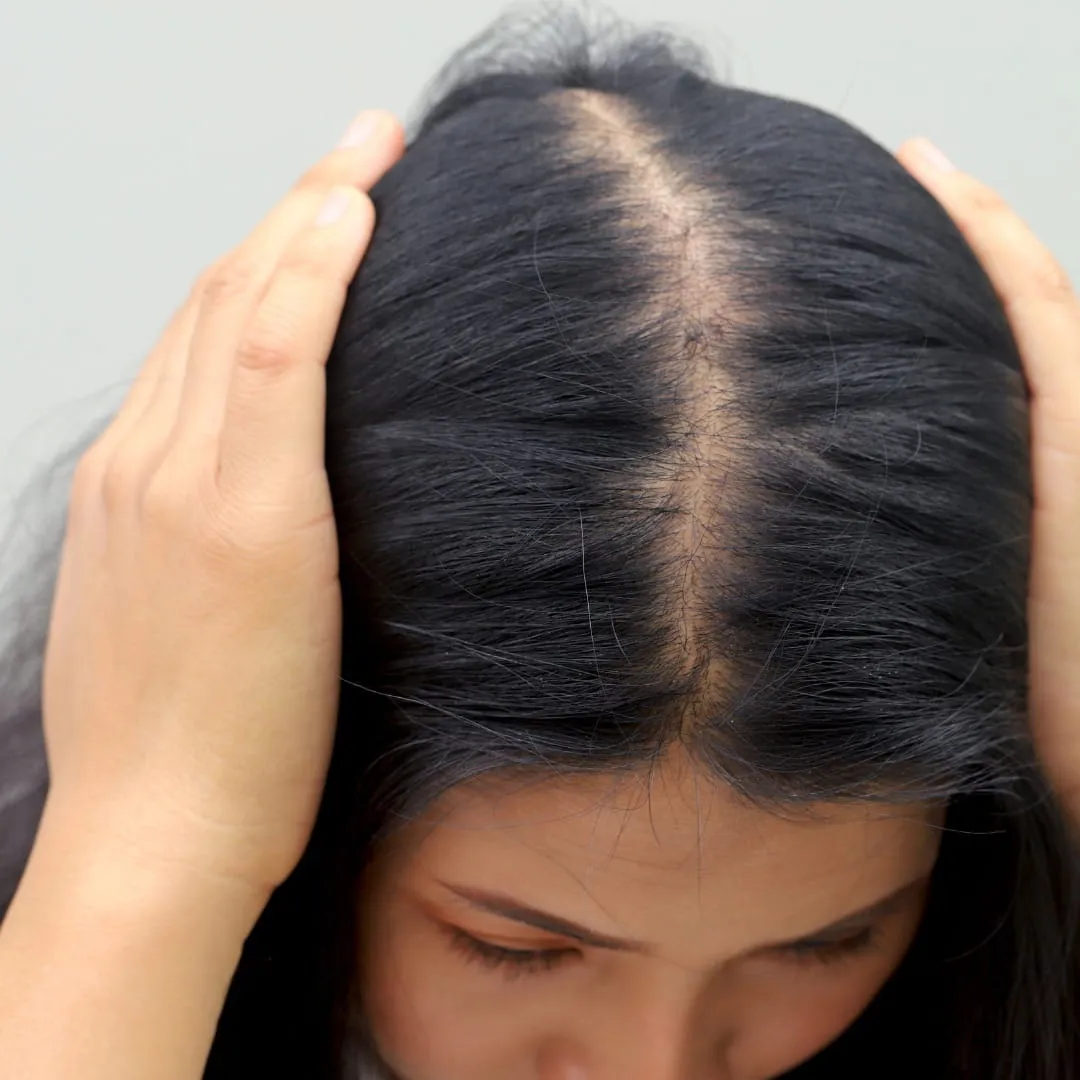
EARLY TREATMENT MATTERS
Hair loss is most responsive to treatment in early stages. Miniaturised follicles can often be restored; follicles inactive for many years are more difficult to restore. Earlier intervention produces better outcomes — but improvement is achievable at most stages.
THE QUICK ANSWER
Hair loss treatment at Vedara Care, in one paragraph.
Hair loss treatment at Vedara Care Polyclinic in Jumeirah Village Circle (JVC), Dubai — walking distance from Circle Mall — is comprehensive medical hair loss care delivered by DHA-licensed consultant dermatologists. We treat male pattern hair loss (androgenetic alopecia), female pattern hair loss, postnatal hair loss (telogen effluvium after childbirth), alopecia areata (autoimmune patchy hair loss), telogen effluvium from stress, illness, or nutritional causes, traction alopecia from tight hairstyles, and scalp conditions affecting hair growth. Treatment begins with comprehensive workup — detailed history, scalp examination, trichoscopy, hormonal evaluation, nutritional assessment, and blood work for underlying contributors. Evidence-based treatments include topical minoxidil, oral finasteride or dutasteride, hormonal treatments for female pattern hair loss, PRP (platelet-rich plasma) injections, hair mesotherapy with growth factors, scalp microneedling, and typically coordination with qualified hair transplant surgeons when appropriate. Meaningful results visible at 4–6 months with continued improvement at 12 months. Patients travel to our JVC clinic from across Dubai.
Medically reviewed by Lead Consultant Dermatologist, MD, DHA-Licensed 2509266 · Last updated June 2026
Why hair loss happens — and why early intervention matters.
Hair loss has multiple potential causes requiring different approaches. Understanding what is happening guides effective treatment selection.
The average adult has approximately 100,000 hair follicles on the scalp, with each follicle cycling through growth, transition, and resting phases continuously. Normal hair shedding involves losing 50–150 hairs per day as old hairs fall out and new ones grow. Hair loss becomes pathological when shedding exceeds new growth, or when follicles miniaturise, or when follicles stop producing hair altogether.
The major hair loss categories
Hair loss falls into several major categories with different mechanisms: androgenetic alopecia (pattern hair loss) — genetic and hormonal, affecting both men and women; telogen effluvium — diffuse shedding triggered by stress, illness, hormonal changes, or nutritional deficiencies; alopecia areata — autoimmune attack on hair follicles producing patchy hair loss; scarring alopecias — conditions causing permanent follicle destruction; traction alopecia — mechanical damage from tight hairstyles. Accurate diagnosis is essential because treatments differ substantially.
The follicle miniaturisation process
In pattern hair loss (androgenetic alopecia), follicles gradually miniaturise rather than disappearing immediately. Normal terminal follicles progressively shrink under genetic and hormonal influences, producing increasingly thin and short hairs over years. Eventually some follicles produce only vellus hairs or become dormant. Critical implication: miniaturised follicles can often be restored with appropriate treatment; completely dormant follicles for many years are more difficult to restore. This is why early intervention produces better outcomes.
Why female hair loss is often underdiagnosed
Female pattern hair loss affects a significant proportion of women — particularly post-menopause but also younger women. It presents differently from male hair loss: diffuse thinning across the central scalp with preservation of the frontal hairline (the 'Christmas tree pattern'), rather than the receding hairline typical in men. Female hair loss often requires comprehensive hormonal workup (thyroid, androgens, vitamin D, iron, ferritin) as part of evaluation.
The Dubai-specific considerations
Several factors common in Dubai populations affect hair: vitamin D deficiency is extremely common despite the climate (due to indoor lifestyle and sun protection); expatriate stress contributes to telogen effluvium; hard water affects hair quality in some areas; frequent chemical treatments and tight hairstyles contribute to specific hair loss patterns. Postnatal hair loss is a substantial demographic given Dubai's birth rate — the expected pattern typically resolves over 6–12 months.
Why patience is essential
Hair grows approximately 1cm per month. Typical treatment timelines: initial reduction in shedding visible at 6–8 weeks; beginning of new growth visible at 3–4 months; meaningful visible improvement at 6 months; maximum benefit from a treatment regimen at 12–18 months. Patients who expect faster results often discontinue effective treatment prematurely. Patient education about realistic timelines is essential for treatment success.
"Hair loss treatment is one of the areas where patient expectations and physiological reality often diverge. The hair will grow back at its own pace — our role is to provide the conditions and treatments that maximise that growth."
HAIR GROWTH CYCLE
85%
Anagen
Active growth phase, 2–7 years
3%
Catagen
Transition phase, 2–3 weeks
12%
Telogen
Resting / shedding phase, 3 months
The specific hair loss conditions we treat at our JVC clinic.
Different hair loss types require different treatment approaches. Accurate diagnosis guides effective treatment selection.
Male Pattern Hair Loss
Androgenetic Alopecia
TYPICAL PRESENTATION:
- Receding temples and crown thinning; progressive over years
Female Pattern Hair Loss
Often Underdiagnosed
TYPICAL PRESENTATION:
- Diffuse thinning across crown and central scalp with preserved hairline
Postnatal Hair Loss
Postpartum Telogen Effluvium
TYPICAL PRESENTATION:
- Diffuse postpartum hair shedding; 2–6 months after childbirth
Telogen Effluvium
Stress, Illness, Nutritional
TYPICAL PRESENTATION:
- Diffuse increased shedding following identifiable trigger event
Alopecia Areata
Autoimmune
TYPICAL PRESENTATION:
- Discrete round patches of complete hair loss with sharp borders
Traction Alopecia
Mechanical
TYPICAL PRESENTATION:
- Hair loss along frontal hairline or specific traction patterns
Scarring Alopecias
Cicatricial Alopecia
TYPICAL PRESENTATION:
- Progressive hair loss with scarring, inflammation, specific patterns depending on type
Diffuse Hair Thinning
Multiple Contributors
TYPICAL PRESENTATION:
- Overall reduced hair density without specific pattern — thinner hair overall
Why hair loss requires investigation before treatment.
Effective treatment depends on accurate diagnosis. Many hair loss clinics prescribe generic treatments without proper workup; this often produces suboptimal outcomes.
"Hair loss has multiple potential causes requiring different treatments. Comprehensive workup identifies the specific contributors in your situation — guiding treatment that addresses actual causes rather than generic intervention."
Detailed history
Initial consultation includes detailed history: timeline of hair loss onset and progression, pattern of shedding versus thinning, family history; detailed medical history including thyroid and autoimmune conditions, recent illnesses or surgery, medications and supplements, nutritional patterns, stress patterns, hair care practices, previous treatments tried, and goals for treatment. Patterns in history often suggest the underlying type of hair loss.
Scalp and hair examination
Physical examination assesses: pattern of hair loss, scalp inflammation or scarring, hair shaft quality (thickness, fragility, texture changes), and pull test for active shedding. Trichoscopy — dermoscopic examination of scalp and hair — provides additional diagnostic information not visible to the unaided eye, including follicle size variation, scalp blood vessel patterns, and hair shaft variations.
Blood work — usually essential
Most hair loss patients benefit from blood work investigating: thyroid function (TSH, T3, T4), ferritin and iron studies, vitamin D, vitamin B12, zinc; for women: androgens (testosterone, DHEAS, prolactin), sex hormone binding globulin; full blood count; inflammatory markers if indicated. Identified deficiencies or imbalances guide treatment selection — sometimes the actual cause of hair loss is fully correctable.
Specific tests for specific situations
Additional testing may be indicated: hormonal workup for women suggesting PCOS; thyroid antibodies if autoimmune thyroid suspected; specific tests for alopecia areata or scarring alopecias if suspected; scalp biopsy if scarring alopecia is suspected in specific situations; genetic testing is rare but available for specific clinical situations.
Photography for monitoring
Standardised photography at baseline allows objective monitoring of treatment response. Many patients cannot reliably assess improvement without photographic comparison. Photography at baseline, 3 months, 6 months, and annually provides objective treatment monitoring. We use standardised protocols so your results are accurately tracked.
Why this workup matters
Generic hair loss treatment without workup often fails because underlying contributors are not identified. We invest in proper diagnosis because it produces better outcomes.
WORKUP PROTOCOL
For most hair loss patients:
Additional for specific situations:
Why we include this: Why we include this: Hair loss treatment without workup often fails because underlying contributors are not identified. We invest in proper diagnosis because it produces better outcomes.
Evidence-based hair loss treatments we offer.
Multiple effective treatments exist. Selection depends on hair loss type, severity, patient preferences, and contributing factors identified during workup.
Topical Minoxidil
Foundational First-Line Treatment
BEST FOR:
- BEST FOR: Male pattern, female pattern; most patients as foundational treatment
Oral Finasteride / Dutasteride
For Male Pattern Hair Loss
BEST FOR:
- BEST FOR: Male pattern hair loss in adult men
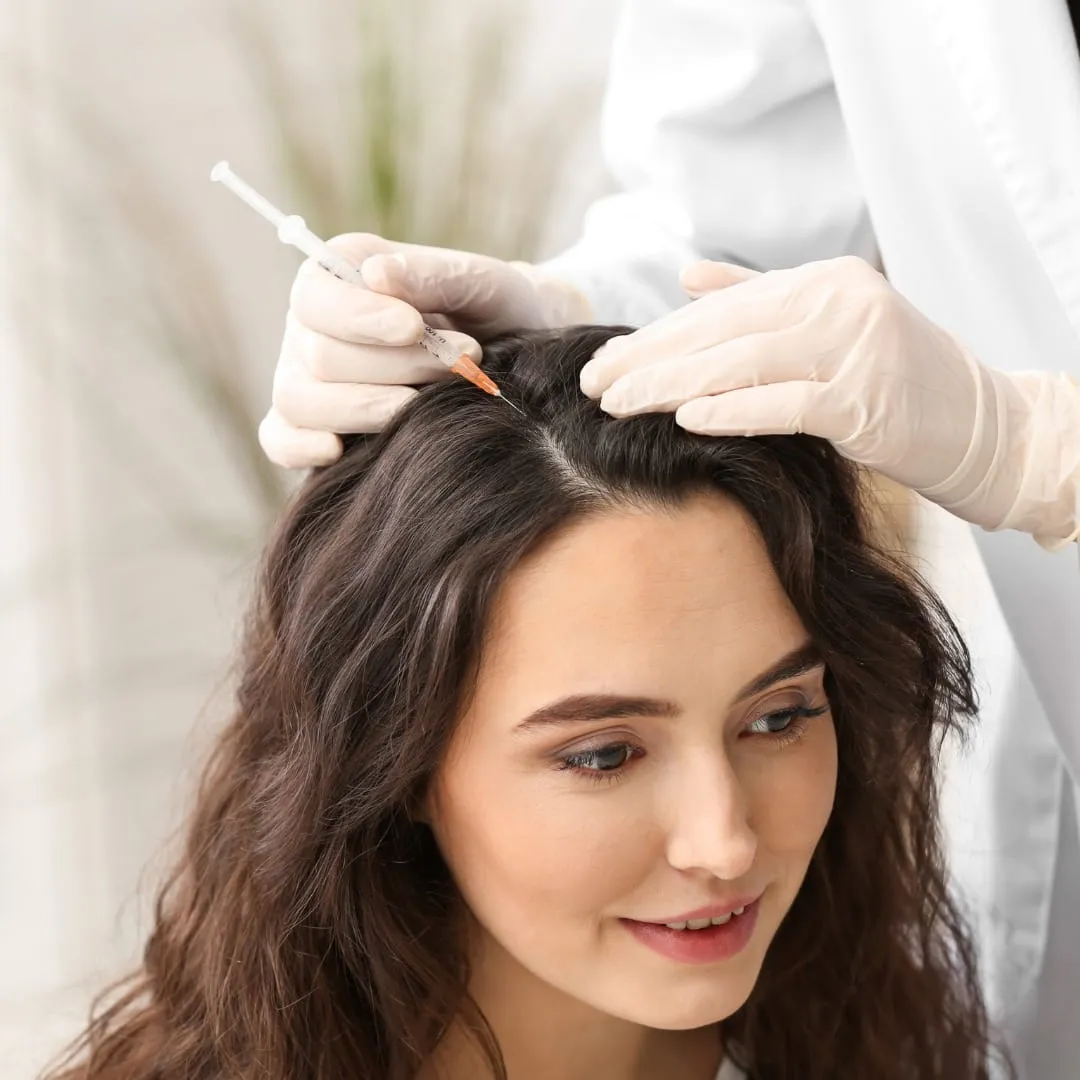
PRP Injections
Platelet-Rich Plasma
BEST FOR:
- BEST FOR: Many hair loss types, often as adjunct to topical treatment
Hair Mesotherapy
Growth Factor Cocktails
BEST FOR:
- BEST FOR: Diffuse thinning; adjunct to other treatments
Hormonal Treatment
For Female Pattern
BEST FOR:
- BEST FOR: Female pattern hair loss with hormonal contributors
Hair Transplant Coordination
Relevant for Appropriate Patients
BEST FOR:
- BEST FOR: Advanced pattern hair loss, stable hair loss, appropriate donor area
How long does hair loss treatment take to show results?
Hair grows slowly. Treatment results require months not weeks. Honest realistic expectations help you commit to treatment.
Initial Stabilisation
Months 0–2
Treatment begins: underlying contributors addressed (nutritional deficiencies, thyroid issues, etc.). Some patients experience temporary increase in shedding during this phase — this is normal and indicates treatment is affecting follicles. Visible hair growth not yet apparent. Reduction in active shedding may be first noticeable change.
Early Growth
Months 3–6
New hair follicles beginning. Hair often appears as fine vellus hairs initially before maturing. Photography comparison at month 3 and 6 typically shows changes patients may not have noticed in mirror. Patience is essential — visible improvement is happening but may be subtle. Most premature treatment discontinuation incorrectly happens during this phase.
Visible Improvement
Months 6–12
Meaningful visible improvement for most patients. New hair growth maturing to terminal hair quality. Increased density visible. Patient confidence often substantially improving. By month 12, most treatment effect from a regimen is apparent. Photography at this stage often shows dramatic comparison to baseline.
Long-Term Maintenance
Month 12 onwards
Long-term maintenance to sustain improvement. Most pattern hair loss treatments require sustained use to maintain results. Adjustments to regimen based on response. Periodic monitoring with photography. Some patients continue improving beyond 12 months; most are at maximum benefit from current regimen by this point.
These timelines describe typical patterns. Individual variation occurs based on hair loss type, severity at baseline, treatment intensity, adherence to regimen, and individual response. The most important behaviour for treatment success is patience — continuing treatment through Phase 1 and 2 when results are not yet visible is essential.
Real hair loss recoveries from our JVC clinic.
"“Female pattern hair loss developing in my early 40s — diffuse thinning that affected my confidence substantially. Multiple previous consultations had recommended only topical minoxidil without comprehensive workup. Vedara's approach was different: comprehensive blood work identifying vitamin D deficiency, low ferritin, and mild thyroid dysfunction; PCOS workup confirming hormonal contributors; combined treatment with topical minoxidil, oral spironolactone, nutritional supplementation, and PRP sessions. Significant improvement visible at 6 months, substantial improvement at 12 months. My hair density has improved noticeably; confidence has restored.”"
Female patient, 43
Female Pattern Hair Loss with Multiple Contributors · 12-Month Programme · Sports City · February 2026
"“Male pattern hair loss starting in my late 20s — concerned about progression. Vedara's consultation included detailed discussion of finasteride risks and benefits, allowing me to make an informed decision. Combined with topical minoxidil and PRP sessions every 6 months. Two years later, hair loss substantially stabilised — no further progression, with some restoration of frontal hairline. The honest discussion about long-term commitment helped me understand this as ongoing management rather than a quick fix.”"
Male patient, 31
Early Male Pattern Hair Loss · Ongoing Combined Treatment · Dubai Marina · January 2026
"“Postpartum hair loss after my second baby — significantly worse than after my first. Substantial shedding at 4 months postpartum affecting my mental health on top of everything else. Vedara's consultation reassured me this was expected telogen effluvium that would resolve; comprehensive workup ruled out other contributors; supportive treatment including PRP and topical minoxidil for several months. Hair recovery substantially complete by 10 months postpartum. The reassurance combined with active treatment made an enormous difference during a stressful time.”"
Female patient, 35
Postnatal Hair Loss · 10-Month Recovery Programme · JVC · March 2026
4.9★
on Google
300+
hair loss patients treated
Multi-modal
evidence-based treatment
DHA
licensed specialist team
Consultant dermatologists for hair loss treatment at our JVC clinic.
Hair loss treatment is delivered by our consultant dermatologists — DHA-licensed specialists with substantial training in trichology. Female and male dermatologists available. Multiple languages including Arabic, English, Hindi, Urdu.

Dr. Amira Hassan, MD
Consultant dermatologist with extensive expertise in female pattern hair loss, hormonal hair disorders, and procedural hair restoration.

Dr. Priya Menon, MD
Specialist in trichology with particular focus on autoimmune hair conditions, alopecia areata, and procedural hair treatments.

Dr. Khalid Al Mansoori, MD
Consultant dermatologist with focus on male pattern hair loss, early intervention strategies, and evidence-based pharmacological treatments.

Dr. Zara Patel, MD
Specialist with expertise in postnatal and stress-related hair loss, nutritional contributors, and comprehensive female hair loss workup.
What hair loss treatment at our JVC clinic costs.
Initial hair loss consultation with trichoscopy (60–75 minutes)
AED 650
Follow-up consultation
AED 350
Comprehensive blood work panel (hair loss workup)
From AED 450
Hormonal evaluation panel (women)
From AED 550
PRP hair treatment — single session
From AED 1,800
PRP hair treatment — 3-session package
From AED 4,500
PRP hair treatment — 4-session package
From AED 5,800
Hair mesotherapy — single session
From AED 900
Hair mesotherapy — 6-session package
From AED 4,800
Combined PRP + mesotherapy programme
From AED 7,500
Comprehensive 6-month hair loss programme (consultation + workup + treatments)
From AED 9,500
Topical and oral medication consultation and prescription
AED 350
Photographic monitoring visit
AED 150
Hair transplant referral consultation
AED 450
What patients ask about hair loss treatment.
For broader dermatology questions, see our dermatology clinic page
Ask Our Team on WhatsAppVISIT OUR JVC CLINIC
Walking distance from Circle Mall, Jumeirah Village Circle.
NEARBY LANDMARKS
- ✓Walking distance from Circle Mall
- ✓3 min from FIVE Jumeirah Village Hotel
- ✓5 min from JSS Private School
- ✓Free patient parking
DISTANCE FROM DUBAI COMMUNITIES
READY TO ADDRESS YOUR HAIR LOSS?
Early intervention. Comprehensive workup. Evidence-based treatment.
Whether you are experiencing pattern hair loss, postnatal hair loss, alopecia areata, diffuse thinning, or hair concerns with unclear cause — comprehensive specialist consultation is the right starting point. We provide thorough workup, evidence-based treatment matched to your specific type, realistic timeline expectations, and ongoing support throughout treatment. Same-week appointments typically available.
Initial consultation from AED 650 · Walking distance from Circle Mall, JVC · DHA-licensed consultant dermatologists · 300+ hair loss patients treated · Comprehensive workup approach · Female and male dermatologists · Insurance for medical hair loss workup
EXPLORE FURTHER
Related dermatology services
Dermatology Clinic
Our complete dermatology department — full medical and aesthetic services, team, comprehensive information.
Learn moreSkin Concern Navigation
For patients with skin concerns beyond hair loss — guidance hub for various dermatology concerns.
Learn moreAcne Treatment
For patients with both acne and hair loss (sometimes related, particularly in hormonal patients) — comprehensive acne treatment.
Learn moreBest Dermatologist Evidence
Credibility evidence for patients evaluating dermatology providers in JVC and across Dubai.
Learn more