Fractional CO2 Laser in JVC for Skin Resurfacing and Texture Renewal
If you've been researching ways to improve acne scarring, uneven texture, or early lines on your skin, you've probably come across fractional CO2 laser treatment more than once. It's one of the more established options in laser skin resurfacing, and it works by creating controlled micro-injuries in the skin that encourage the body's own repair and collagen-building process. At Vedara Care Polyclinic in Jumeirah Village Circle, fractional CO2 laser treatment is offered as part of a dermatology-led approach — meaning the decision to proceed, the settings used, and the number of sessions planned are all based on an in-person assessment of your skin, not a one-size-fits-all protocol. This page is here to help you understand what the treatment actually involves, who tends to benefit from it, what recovery realistically looks like, and what questions are worth asking before you book. Skin resurfacing results build gradually and vary from person to person, so we've tried to keep the expectations here honest rather than aspirational.
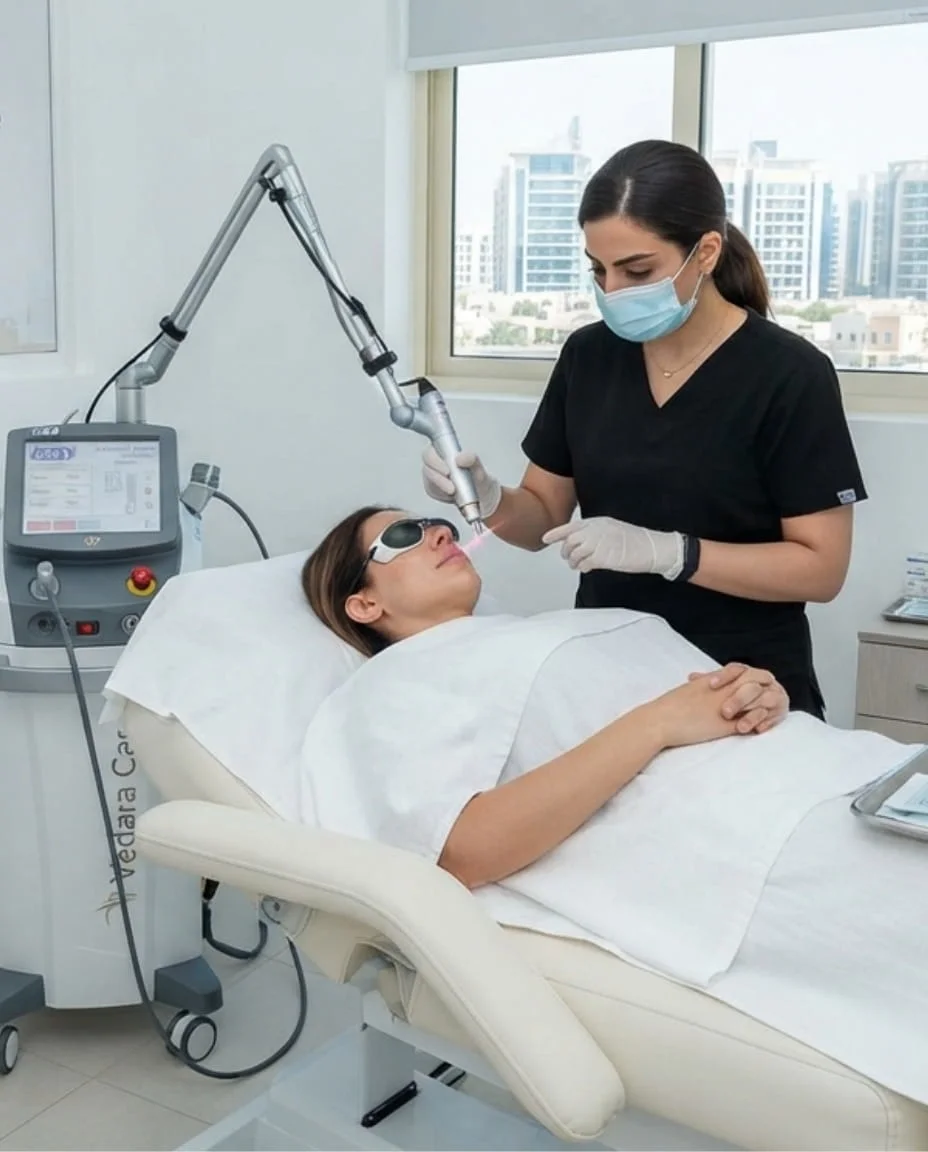
Fractional Resurfacing
This is not a marketing-style article but a semi-clinical resource — which is exactly why it's here. It exists to help you know what CO2 laser actually does, what it can and cannot achieve, and why settings should be matched to the individual, not the calendar.
THE QUICK ANSWER
Fractional CO2 laser treatment at Vedara Care, in one paragraph.
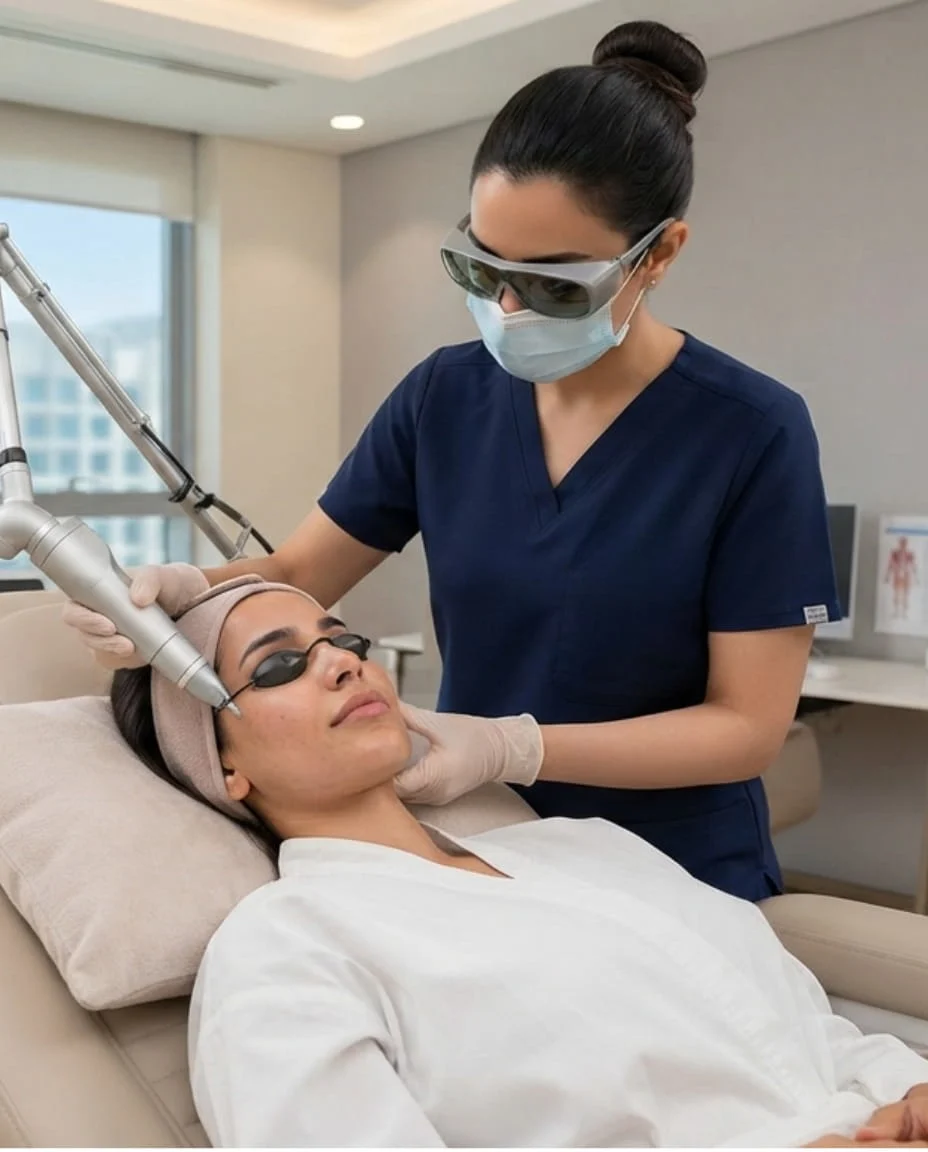
Fractional CO2 laser is a form of laser skin resurfacing that treats the skin in a grid-like pattern of tiny columns, leaving the surrounding tissue untouched to support faster healing. This "fractional" approach allows the laser to reach deeper skin layers to stimulate collagen remodelling while reducing the downtime associated with older, fully ablative CO2 lasers. It's commonly considered for acne scarring, uneven skin texture, fine lines, sun-damaged skin, and certain types of surgical or traumatic scarring. Though suitability depends on skin type, scar depth, and individual healing history. A dermatology assessment is used to determine whether the treatment is appropriate, what intensity setting is suitable, and how many sessions may be needed. Recovery can involve redness, swelling, and peeling that typically settles over one to two weeks, though this varies by treatment depth. Results develop gradually over several months as new collagen forms, and most patients need more than one session to see meaningful change.
Medically reviewed by: [Verified Dermatologist Name] DHA Licensed · Last updated: [Month Year]
CLINICAL APPLICATIONS
Skin Concerns We May Treat With Fractional CO2 Laser At Our JVC Clinic
1. Acne scars
Texture changes left behind after inflammatory acne Acne scarring — particularly rolling, boxcar, or shallow icepick-type scars — is one of the most common reasons patients ask about fractional laser treatment. The laser's ability to reach into the deeper dermis makes it a reasonable option for stimulating collagen in areas where scarring has created textural depressions. Not all acne scars respond the same way: shallow to moderate scarring tends to show more visible improvement than very deep, tethered scars, which sometimes need a combination approach.
Realistic expectation: Fractional CO2 laser can visibly soften the appearance of many acne scars, but it does not erase them completely, and multiple sessions are usually required.
2. Uneven skin texture
Rough, uneven, or "orange-peel" surface quality Skin texture concerns unrelated to acne — such as roughness from sun exposure, ageing, or general skin turnover changes — can also be assessed for fractional resurfacing. The controlled micro-injury pattern encourages smoother, more even-textured skin as healing progresses.
Realistic expectation: Pores may appear less prominent, though their underlying size is not permanently altered.
3. Fine lines and early skin ageing
Superficial lines from sun exposure, expression, or natural ageing Fine lines, particularly around the mouth, eyes, and forehead, can soften with fractional CO2 laser as collagen production increases. It's generally more suited to fine, superficial lines than to deep folds or significant volume loss, which may need a different approach entirely.
Realistic expectation: Softening of fine lines is achievable for many patients, but the treatment does not replace volume-restoring options for deeper folds.
4. Selected pigmentation concerns
Certain types of sun-related or textural pigmentation Some forms of pigmentation — particularly those tied to sun damage and textural irregularity — may improve with fractional CO2 laser. However, pigmentation is a broad category, and certain types (such as melasma) can actually worsen with heat-based laser treatment in some individuals.
Realistic expectation: Not all pigmentation is suitable for CO2 laser, and a dermatologist will assess your specific pigment type before recommending it.
5. Sun-damaged skin
Changes from cumulative UV exposure over time Years of sun exposure can leave skin with a combination of texture irregularity, fine lines, and uneven tone. Fractional CO2 laser addresses several of these concerns simultaneously by prompting a broad resurfacing response.
Realistic expectation: Improvement is often noticeable but gradual, and ongoing sun protection is essential to maintain results.
6. Selected surgical or traumatic scars
Scarring from prior surgery, injury, or skin trauma Certain surgical or traumatic scars — particularly those that are raised, textured, or discoloured — may be considered for fractional resurfacing once fully healed. Scar age, depth, and location all factor into whether this is appropriate.
Realistic expectation: Scar softening and blending with surrounding skin is possible, but complete scar removal should not be expected.
7. Enlarged-looking pores
Pores that appear more visible due to skin laxity or oil production While pore size is largely genetic, the appearance of enlarged pores can be softened as skin texture and mild laxity improve following treatment.
Realistic expectation: Pores may appear less prominent, though their underlying size is not permanently altered.
8. Other suitable skin texture concerns
Additional textural irregularities assessed case-by-case Some patients have skin-texture concerns that don't fit neatly into a single category — a combination of mild scarring, roughness, and dullness, for example. These are assessed individually during consultation.
Realistic expectation: Suitability and expected outcome vary significantly from person to person, which is why an in-person assessment matters more than a general description.
How Personalised Fractional CO2 Laser Treatment Differs From a Standard Facial
Individualised treatment settings
Fractional CO2 laser is an adjustable medical device, not a fixed protocol. Energy levels, density, and depth are set based on your skin type, the concern being treated, and how much downtime you can accommodate.
Fractional treatment zones
Rather than treating the entire skin surface, the laser creates a pattern of microscopic treatment columns, leaving untouched skin between them. This is what allows for faster healing compared with older, fully ablative lasers.
Recovery considerations
Downtime is planned around your settings. Lighter settings may involve a few days of redness; deeper settings involve a longer, more involved recovery. This is discussed before treatment, not after.
Skin-type considerations
Skin tone and type influence both the settings used and the risk of post-treatment pigmentation changes. This is one of the more important parts of a pre-treatment assessment.
Gradual collagen remodelling
Results are not immediate. Collagen remodelling continues for months after a session, which is why final results are typically assessed at three to six months.
Realistic expectations
A personalised plan means being told honestly what the treatment can and cannot do for your specific skin — including when it isn't the right fit.
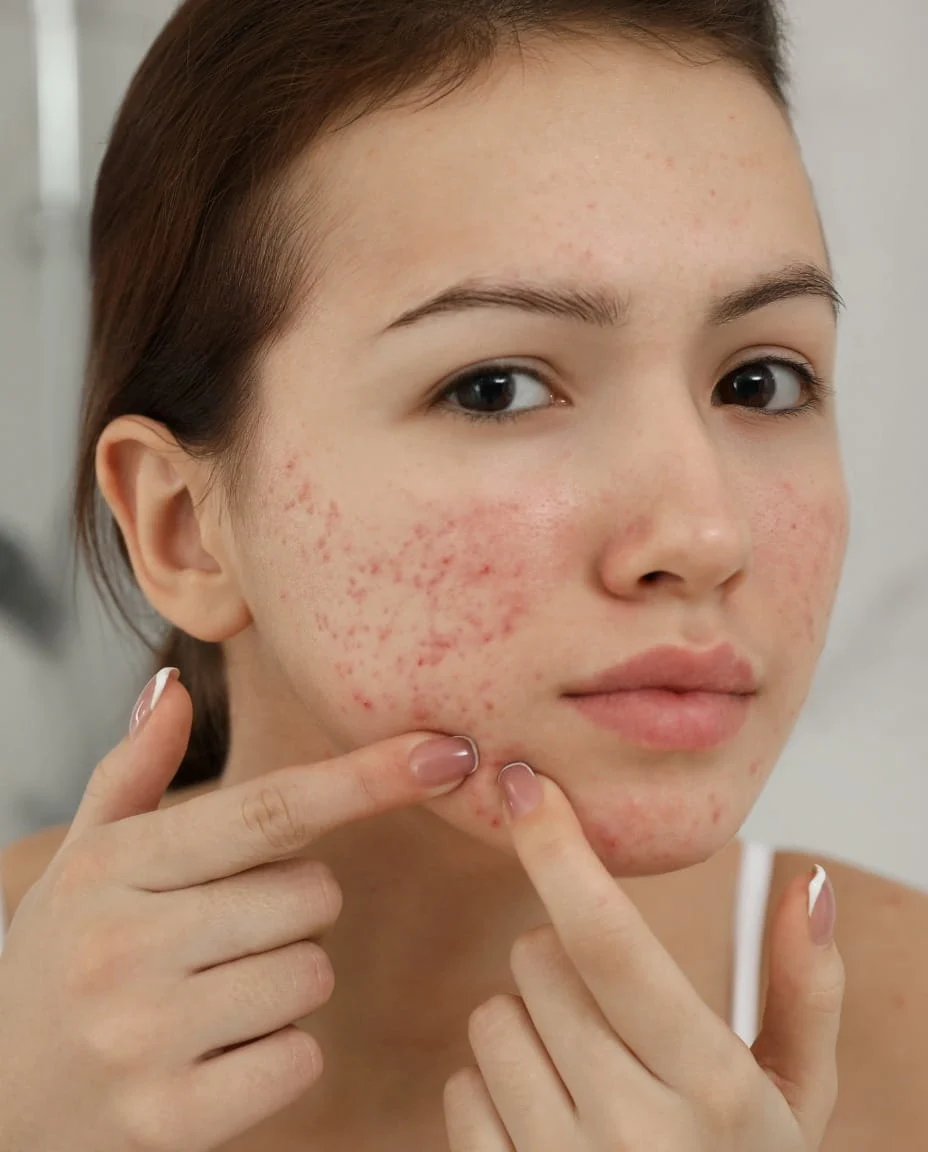
TREATMENT PROCESS
What Happens During a Fractional CO2 Laser Session?
1 — Assessment
Your first visit involves a detailed skin assessment, a review of your medical history, and a conversation about your goals and concerns. This is also when suitability, expected downtime, and an approximate number of sessions are discussed.
2 — Preparation
You'll typically be advised on sun protection in the weeks before treatment, along with any skincare adjustments — for example, pausing certain active ingredients. Some patients are given specific pre-treatment instructions depending on their skin type and treatment depth.
3 — Laser Treatment
A topical numbing cream is usually applied before the session to improve comfort. During treatment, the laser is passed over the treatment area in a controlled, systematic way. Patients often describe the sensation as warmth or mild stinging rather than sharp pain, though this varies by individual and by settings used.
4 — Recovery and Aftercare
Immediately after treatment, skin is typically red and warm, similar to a sunburn. You'll be given specific aftercare instructions covering cleansing, moisturising, and sun protection, along with guidance on when to follow up.
Fractional CO2 Laser Recovery: What Should You Expect?
First 24 hours
Redness, warmth, and mild swelling are common, similar in appearance to sunburn. Skin may feel tight or sensitive.
First several days
Peeling, dryness, and in some cases light crusting can occur, particularly with deeper settings. Skin often looks pink or slightly bronzed as the surface renews.
Following weeks
Redness typically fades and skin texture starts to feel smoother, though this timeline depends on the intensity of the treatment used.
Longer-term
Collagen remodelling continues beneath the surface for several months, meaning texture and scar improvement can continue to develop well after visible redness has resolved.
Throughout recovery, strict sun protection and a gentle, fragrance-free skincare routine are important. Temporary pigmentation changes — either lighter or darker patches — can occur, particularly in deeper skin tones, and are discussed as part of the consent process. If you notice signs of infection, unusual pain, or pigmentation changes that concern you, contact the clinic rather than waiting for your next scheduled visit. Recovery timelines are general guidance, not a fixed promise — actual healing depends on your skin, the settings used, and how well aftercare instructions are followed.
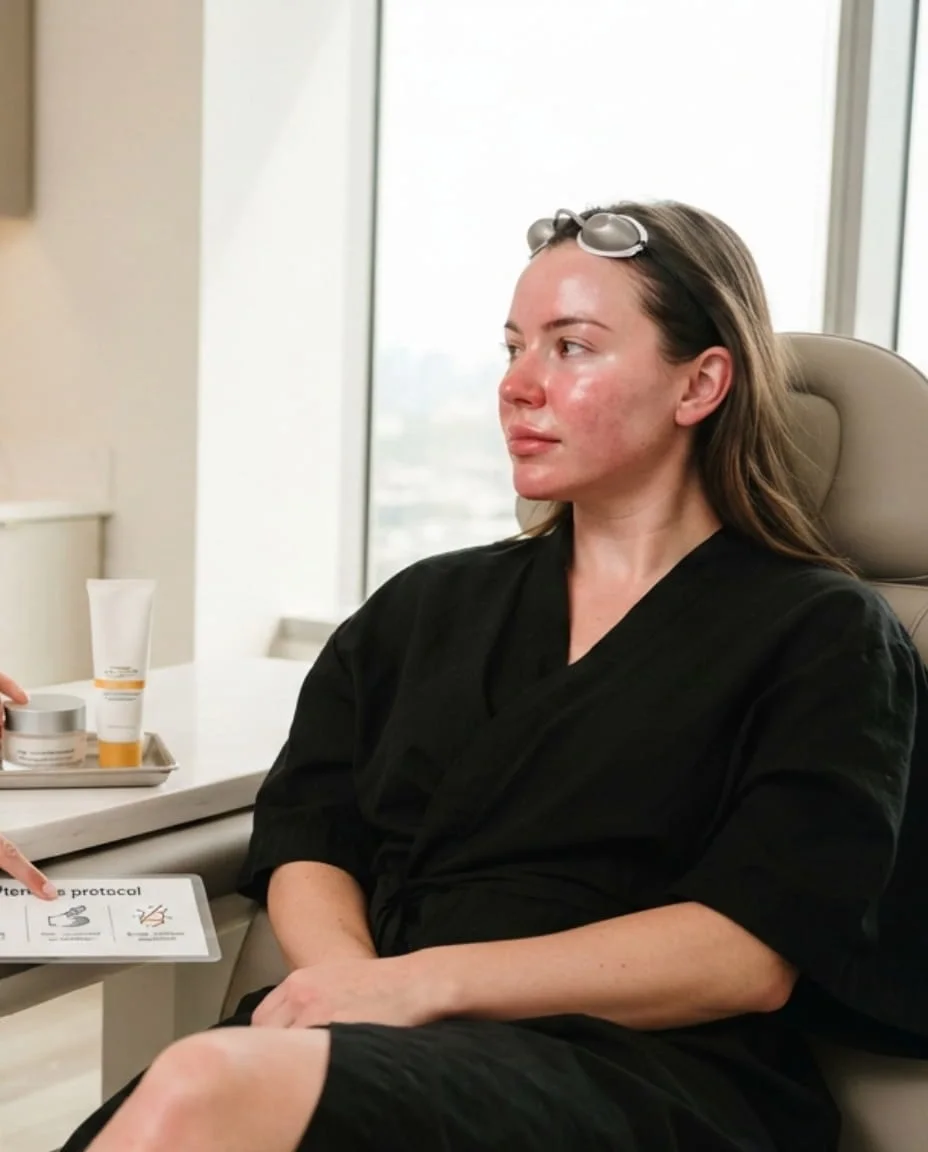
REALISTIC RESULTS
Fractional CO2 Laser Before and After: Understanding Realistic Results
Before-and-after photographs are a useful reference point, but they need to be read carefully. Lighting conditions, camera angle, and even the makeup or skincare on the skin at the time of the photo can all affect how "after" images appear compared with "before" ones.
Photographs also don't always show how many sessions were involved, what settings were used, or how that particular patient's skin typically heals — all of which affect outcome. Two patients with similar-looking acne scars can respond differently based on scar depth, skin type, and individual healing response.
It's worth being direct here: acne scars generally improve in appearance with fractional CO2 laser — they become softer, shallower, and less noticeable — but they do not disappear entirely for most patients. Any clinic photographs shown to you should be genuine, unedited, and used only with the patient's informed consent.
SUITABILITY
Who May Be Suitable for Fractional CO2 Laser?
Fractional CO2 laser may be considered for patients with:
- ✓Acne scarring (mild to moderate)
- ✓Uneven or rough skin texture
- ✓Fine lines, particularly from sun exposure
- ✓Select sun-damage related concerns
- ✓Certain surgical or traumatic scars once fully healed
- ✓General skin texture rejuvenation goals
IMPORTANT CONSIDERATIONS
Who May Not Be Suitable?
However, some situations call for a closer look before treatment can proceed, including:
- ✕Active skin infection in the treatment area
- ✕Certain active inflammatory skin conditions (e.g., active eczema or psoriasis flares)
- ✕Recent sun exposure or tanning
- ✕A personal history of abnormal or keloid scarring
- ✕Higher risk of post-treatment pigmentation changes
- ✕Certain medications (including some acne medications)
- ✕A history of poor or delayed wound healing
If any of these apply to you, it doesn't automatically rule out treatment — but it does mean your dermatologist needs the full picture. Always disclose your complete medical history, including medications and prior skin treatments, during your consultation.
HONEST BOUNDARIES
Is Fractional CO2 Laser Suitable for Every Skin Concern?
Not always — and a responsible consultation should tell you this rather than push treatment regardless. Situations where another option might be more appropriate first include:
Certain pigmentation conditions
such as melasma, which can be heat-sensitive and may worsen with some laser treatments
Deeper, more severe acne scarring
which sometimes responds better to a staged or combined approach
Facial volume loss
which fractional resurfacing does not address — volume concerns typically need a different treatment category entirely
Active acne
which usually needs to be brought under control before resurfacing is considered
Certain scar types
particularly those that are still actively healing or evolving
Fractional CO2 Laser Side Effects and Safety Considerations
Most patients experience some combination of the following temporary effects after treatment:
Temporary effects
Redness · Swelling · A warm, sunburn-like sensation · Skin sensitivity · Dryness and peeling · Light crusting, particularly with deeper settings · Temporary pigmentation changes (lighter or darker patches)
Less common complications
These generally settle within the recovery window discussed with your dermatologist, though timing varies by individual. Less common complications can include prolonged redness, infection, scarring, or more persistent pigmentation changes — particularly in patients with a higher risk profile or when aftercare instructions aren't closely followed. These risks are part of a full informed-consent discussion before treatment, and no responsible provider should describe the procedure as entirely risk-free.
Safety note
If you notice increasing pain, spreading redness, discharge, fever, or any symptom that feels abnormal during recovery, contact the clinic promptly rather than waiting it out.
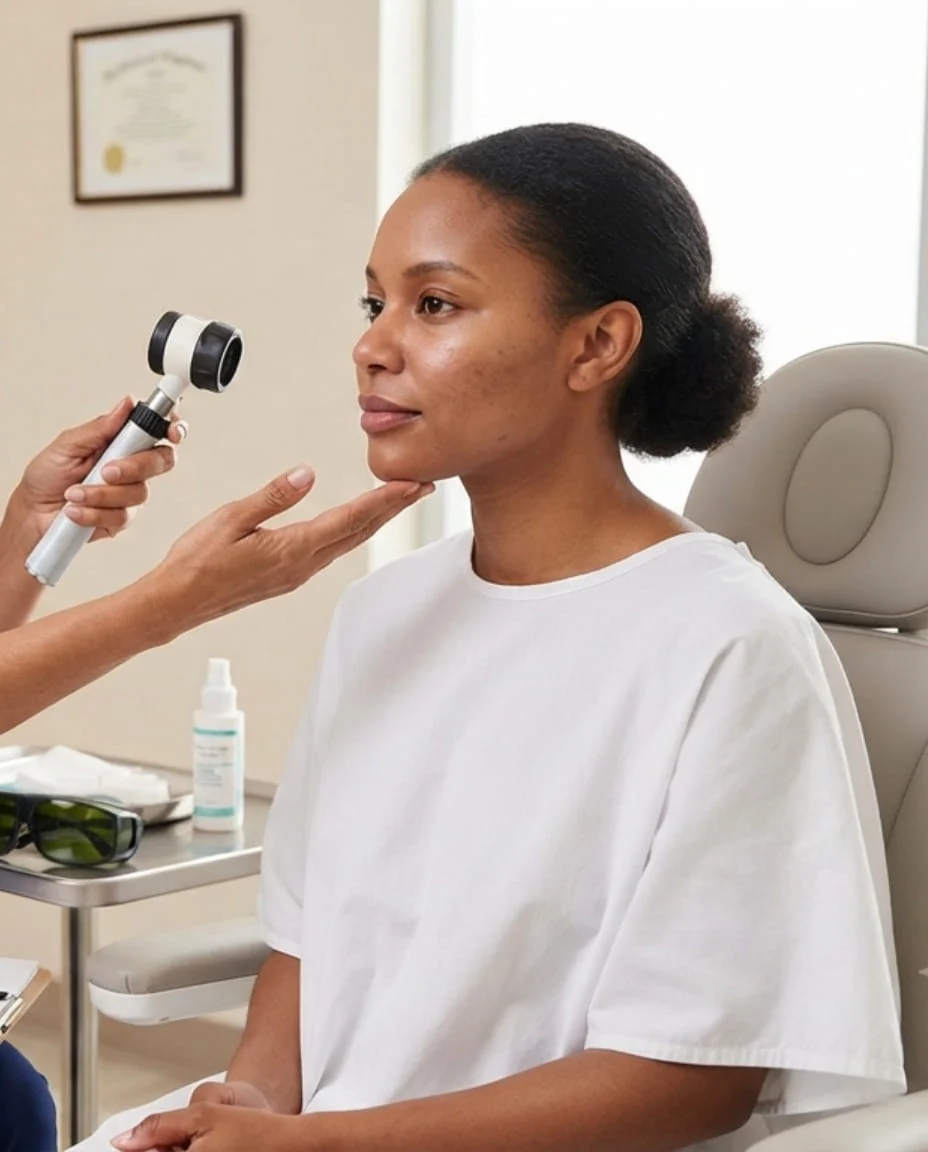
COMBINATION PLANNING
Can Fractional CO2 Laser Be Combined With Other Skin Treatments?
In some cases, yes — but combination planning should be led by a dermatologist rather than assumed by the patient. Treatments sometimes considered alongside or around fractional CO2 laser include:
Combining treatments too closely together, or without proper sequencing, can increase risk rather than improve results. This is why combination plans are built individually rather than offered as a package by default.
How Many Fractional CO2 Laser Sessions Do You Need?
There's no single number that applies to every patient, and any clinic promising a fixed session count without an assessment should be approached with some caution. The number of sessions typically depends on:
• The specific concern being treated (e.g., acne scars vs. fine lines)
• Scar depth and pattern
• Skin type and healing tendency
• The intensity of settings used per session
• Any previous resurfacing or laser treatments
• The outcome you're hoping to achieve
• How your skin responds after the first session
Many patients need more than one session, spaced weeks to months apart, to reach a meaningful improvement. Your dermatologist will typically give you a working estimate after your first assessment, with the plan reviewed as treatment progresses.
PRICING
What Does Fractional CO2 Laser Cost in JVC?
Cost varies depending on the treatment area, the depth/intensity of the session, the number of sessions planned, and your individual treatment goals. Final pricing is confirmed during your consultation, once your treatment plan has been assessed.
| Treatment | Indicative Price Range |
|---|---|
| Fractional CO2 Laser — Consultation | [VERIFY PRICE] |
| Fractional CO2 Laser — Single Session (Face) | [VERIFY PRICE] |
| Fractional CO2 Laser — Targeted Area (e.g., scars) | [VERIFY PRICE] |
| Package Pricing (Multiple Sessions) | [VERIFY PRICE] |
INSURANCE
Is Fractional CO2 Laser Covered by Insurance in Dubai?
Insurance coverage generally depends on whether a treatment is classified as medically necessary or cosmetic. Fractional CO2 laser for cosmetic concerns — such as general skin rejuvenation or fine lines — is typically not covered by standard health insurance policies in the UAE.
In select cases where treatment relates to a documented medical or post-surgical scarring concern, some element of coverage may apply, but this depends entirely on your specific policy and insurer.
We recommend verifying directly with your insurance provider before your appointment, and our reception team can assist with any documentation you may need for a claim.
OUR TEAM
Dermatology Specialists at Our JVC Clinic
[VERIFIED DOCTOR NAME]
Data shown as:
Specialty: Dermatology
DHA License: [Verify]
Subspecialty: [To be confirmed]
Languages: [To be confirmed]
Profile: [Link to profile page]
[VERIFIED DOCTOR NAME]
Data shown as:
Specialty: Dermatology
DHA License: [Verify]
Subspecialty: [To be confirmed]
Languages: [To be confirmed]
Profile: [Link to profile page]
Practitioner details will be updated with verified credentials before publication.
What Patients Ask Before Booking Fractional CO2 Laser in JVC
Answers to common questions about Fractional CO2 Laser treatment, suitability, recovery, results and cost in Dubai.
Book ConsultationStart With a Professional Skin Assessment
Fractional CO2 laser can be a genuinely useful option for certain skin concerns — but it isn't the right starting point for every patient or every type of scarring or pigmentation. The most reliable way to know whether it's right for you is a proper skin assessment: reviewing your history, examining your specific concern, and being honest about what results are realistic given your skin type and goals.
If you're considering fractional CO2 laser in JVC, the next step is a consultation where suitability, expected recovery, and a personalised treatment plan can be discussed directly with a dermatology practitioner — before any treatment decision is made.
GET IN TOUCH
Book a Fractional CO2 Laser Consultation at Vedara Care Polyclinic
NEARBY LANDMARKS
- ✓Binghatti Azure building, Al Barsha South Fourth
- ✓Near JVC Circle roundabout, accessible from Hessa Street and Al Khail Road
DISTANCE FROM DUBAI COMMUNITIES
LOCAL ACCESSIBILITY
Why JVC for Fractional CO2 Laser?
Our clinic is located within JVC, offering dermatology consultations and fractional CO2 laser treatment for patients across the surrounding Dubai community.
RELATED SERVICES AND RESOURCES
Related Services and Resources
Dermatology Clinic in JVC
Our dermatology services cover a wide range of skin concerns, with personalized treatment plans based on your skin type, condition, and goals.
Learn moreMicroneedling Treatment
Microneedling uses controlled micro-injuries to support collagen production and improve the appearance of acne scars, uneven texture, enlarged pores, and other skin concerns.
Learn moreRF Microneedling
RF microneedling combines microneedling with radiofrequency energy to support collagen remodeling, skin tightening, and overall skin rejuvenation.
Learn moreChemical Peel treatment
Chemical peels can help improve uneven skin tone, pigmentation, acne, dullness, and surface texture by encouraging controlled exfoliation and skin renewal.
Learn moreAcne Scar Treatment
Explore treatment options for reducing the appearance of acne scars and improving skin texture. Treatment selection depends on the type, depth, and severity of scarring.
Learn moreSkin Rejuvenation Services
Discover personalized skin rejuvenation treatments designed to improve skin texture, tone, firmness, and overall appearance while supporting healthier-looking skin.
Learn more