Massage with warm rice. The classical Ayurvedic therapy for what other treatments cannot reach.
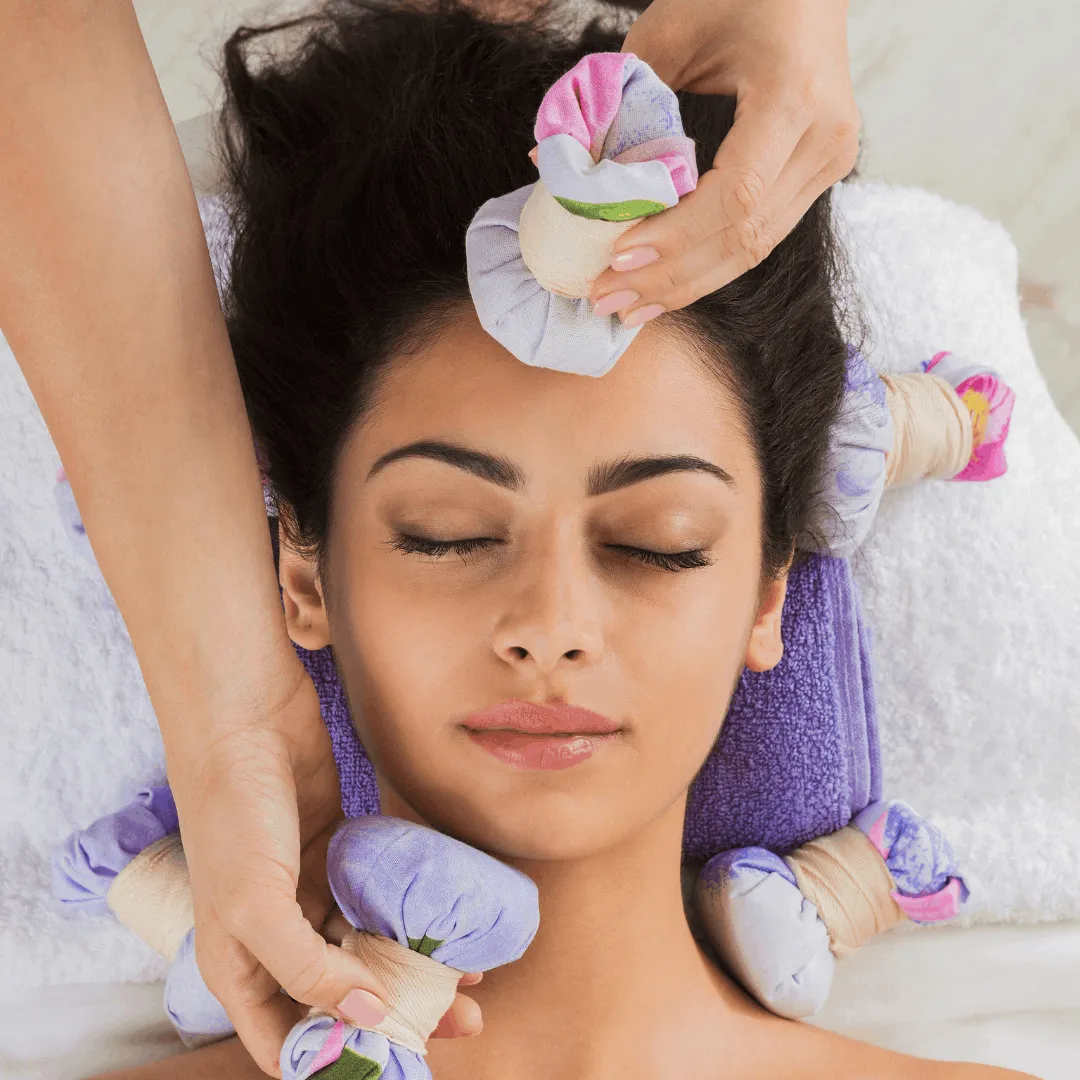
Njavarakizhi — also written Navarakizhi, and called Shashtika Shali Pinda Sweda in Sanskrit — is performed using small cloth boluses filled with a special variety of rice cooked in herbal medicated milk. At our DHA-licensed Ayurveda clinic in Jumeirah Village Circle, Dubai, it is doctor-prescribed for muscle wasting, post-illness recovery, neurological rehabilitation, and chronic inflammatory conditions.
NOT THE OBVIOUS CHOICE.
Njavarakizhi is prescribed for specific clinical reasons — not as a general relaxation therapy. Your doctor will explain whether it's right for you.
THE QUICK ANSWER
Njavarakizhi in Dubai, in one paragraph.
Njavarakizhi (नवरకిజీ) — known in classical Sanskrit as Shashtika Shali Pinda Sweda — is a specialised Ayurvedic massage therapy performed using small cloth boluses filled with Shashtika rice cooked in herbal medicated milk. The boluses are dipped repeatedly in warm milk and used to massage the body with synchronized strokes for 60 to 75 minutes. At Vedara Care Polyclinic in Jumeirah Village Circle, Dubai, Njavarakizhi is doctor-prescribed by BAMS-qualified physicians for muscle wasting, post-illness recovery, neurological rehabilitation, paralysis support, rheumatoid conditions, and degenerative muscle disorders. Sessions start from AED 480.
Medically reviewed by Dr. Priya Nair, BAMS, MD (Ayurveda), DHA-Licensed 2509266 • Last updated May 2026
A therapy from classical Kerala texts, performed in Dubai with the exact rice variety the texts describe.
The Sanskrit name Shashtika Shali Pinda Sweda combines three concepts: 'Shashtika' (a specific variety of rice that matures in 60 days), 'Shali' (cultivated rice), 'Pinda' (bolus or tied package), and 'Sweda' (sudation or induced sweating). Together, the name describes the therapy precisely — a sudation treatment using boluses of sixty-day-matured rice. The classical Kerala name Njavarakizhi (also spelled Navarakizhi) names the rice itself: Njavara, the same Shashtika rice described in the classical texts.
The therapy works on a different principle from Abhyanga or Shirodhara. While therapies penetrate the skin externally, Njavarakizhi works through three mechanisms: the sustained heat from the boluses; the nutritive value of the rice itself (rich in specific amino acids and trace minerals); and the medicated milk that carries the herbs. The rice itself acts as a carrier and an active therapeutic agent in classical texts describe Njavara as one of the most nourishing therapies in Ayurveda — used historically for the most depleted patients: those recovering from severe illness, those with progressive muscle wasting (sarcopenia), those with post-stroke or post-crippling conditions, and those whose tissues need rebuilding rather than just relaxation.
"Most massages take something away — tension, fatigue, toxins. Njavarakizhi gives something back."
"Most massages take something away — tension, fatigue, toxins. Njavarakizhi gives something back."
Seventy-five minutes, four phases, and rice that has been cooking since before you arrived.
The classical Njavarakizhi protocol followed at our JVC clinic. The preparation takes longer than the therapy itself.
Phase 1 — Rice & Milk Preparation
The preparation begins long before you arrive. Njavara rice is rinsed and cooked slowly in a mixture of cow's milk and a herbal decoction (kashayam) — the specific herbs depending on your prescribed protocol. The rice is cooked until it reaches a soft, sticky consistency that holds together when formed into boluses. Once cooked, the rice is divided and bundled into small cotton boluses. By the time you arrive, four to six warm rice boluses are ready alongside a brass vessel with warm herbal milk for dipping.
Phase 2 — Preparatory Abhyanga
Your session begins with a 15-minute full-body Abhyanga using a medicated oil selected to complement the Njavarakizhi protocol. This warm-up is essential — it opens the skin's pores, relaxes the muscles, and prepares the body to receive the sustained heat of the rice boluses. Without this preparation, the rice heat does not penetrate effectively.
Phase 3 — The Njavarakizhi
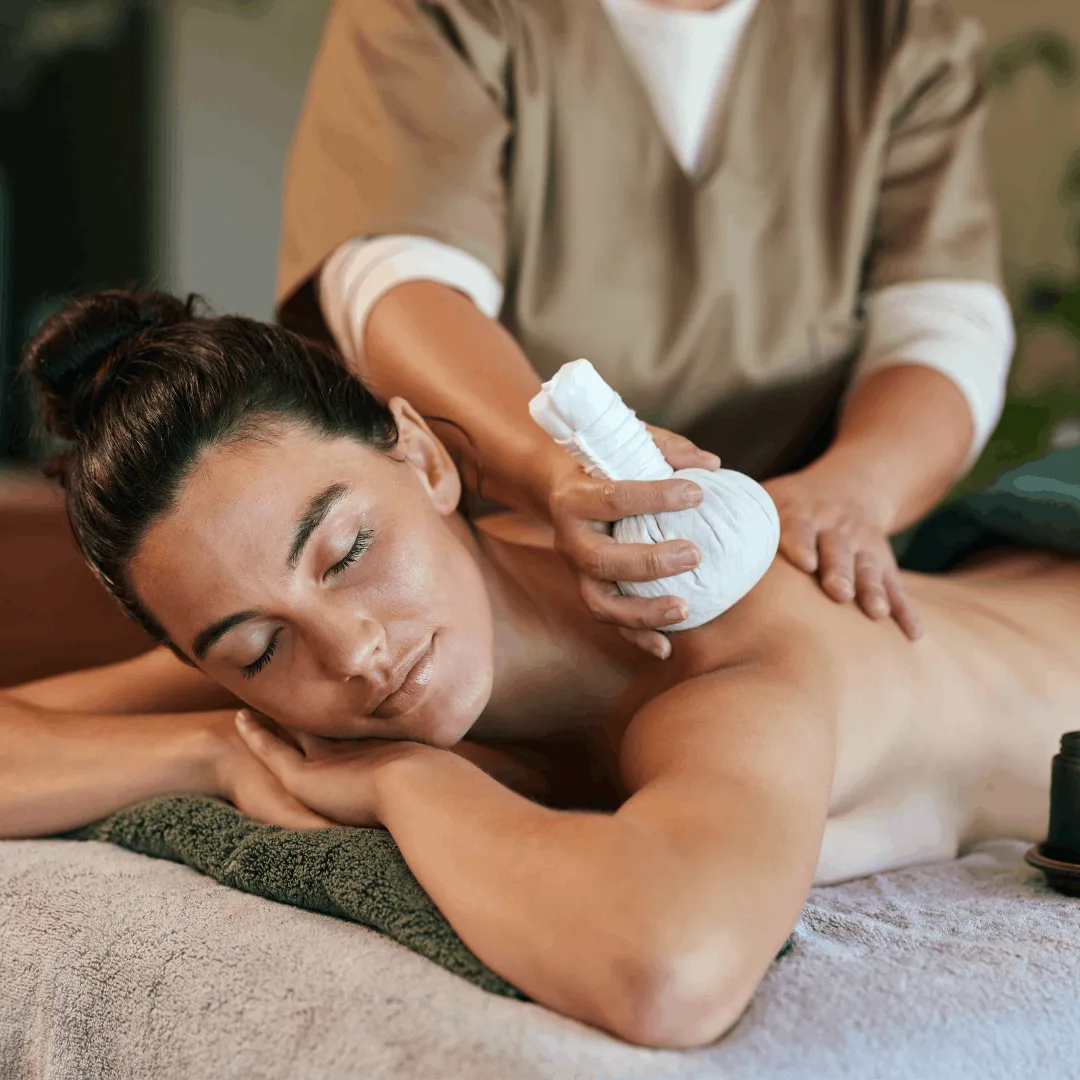
The main therapy begins. Two trained therapists work in synchronized strokes, each holding a warm rice bolus that has been dipped in the warm herbal milk. The boluses are massaged along the same classical pathways as Abhyanga but with long, sweeping strokes and continuous dipping in warm milk. Each time a bolus cools, it is returned to the warm milk vessel and a fresh warm bolus is taken. Across 60 minutes of therapy, the boluses are exchanged approximately every 8-10 minutes.
Phase 4 — Recovery Period
After the main therapy, you remain on the droni for at least 10 minutes. Residual rice and milk is gently wiped away — but not fully washed off. The body absorbs continuing nourishment from the rice film left on the skin for several hours. We recommend showering for at least 2 hours, and remaining in a warm environment for the rest of the day. Most patients describe a deep sense of nutritional replenishment — not just relaxation.
Total clinic time approximately 90-105 minutes including changeover and recovery period. Some protocols include a brief Swedana (medicated steam) at the end.
CLINICAL VARIATIONS
The same therapy with different herbs delivers different outcomes.
The kashayam (herbal decoction) used to cook the rice and to dip the boluses is selected after consultation based on your specific clinical need.
Dashamoola-Based Kashayam
Anti-inflammatory and tissue-restorative
The most commonly used herbal preparation, based on Dashamoola — the classical 'ten-root' formulation. Used as the base for general Njavarakizhi protocols, particularly for rheumatoid conditions, post-illness recovery in adults, and muscle weakness without specific neurological involvement. Provides anti-inflammatory action alongside the nutritive rice.
Typically prescribed for:
Bala-Based Kashayam
Specifically for muscle strength and Vata-related wasting
Bala (Sida cordifolia) is the classical herb for muscular strength and rejuvenation. This variation is used for progressive muscle wasting, age-related sarcopenia, post-prolonged-immobilisation muscle loss, and certain muscular dystrophies as supportive care. Often the choice for elderly patients with frailty.
Typically prescribed for:
Mahanarayana-Adjunct Kashayam
Neurological recovery support
A specialised preparation used in protocols for post-stroke rehabilitation, certain forms of paralysis (Pakshaghata in Ayurvedic terminology), and post-Bell's-palsy recovery. Combined with internal Ayurvedic medicines and physiotherapy in our integrated neurological recovery programmes. Always in coordination with conventional neurology care.
Typically prescribed for:
Postnatal Sutika-Specific Kashayam
For new mothers in classical 45-day care
Within the classical Sutika Paricharya (postnatal Ayurvedic care) protocols, Njavarakizhi is sometimes prescribed in the third or fourth week postpartum for new mothers experiencing significant post-delivery weakness, particularly after caesarean recovery or prolonged labour. The herbal milk is specifically formulated for postpartum tissue restoration.
Typically prescribed for:
Your doctor will select the appropriate herbal preparation after clinical assessment. The Njavara rice and herbs used at Vedara Care are sourced from authenticated Kerala suppliers with documented quality testing.
CLINICAL APPLICATIONS
Where Njavarakizhi delivers — and where it does not.
Njavarakizhi has narrower clinical applications than most Ayurvedic massages. When used appropriately, the outcomes are remarkable; when used as a general treatment, it is no more effective than simpler therapies.
WHERE IT EXCELS
Progressive muscle wasting
Typical course: 14–21 sessions over 4–6 weeks
Post-illness convalescence (dengue, COVID, prolonged hospitalisation)
Typical course: 14 sessions over 4–6 weeks
Post-stroke rehabilitation (part of integrated programme)
Typical course: 21–30 sessions
Bell's palsy and certain facial paralysis recovery
Typical course: 14 sessions
Rheumatoid arthritis and Arthritis (with internal Ayurvedic medicines and conventional care)
Typical course: 14–21 sessions
Sarcopenia in elderly patients
Typical course: 21 sessions, often repeated every 6–12 months
Post-prolonged-immobilisation muscle recovery
Typical course: 14 sessions
Specific postpartum protocols (within Sutika Paricharya)
Typical course: 7–14 sessions
HONEST LIMITS
Real Ayurvedic doctors at our JVC clinic recommend something else when this treatment is not appropriate.
General relaxation and stress
is better and more cost-effective
Insomnia and anxiety
Shirodhara is the targeted therapy
Kativasti is more focused
Weight management
Udvartana works on different mechanisms
Acute infections or active inflammation
Wait for resolution first
Severe cardiac conditions
The sustained heat may not be appropriate without cardiology clearance
Honest note: Njavarakizhi is one of the most over-prescribed Ayurvedic therapies in Dubai — clinics offer it because it sounds exotic and commands premium pricing. We will tell you honestly if your condition does not warrant it.
PATIENTS WHO BENEFIT MOST
Three groups for whom Njavarakizhi is genuinely transformative.
Patients Recovering from Severe Illness
After prolonged hospitalisation, severe dengue, post-COVID weakness, or any condition involving significant muscle deconditioning, Njavarakizhi accelerates tissue recovery in ways that diet and physiotherapy alone cannot. The combination of moist heat, nutritive rice, and medicated milk supports protein synthesis and tissue rebuilding when the body is in a depleted state.
- Restores muscle bulk and strength
- Improves appetite and digestive capacity
- Reduces post-illness fatigue meaningfully
Elderly Patients with Frailty and Sarcopenia
Age-related muscle loss (sarcopenia) responds particularly well to Njavarakizhi when combined with appropriate diet and gentle exercise. Many of our elderly patients return annually for a 21-session Njavarakizhi course as preventive care — maintaining muscle mass, joint mobility, and quality of life into their 70s and 80s.
- Helps preserve muscle mass and grip strength
- Improves joint mobility and reduces stiffness
- Supports sleep quality and energy levels
Patients in Neurological Recovery
For post-stroke patients, those recovering from Bell's palsy, and others in neurological rehabilitation, Njavarakizhi is used alongside conventional physiotherapy and neurology care. It does not replace medical management — but it consistently supports muscle tone recovery, tissue health, and patient quality-of-life during long rehabilitation periods.
- Supports motor recovery alongside physiotherapy
- Improves circulation in affected limbs
- Enhances overall recovery momentum
All three groups are also candidates for our home healthcare services — home Njavarakizhi is one of our most-requested specialised therapies for elderly and post-illness patients across Dubai.
Three Njavarakizhi protocols, calibrated to clinical need.
Trial Course
- Initial doctor consultation included
- 7 Njavarakizhi sessions with preparatory Abhyanga
- Doctor-selected kashayam preparation
- Authentic Shashtika Njavara rice
- 4-week follow-up to assess response
First-time Njavarakizhi, mild convalescence, assessing therapy response before a longer course
Clinical Restorative Course
- Comprehensive initial consultation
- 14 Njavarakizhi sessions with adjusted kashayam mid-course
- Combined Ayurvedic internal medicines
- Dietary protocol for tissue rebuilding
- Two doctor reviews (Sessions 5 and 10)
- 8-week follow-up programme
Post-illness recovery, sarcopenia, rheumatoid conditions, post-immobilisation rehabilitation
Intensive Restorative Programme
- Full clinical assessment with treatment team
- 21-30 Njavarakizhi sessions
- Combined with Abhyanga and other therapies as indicated
- Comprehensive internal Ayurvedic medicines
- Dietary and lifestyle protocol
- Three doctor reviews through programme
- 12-week follow-up support
Post-stroke rehabilitation, severe muscle wasting, complex neurological recovery, integrated long-term care
All programmes can be combined with home healthcare services for patients who cannot easily travel to the clinic. Pricing adjusted for home delivery. Insurance direct-billing available with seven major insurers — coverage for specialised restorative care varies by plan.
HOME HEALTHCARE
For our elderly and post-illness patients, home Njavarakizhi changes outcomes.
Njavarakizhi is the home therapy our clinic most consistently recommends — because the patients who benefit most from it are often the patients who cannot easily travel.
For elderly patients with mobility limitations, post-illness patients with significant fatigue, and post-stroke patients in rehabilitation, the clinical reality is that consistent treatment matters more than the venue. A patient who manages 7 of 14 prescribed clinic sessions due to fatigue gets a worse outcome than one who completes all 14 sessions at home.
- Two synchronised therapists, same as clinic
- Freshly prepared Njavara rice from our clinic kitchen
- Same DHA-licensed clinical protocols
- Same medicated kashayam preparations
Home Njavarakizhi: From AED 680 per session
What patients say.
"After my post-COVID fatigue lasted nine months, two weeks of Njavarakizhi did what nothing else was able to do."
Sarah K.
Post-COVID Recovery · 14-Session Clinical Course · February 2026 · Vedara Care JVC
"For my mother at 78, after her hip surgery, this was the difference between recovering and not."
On behalf of Amina B.
Post-Surgery Recovery · 21-Session Home Programme · At Vedara Care, February 2026
"Eighteen months after my stroke, the Njavarakizhi sessions are the part of my recovery I will not skip."
Rahul D.
Post-Stroke Rehabilitation · Ongoing Programme · Vedara Care JVC, March 2026
4.9
4.9 stars on Google
23
Njavarakizhi-specific reviews
88%
reported meaningful clinical improvement
What patients ask before considering Njavarakizhi.
For comparison with other Ayurvedic massages, see our category guide. For Abhyanga or general Ayurvedic care, see the broader treatment pages.
Ask the TeamVISIT US
Where Njavarakizhi happens at Vedara Care.
NEARBY LANDMARKS
- ✓Next to Circle Mall
- ✓3 min from FIVE Jumeirah Village
- ✓ 5 min from JSS Private School
- ✓Free patient parking available
DISTANCE FROM DUBAI COMMUNITIES
READY?
Begin with a clinical assessment.
Njavarakizhi is not the right therapy for most patients — but for the right patient, it is unmatched. A 45-60 minute consultation at our JVC clinic includes clinical assessment and a clear recommendation on whether Njavarakizhi will deliver the outcomes you are looking for. If it is not the right therapy, we will say so and recommend what is.
First consultation from AED 150 · Sessions require 24-48 hour advance booking · Home service available across Dubai
EXPLORE FURTHER
Related pages.
Abhyanga Massage in Dubai
For general wellbeing, relaxation, and dosha balance — the most widely applicable Ayurvedic massage. Often combined with Njavarakizhi.
Learn moreHome Healthcare in Dubai
Specialised Ayurvedic therapies delivered to your home across Dubai. Particularly relevant for elderly and post-illness patients.
Learn morePanchakarma in Dubai
For complex chronic conditions, Njavarakizhi is sometimes included as part of a 14–21 day classical Panchakarma protocol.
Learn moreCompare All Ayurvedic Massages
Not sure if Njavarakizhi is right for you? Compare with Abhyanga, Shirodhara, Kativasti, and Udvartana.
Learn more