Skin reflects what is happening inside. Treating only the outside is why skin conditions return.
Authentic Ayurvedic treatment for chronic skin conditions in Dubai addresses the systemic patterns — digestive function, hormonal balance, stress patterns, immune regulation, blood quality — that drive recurring skin issues. At our Jumeirah Village Circle (JVC) clinic, structured 4 to 9-month programmes work alongside dermatology (including our own dermatology department) for eczema, psoriasis, chronic acne, rosacea, melasma, urticaria, and other persistent skin conditions. We do not replace topical treatments. We address why they keep being needed.
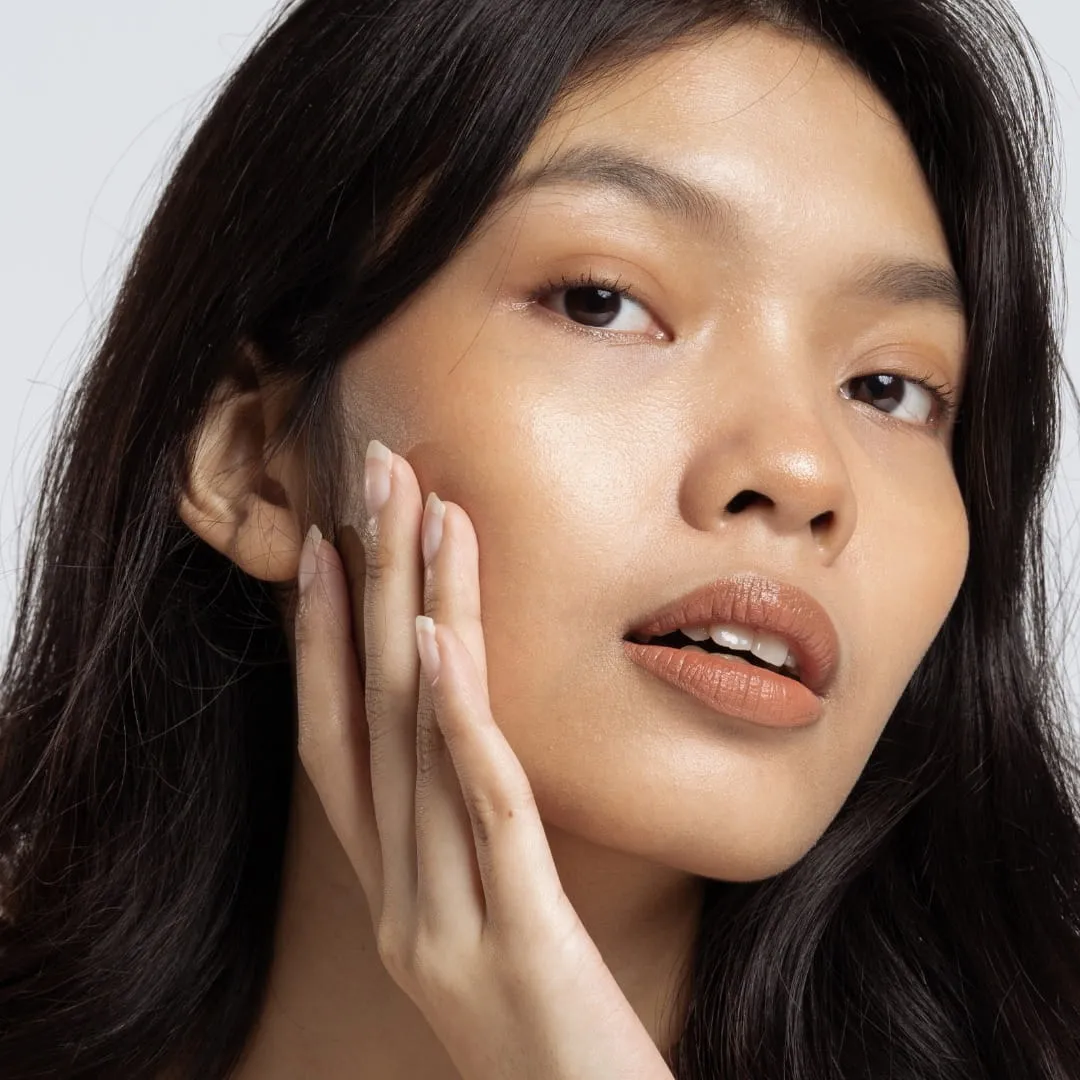
WE LOOK AT MORE THAN YOUR SKIN.
Your skin condition is rarely isolated. Diet, stress, sleep, hormones, gut function — they all show up on your skin. Treatment that ignores them produces temporary results.
THE QUICK ANSWER
Ayurvedic skin treatment in Dubai, in one paragraph.
Ayurvedic treatment for skin conditions in Dubai is a 4 to 9-month structured medical programme combining classical Panchakarma protocols (typically Virechana for Pitta-driven skin patterns, sometimes Rakta Mokshana for severe inflammatory skin conditions), specific internal medicines (Manjishtadi Kashayam, Mahatiktaka Ghrita, Patolakaturohinyadi Kashayam, Khadirarishta, condition-specific formulations), individualised dietary regulation, and external treatments (medicated oils, Mukha Lepa facial protocols where appropriate). At Vedara Care Polyclinic in Jumeirah Village Circle (JVC), Dubai — next to Circle Mall — protocols are calibrated to your specific skin condition (eczema, psoriasis, chronic acne, rosacea, melasma, urticaria) and dosha pattern, working alongside dermatology including our own DHA-licensed dermatology department. Initial consultations start from AED 450.
Medically reviewed by Dr. Priya Sharma, BAMS, MD (Ayurveda), DHA-Licensed 2509266 · Last updated June 2026
Most chronic skin conditions are systemic problems showing up on the surface.
Patients with chronic skin conditions in Dubai have typically been through a recognizable pattern. A dermatology visit. Topical steroids, topical calcineurin inhibitors, or topical antibiotics. Sometimes systemic medications. The condition improves substantially while on treatment, then returns when treatment stops — or recurs in waves despite ongoing maintenance. Skincare routines escalate. Specialized products are tried. Trigger avoidance becomes a way of life. The skin is managed but not resolved.
Modern dermatology is excellent at what it does — diagnosing skin conditions, providing topical and systemic treatments that suppress the inflammatory or immune processes producing the surface manifestation, and managing acute presentations. What 15-minute dermatology appointments cannot do is address the systemic patterns that drive the recurring inflammation — digestive function, blood quality (Rakta in classical Ayurvedic terms), hormonal balance, stress and cortisol patterns, immune regulation, dietary factors, and the constitutional patterns determining why this person develops this skin condition rather than another.
Classical Ayurveda treats chronic skin disorders (Kushta) as primarily systemic conditions with skin manifestations. The Charaka Samhita devotes substantial attention to Kushta classification, identifying patterns based on dosha involvement (Pitta-dominant inflammatory conditions like eczema and psoriasis; Kapha-dominant cystic and infiltrative conditions; Vata-dominant dry and atrophic conditions), the role of Rakta dhatu (blood tissue) in skin disorders, the importance of Agni (digestive fire) in producing the metabolic byproducts (Ama) that drive inflammation, and the influence of mental and emotional factors on skin presentation.
Authentic Ayurvedic skin treatment at our JVC clinic addresses these systemic patterns through structured 4-9 month programmes. The topical treatments your dermatologist has prescribed continue throughout (we do not ask you to stop them). What we add is the systemic work that reduces the underlying patterns producing recurrence — so the topical treatments become progressively less needed over time, not because we replace them, but because the root patterns improve.
"Topical treatment of chronic skin disease is like mopping the floor while the tap is running. Necessary, sometimes essential — but never enough."
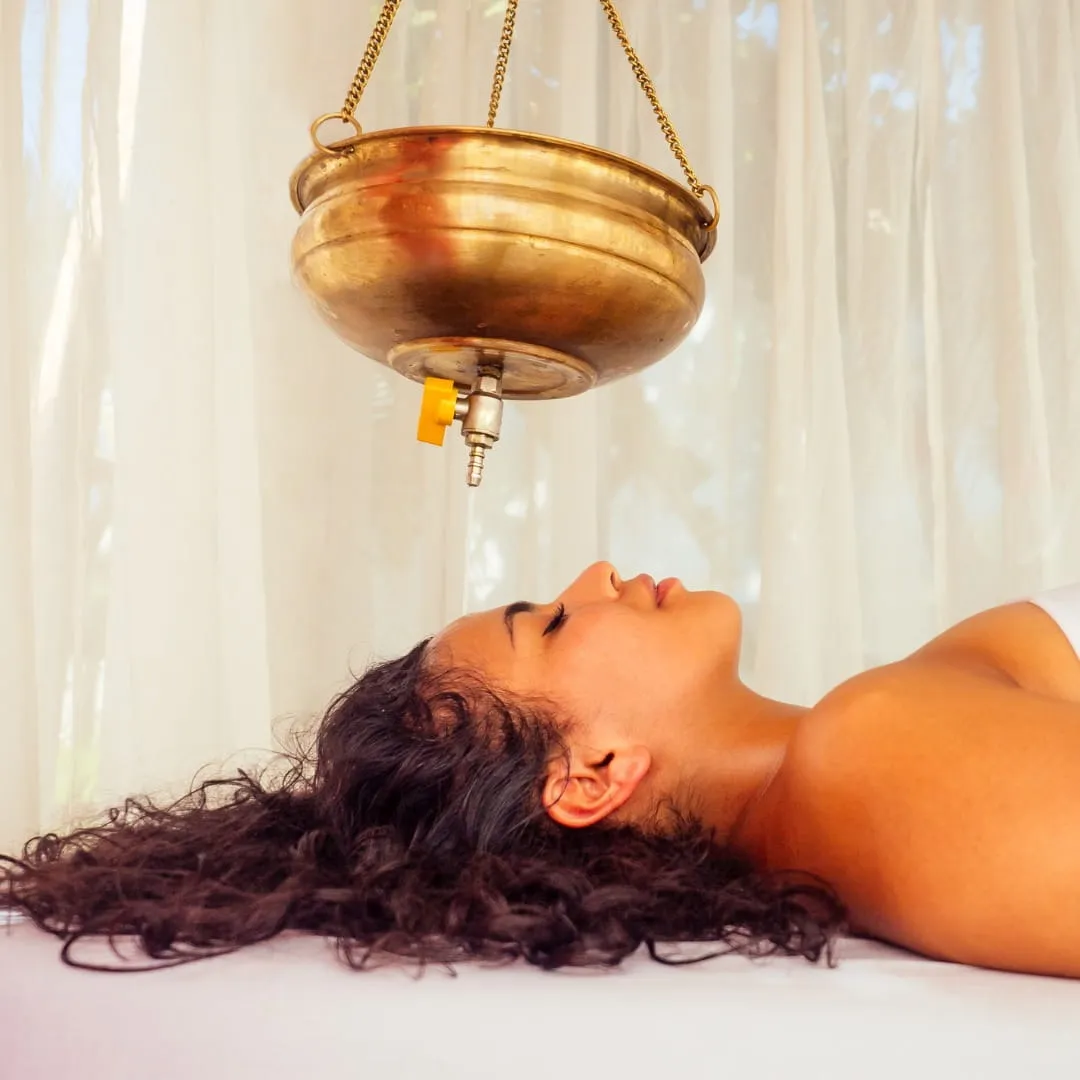
Ten skin conditions. Different Ayurvedic approach for each.
"Skin problem" describes very different clinical conditions, with very different treatment implications. At our JVC clinic, your specific diagnosis determines the protocol — and accurate dermatological diagnosis is the foundation.
Eczema (Atopic Dermatitis)
Vicharchika in classical Sanskrit
Ayurvedic emphasis for this type:
Psoriasis
Eka Kushta, Kitibha in classical Sanskrit
Ayurvedic emphasis for this type:
Hormonal Acne
Yauvana Pidaka in classical Sanskrit
Ayurvedic emphasis for this type:
Rosacea
Mukha-dushika and Pitta-prakriti patterns
Ayurvedic emphasis for this type:
Melasma and Hyperpigmentation
Vyanga in classical Sanskrit
Ayurvedic emphasis for this type:
Chronic Urticaria (Hives)
Sheetapitta in classical Sanskrit
Ayurvedic emphasis for this type:
Vitiligo
Shvitra in classical Sanskrit
Ayurvedic emphasis for this type:
Seborrheic Dermatitis
Darunaka and related patterns
Ayurvedic emphasis for this type:
Lichen Planus
Charmadala and related patterns
Ayurvedic emphasis for this type:
Chronic Post-Inflammatory Skin Issues
Various patterns including residual Pitta-Rakta involvement
Ayurvedic emphasis for this type:
Most patients arrive at our JVC clinic with a clear dermatological diagnosis. For undiagnosed skin conditions or suspected new dermatological disease, we coordinate with our own dermatology department or your existing dermatologist for accurate diagnosis before designing a treatment plan. Effective Ayurvedic skin treatment requires accurate diagnosis.
For skin conditions, the strongest outcomes integrate Ayurveda with dermatology.
Skin conditions involve both surface inflammation (which topical and systemic dermatological treatments address well) and systemic root patterns (which Ayurveda addresses well). Patients who receive both — coordinated between teams — consistently outperform patients who receive either alone.
At Vedara Care, our Ayurvedic doctors and DHA-licensed dermatologists share clinical notes for skin patients. The dermatologist provides accurate diagnosis, manages acute presentations, prescribes topical and systemic treatments as clinically indicated, and monitors disease activity. The Ayurvedic physician addresses systemic patterns through Panchakarma, internal medicines, dietary protocols, and lifestyle modification.
A typical integrated programme looks like: dermatology visit for accurate diagnosis and topical-systemic treatment optimization; then Ayurvedic consultation for systemic root pattern work, with both teams reviewing progress together at key milestones. Topical treatments continue throughout the Ayurvedic programme — we do not ask you to stop them. The goal is reducing the underlying patterns, so topical treatments become progressively less needed over time.
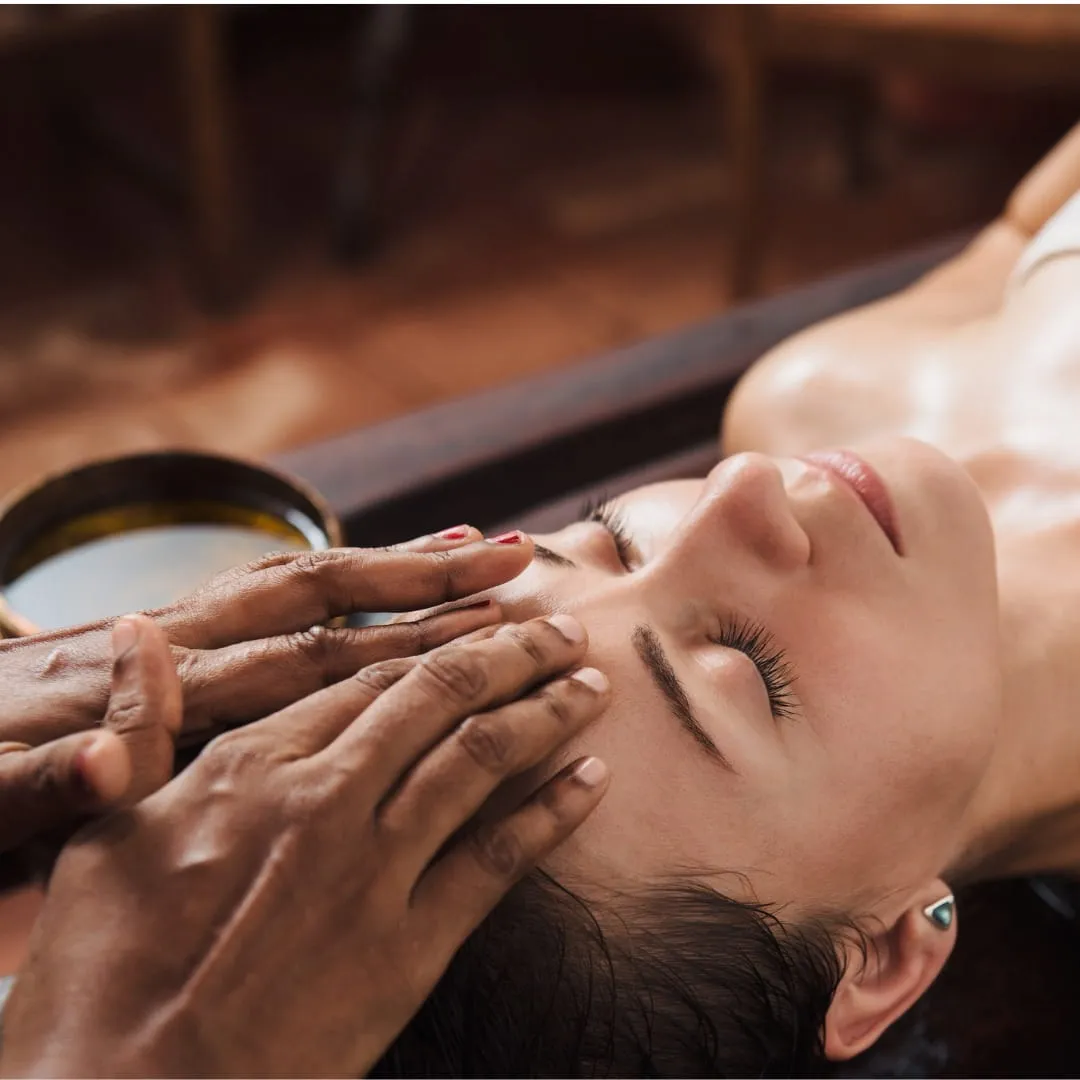
Ayurvedic skin treatment has four pillars.
Panchakarma Cleansing
Internal Medicines for Skin Restoration
Dietary Regulation — Skin-Specific Protocols
External Treatments, Lifestyle & Stress Protocols
What four to nine months of Ayurvedic skin treatment at our JVC clinic looks like.
A representative protocol for moderate chronic eczema. Other skin conditions follow modified versions. Your specific plan is calibrated at consultation.
Assessment & Foundation
- 60-minute consultation with BAMS-qualified physician at our JVC clinic
- Detailed skin history — onset, distribution, severity, triggers, family history of atopy or autoimmunity
- Review of dermatological history — diagnosis, all treatments tried (topical and systemic), current medications
- Photography of affected areas with consent (baseline documentation)
- Coordination with your dermatologist or our dermatology department (with consent)
- Pulse diagnosis, dosha assessment, condition classification
- Initial internal medicines protocol begins (compatible with current topical/systemic treatments)
- Dietary plan introduced gradually
- Lifestyle and stress baseline established
Panchakarma & Active Treatment
- 7-14 day Panchakarma programme (if appropriate — Virechana most common for Pitta-driven conditions)
- 5-7 day pre-Panchakarma preparation
- Main Virechana day with skin condition carefully monitored
- 7 days Paschatkarma recovery with specific dietary protocol
- Resumed internal medicines post-Panchakarma with adjusted dosing
- Dietary protocol deepened based on response
- Topical treatments continued throughout
Continued Active Treatment
- Mid-programme review with photo comparison and dermatology coordination
- Refined herbal protocol based on response
- Continued dietary refinement
- For patients with stress-skin overlap: Shirodhara introduced
- For specific facial conditions: Mukha lepa external treatments may begin
Consolidation
- Continued internal medicines with maintenance adjustments
- Reduced clinic visits (every 2-3 weeks)
- Dietary protocol becoming sustainable lifestyle
- For patients with significant flares, possible second short Panchakarma
- Coordination with dermatology on potential topical treatment reduction (under their supervision)
Refinement (For Continuing Patients)
- For psoriasis, severe chronic conditions, vitiligo: continued active treatment
- Maintenance dose of internal medicines
- Reduced visits (every 2-3 weeks then monthly)
- Continued protocol integration
- Long-term plan discussion
Continuation for Complex Conditions
- For psoriasis, vitiligo, severe atopic eczema, complex multi-condition patterns
- Continued internal medicines
- Quarterly dermatology coordination
- Annual return planning
This is a representative protocol. Chronic acne and rosacea often respond well in 4-6 months. Eczema typically needs 6 months. Psoriasis and vitiligo benefit from 9-month programmes alongside dermatology. Your specific timeline is documented and reviewed monthly.
Honest outcome ranges based on skin condition and adherence.
Different skin conditions respond differently to Ayurvedic adjunctive treatment. These ranges are based on our 380+ skin patients at the JVC clinic with documented before-and-after photography and patient-reported outcomes after structured programmes.
| Condition | Disease Activity Reduction (6-9 months) | Topical Treatment Needs | Long-term Outlook |
|---|---|---|---|
| Eczema (Atopic Dermatitis) | 50-75% reduction in flare frequency typical | Often reduced topical steroid use under dermatologist supervision | Substantial long-term improvement with maintenance |
| Psoriasis | 40-60% PASI score improvement typical alongside dermatology | Variable — depends on conventional treatment | Adjunctive support; biologics often continued |
| Hormonal Acne | 60-80% reduction in active lesions typical | Often reduced topical/systemic acne treatment needs | Often substantial long-term improvement |
| Rosacea | 50-70% reduction in flushing and papules typical | Often reduced topical treatment | Excellent long-term outcomes for Pitta-pattern patients |
| Melasma | 30-50% improvement in pigmentation typical | Often reduced need for cosmetic treatments | Variable — UV protection essential lifelong |
| Chronic Urticaria | 50-70% reduction in episode frequency | Often reduced antihistamine needs | Good long-term outcomes for many patients |
| Seborrheic Dermatitis | 50-70% reduction in flare frequency | Often reduced topical antifungal needs | Good long-term improvement with maintenance |
| Vitiligo | 20-40% repigmentation typical in selected cases | Continued conventional treatment recommended | Variable — some patches respond, others don't |
| Lichen Planus | 40-60% reduction in disease activity | Variable | Depends on severity and form |
| Post-Inflammatory Pigmentation | 30-60% improvement typical | Often reduced need for cosmetic treatments | Excellent long-term with sustained protocols |
These ranges are based on patients completing the full programme with consistent dietary and lifestyle adherence alongside ongoing dermatology care. Patients who do not implement systemic protocols see significantly lower improvements. The single biggest predictor is adherence to all four pillars.
When dermatology comes first — or alongside us.
Conditions requiring immediate dermatological care:
- Suspicious moles or unusual spots (urgent dermatology review)
- Severe acute drug reactions or systemic disease (emergency)
- Severe acute acne flares requiring systemic treatment (dermatology-lead, Ayurveda after stabilization)
- Suspicious skin infections (bacterial, viral, fungal) needing antimicrobial treatment first
- Severe psoriasis with systemic involvement (psoriatic arthritis — dermatology coordination)
- Undiagnosed skin conditions without dermatological workup
Final diagnostic decisions at our JVC clinic refer to dermatology — including our own DHA-licensed dermatology department — for diagnostic workup and acute management. We provide structured systemic adjunctive care, never replacing dermatological care.
Conditions where we work alongside dermatology:
- You have a confirmed dermatological diagnosis.
- You are on stable topical or systemic dermatological treatment.
- Your dermatologist has cleared you for adjunctive care.
- You have completed appropriate workups (biopsies, blood tests if indicated).
- You want to address systemic patterns alongside topical treatment.
"Adult eczema for fifteen years. Steroid creams forever. Six months at Vedara alongside my dermatologist — the flares have reduced from monthly to occasional. My topical steroid use is half what it was."
Sarah K.
Atopic Dermatitis · 6-Month Programme , JVC District 12 · February 2026
"Hormonal acne since my late 20s, worse after coming off the pill. Nothing topical worked long-term. Five months at Vedara, integrated with their dermatology team — my skin is clear and stable for the first time in a decade."
Priya R.
5-Month Integrated Programme , Al Barsha South · January 2026
"Plaque psoriasis on my elbows, knees, and scalp for years. On Stelara — managed but never gone. Vedara's nine-month programme alongside my dermatologist and biologic — my plaques have shrunk substantially. My dermatologist is impressed."
Rohan G.
Plaque Psoriasis · 9-Month Adjunctive Programme , Dubai Marina · March 2026
5,000+
Patients Treated
74%
Improvement Reported
62%
Reduced Topical Needs
What Ayurvedic skin treatment at our JVC clinic costs.
Indicator pricing for our three most common skin programmes. Final pricing depends on condition, severity, and protocols confirmed at consultation.
Skin Initial Assessment
- Consultation with BAMS physician
- Detailed skin history & assessment
- Review of dermatological history
- Photography for baseline
- Pulse & dosha assessment
- Coordination plan with dermatology
- Written treatment plan
- Full programme pricing
First step for every new patient — required before any treatment programme
Standard 6-Month Skin Programme
- All Initial Assessment components
- One Panchakarma programme (7-14 days)
- 6 months internal medicines
- Comprehensive dietary protocol
- External treatments as appropriate
- Monthly doctor review
- Coordinated dermatology reviews
- 12-month follow-up
Eczema, hormonal acne, rosacea, chronic urticaria, melasma, dermatitis
Comprehensive 9-Month Skin Programme
- All Standard Programme components
- Extended internal medicines
- Possible second Panchakarma
- Extended external treatments
- Continued dermatology coordination
- Detailed photo documentation
- 12-month follow-up programme
Psoriasis, vitiligo, severe chronic eczema, complex multi-condition presentations
Insurance direct-billing available with some major insurers — coverage for Ayurvedic skin treatment varies by plan. Skin conditions are recognised medical conditions supporting coverage in many plans. WhatsApp your insurance card before booking.
What patients ask before starting Ayurvedic skin treatment.
For hair-specific issues, see our hair loss pages. For PCOS-related acne, see PCOS page. For skin and gut connection, see IBS page.
Read about Panchakarma
Read about Dermatology in JVC
READY?
Treating your skin condition systemically — not just topically.
If you have been managing a chronic skin condition with cycles of topical treatments and flares, the next useful step is different. A 60-minute consultation at our JVC clinic identifies the systemic patterns driving recurrence — digestive, hormonal, stress, dietary, constitutional — and designs a 4-9 month programme tailored to your specific condition. We work alongside your dermatologist (including our own dermatology team if you prefer). We do not replace topical treatment. We address why it keeps being needed.
Initial consultation from AED 450 · Walking distance from Circle Mall, JVC · Integrated with dermatology · Female doctors available · Insurance direct-billing
EXPLORE FURTHER
Related pages.
Panchakarma in Dubai
Classical 5-fold detoxification for chronic conditions.
Learn moreAyurveda for PCOS in Dubai
Addressing hormonal drivers of acne and skin issues.
Learn moreAyurveda for IBS in Dubai
Skin and gut connection protocols.
Learn moreOur Ayurveda Clinic in JVC
Visit us in Jumeirah Village Circle.
Learn more