Neurological physiotherapy in Dubai. Specialised care, honestly delivered.
Neurological physiotherapy at our Jumeirah Village Circle (JVC) clinic and at your home across Dubai. Specialised treatment for stroke recovery, Parkinson's disease, multiple sclerosis, traumatic brain injury, spinal cord injury, motor neurone disease, peripheral neuropathy, and other neurological conditions. Long-term care relationships, coordination with neurologists, family-involved approach. Home physiotherapy across Dubai for patients who cannot easily travel.
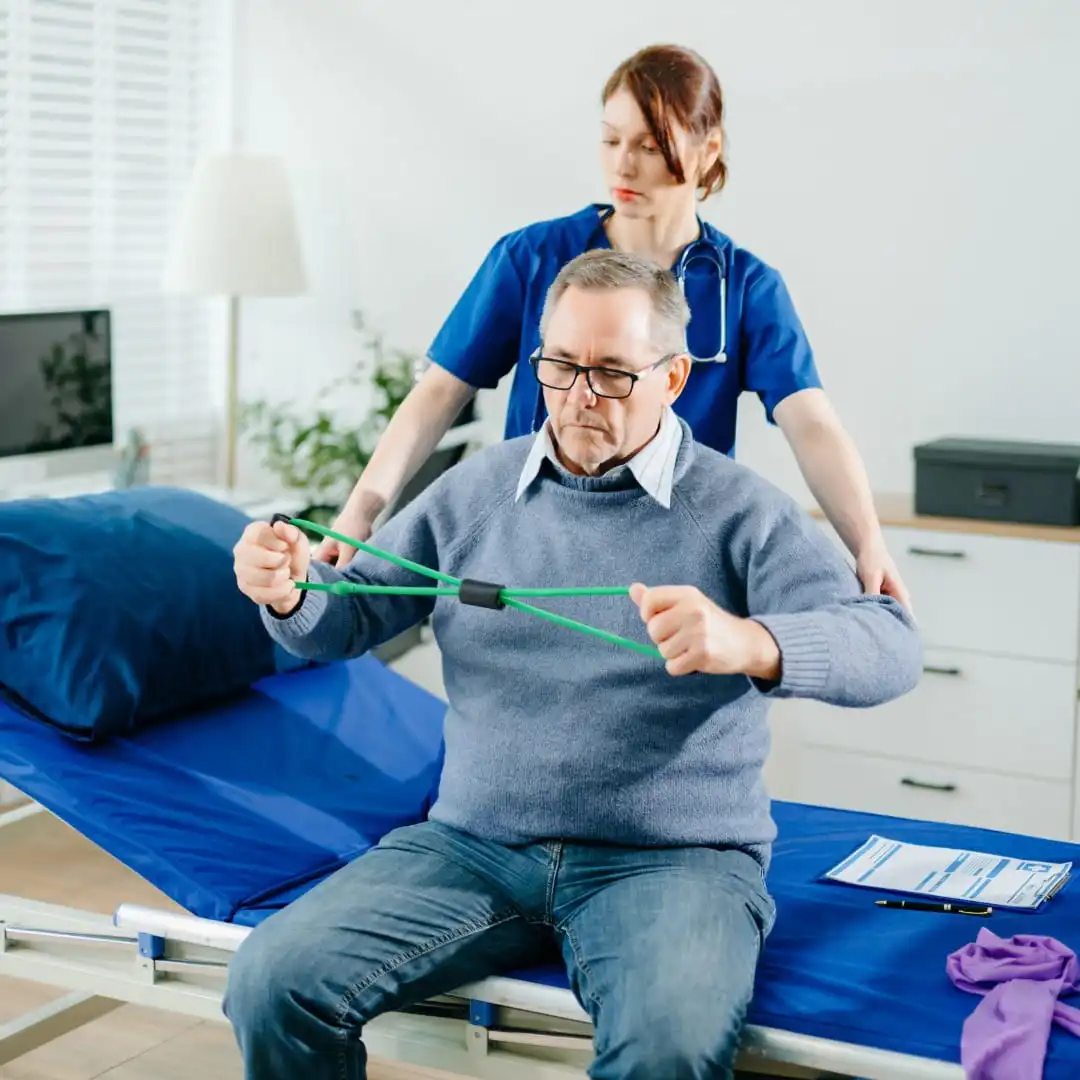
WE COME TO YOUR HOME ACROSS DUBAI.
Many neurological patients cannot easily travel to clinic. Our specialist physiotherapists deliver care at your home across JVC, JVT, Al Barsha South, Marina, Downtown, Palm Jumeirah, Mirdif, and surrounding Dubai areas.
THE QUICK ANSWER
Neurological physiotherapy at Vedara Care, in one paragraph.
Neurological physiotherapy at Vedara Care Polyclinic — at our Jumeirah Village Circle (JVC), Dubai clinic walking distance from Circle Mall, and at patient homes across Dubai — is specialised long-term rehabilitation for adults with neurological conditions. Delivered by physiotherapists with specific neurological training, we provide care for post-stroke recovery (CVA), Parkinson's disease (including LSVT-BIG protocols), multiple sclerosis (relapsing-remitting and progressive forms), traumatic brain injury, spinal cord injury, motor neurone disease, peripheral neuropathy, Bell's palsy, Guillain-Barré syndrome, functional neurological disorder, and adults with cerebral palsy. Treatment combines neurodynamic mobilisation, gait training, balance rehabilitation, functional electrical stimulation, constraint-induced movement therapy, falls prevention, and family caregiver education. We coordinate directly with neurologists, occupational therapists, speech therapists, and broader care teams. Home physiotherapy is available across Dubai including JVT, Al Barsha South, Sports City, Motor City, Arjan, Dubai Hills, Marina, Downtown, Palm Jumeirah, and Mirdif. Initial consultation from AED 450; structured neurological rehabilitation programmes from AED 3,800. Insurance direct-billing with Daman, AXA, Allianz, Oman Insurance, Now Health, Bupa, and MetLife.
Medically reviewed by Dr. Sarah Thompson, DPT, Neurological Specialist, DHA-Licensed 2509266 · Last updated June 2026
Neurological conditions we treat at our JVC clinic and across Dubai.
Each neurological condition has specific rehabilitation principles, evidence-based protocols, and realistic outcome expectations. Our specialised approach is calibrated to your specific condition, current functional level, and individual goals.
Stroke Recovery (CVA)
Cerebrovascular Accident Rehabilitation
Realistic outcomes:
Parkinson's Disease
Progressive Neurodegenerative Disease
Realistic outcomes:
Multiple Sclerosis (MS)
Demyelinating Neurological Disease
Realistic outcomes:
Traumatic Brain Injury (TBI)
Acquired Brain Injury Rehabilitation
Realistic outcomes:
Spinal Cord Injury (SCI)
Traumatic or Non-Traumatic SCI
Realistic outcomes:
Motor Neuron Disease (MND/ALS)
Degenerative Motor Neuron Disease
Realistic outcomes:
Peripheral Neuropathy
Including Diabetic & Post-Chemotherapy Neuropathy
Realistic outcomes:
Other Neurological Conditions
Including Bell's Palsy, Guillain-Barré Syndrome & Functional Neurological Disorders
Realistic outcomes:
If your specific neurological condition is not listed, contact us. Our team has experience across the spectrum of adult neurological rehabilitation. We coordinate with your neurologist to ensure our approach aligns with your overall medical management.
How specialised neurological physiotherapy actually differs from general practice.
Neurological physiotherapy is genuinely different from general physiotherapy. The underlying neuroscience, the assessment methods, the treatment approaches, the realistic timelines, and the relationship with the patient all differ from musculoskeletal physiotherapy. Several principles shape every neurological session at our JVC clinic.
Neuroplasticity guides everything
The brain and nervous system retain capacity for adaptation and recovery throughout life — though this capacity is greatest after acute injury than established progressive conditions. Modern neurological rehabilitation is built on neuroplasticity principles: intensive, task-specific, repetitive practice produces measurable neural reorganisation and functional gains. The outcome is not simply stronger muscles; it is improved nervous system function.
Assessment is movement-based and functional
Neurological assessment differs from musculoskeletal assessment. We use standardised outcome measures appropriate to your condition, timed functional assessments, gait analysis, balance testing, and repeated measurements to track progress objectively. Functional assessment focuses on real-world activities you need or want to do, not just isolated movement.
Treatment is task-specific and intensive
Modern evidence supports task-specific repetitive training over older neurodevelopmental approaches. If walking is the goal, you walk — with appropriate progression, assistance, and challenge. If hand function is the goal, you practise hand tasks with appropriate intensity. General strengthening and stretching have value but specific practice produces the greatest gains. Sessions are typically 60–75 minutes because intensive practice requires time.
Long-term relationships matter
Neurological rehabilitation is measured in months and years, not weeks. The same therapist working with you throughout your care creates continuity, tracks subtle progress, adjusts to your evolving condition, and develops the therapeutic relationship that becomes long-term motivation. Hospital-style rotating therapist scheduling is generally incompatible with effective neurological rehabilitation.
Family and caregivers are part of the team
Neurological patients spend the vast majority of their time outside therapy sessions. What they do during those hours determines outcomes more than what happens during sessions. Family education on positioning, transfers, exercise programmes, falls prevention, communication strategies, and emotional support is essential. Caregivers are integrated into the care plan as active participants.
Honest expectations sustain motivation
Neurological recovery is variable and often slow. Patients and families need honest expectation-setting — neither pessimistic dismissal nor false miracle promises. Realistic goals, milestone planning, honest communication about progress (including plateaus and setbacks), and explicit discussion of what physiotherapy can and cannot achieve form the foundation of sustainable rehabilitation.
"Modern neurological rehabilitation is grounded in neuroscience and evidence. The gains are real — but they require intensive, task-specific, sustained work. There are no shortcuts and no miracles. There is honest work that produces honest outcomes."
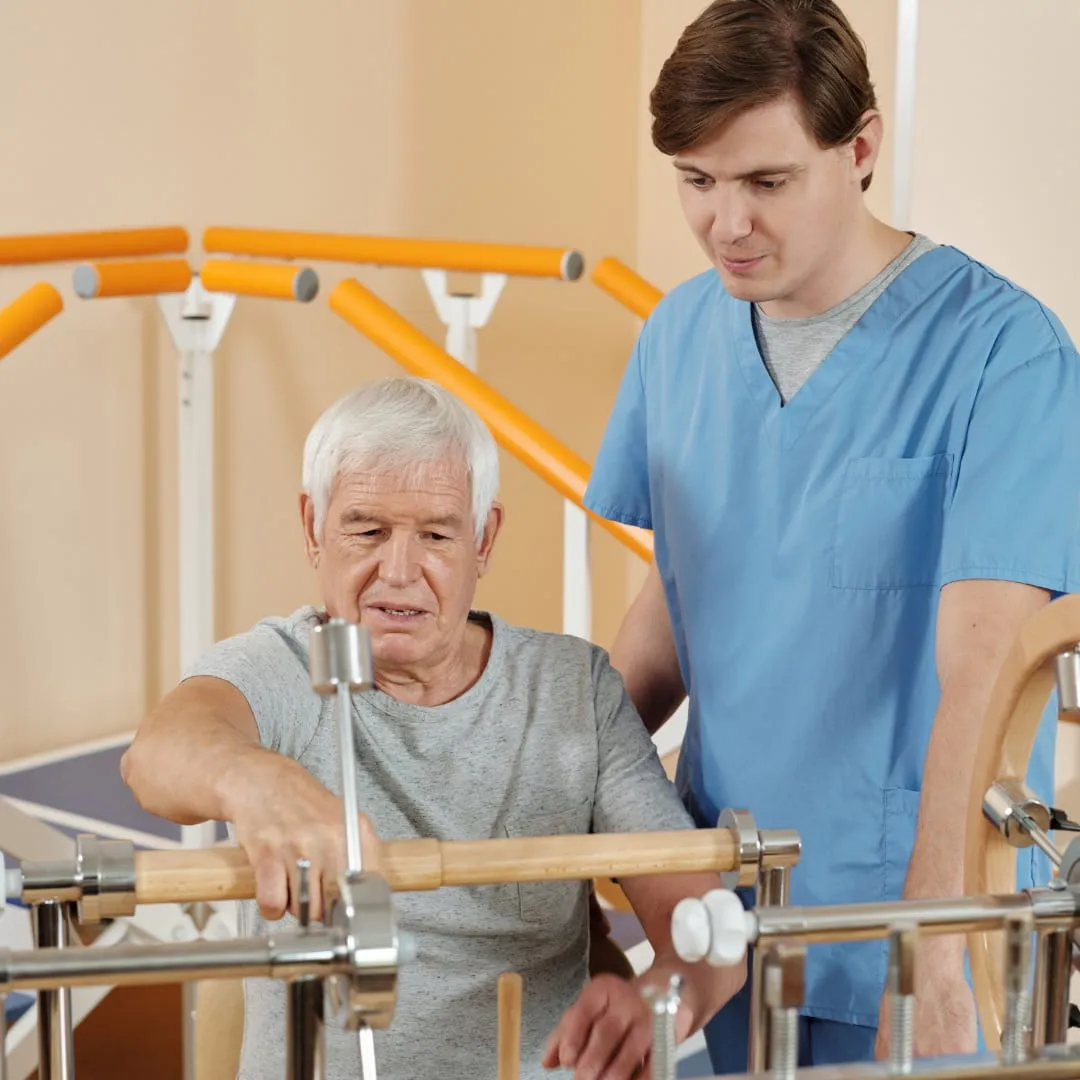
The four phases of neurological rehabilitation.
A representative progression for adult acquired neurological conditions (stroke, TBI, post-acute presentations). Progressive conditions like Parkinson's, MS, and MND follow different patterns calibrated to disease trajectory rather than recovery phases.
Acute and Early Recovery (Weeks 0-12 post-event)
- Often hospital-based initially; transition to outpatient or home care as appropriate
- Frequency: typically 3-5 sessions per week if tolerated
- Focus on early motor recovery, preventing secondary complications, family education
- Home physiotherapy often essential at this stage
- Intensive task-specific practice within tolerance
- Coordination with hospital discharge team, neurologist, and other rehabilitation providers
Active Recovery (Months 3-9)
- Frequency: typically 2-3 sessions per week
- Continued intensive task-specific practice
- Functional goal-focused training (walking, transfers, daily activities, return to work where appropriate)
- Balance and falls prevention emphasis
- Equipment evaluation and prescription as needed (orthoses, mobility aids)
- Continued family caregiver education and support
Consolidation and Plateau Management (Months 9-18)
- Frequency reduces: typically 1-2 sessions per week
- Continued progress for some patients; plateau management for others
- Long-term function preservation
- Return to community activities and life roles
- Adaptation to permanent functional changes where applicable
- Caregiver support ongoing
Long-Term Maintenance and Adaptation (Months 18+)
- Frequency: monthly or as-needed
- Continued exercise programme (home-based primarily)
- Periodic reassessment
- Management of any decline or secondary complications
- Quality of life optimisation
- For progressive conditions: ongoing adaptation to evolving disease
These phases are illustrative for acquired neurological conditions. Progressive conditions (Parkinson's, MS, MND) follow different patterns — typically ongoing physiotherapy without distinct 'recovery' and 'maintenance' phases. Your specific trajectory and plan are documented based on your condition and individual situation.
We come to you across Dubai.
Many neurological patients cannot easily travel to a clinic — particularly in early recovery, during disease progression, or for those with significant mobility limitations. Asking a recently-stroked patient or a person with advanced Parkinson's to navigate Dubai traffic and clinic parking for a 60-minute appointment can be impractical or impossible.
Our home physiotherapy service operates across Dubai for neurological patients — JVC, JVT, Al Barsha South, Sports City, Motor City, Arjan, Dubai Hills, Marina, Downtown, Palm Jumeirah, Mirdif, and surrounding areas. Our specialised neurological physiotherapists travel to your home with portable assessment equipment, treatment supplies, and structured protocols. The home environment is often more therapeutically valuable than a clinic — practising in the actual setting where function is needed.
When home physiotherapy is particularly valuable for neurological patients: early stroke recovery (first 3-6 months when transportation is difficult), Parkinson's patients with significant freezing or fall risk, MS patients during relapses or with significant fatigue, end-stage progressive conditions (MND, advanced Parkinson's), patients without family support for clinic transport, and post-discharge from hospital when intensive rehabilitation continues at home.
Many patients benefit from a combination of home and clinic sessions — home physiotherapy for the practical reality of daily life, clinic sessions for access to specialised equipment (parallel bars, gait analysis, functional electrical stimulation, balance equipment) when transport is feasible. We work with you and your family to design the right combination.
Coverage:
Across Dubai — JVC, JVT, Al Barsha South, Sports City, Motor City, Arjan, Dubai Hills, Marina, Downtown, Palm Jumeirah, Mirdif, and surrounding areas
Typical Use Cases:
- Early stroke recovery
- Advanced Parkinson's
- MS during relapses
- Progressive conditions
- Post-hospital discharge
- Patients without transport support
Session Duration:
60-75 minutes including travel time consideration
Pricing:
From AED 550 per home session
Booking:
WhatsApp +971 55 573 6312 for fastest response
How we work with your broader neurological care team.
Effective neurological rehabilitation requires coordination across multiple healthcare providers. Neurology is a multi-disciplinary specialty by necessity — different professionals address different aspects of complex conditions.
Neurologists
Your neurologist remains the medical lead for your condition. We coordinate with neurologists across Dubai and internationally — sharing initial assessments, milestone updates, observations about medication effects on function, and clinical questions where their guidance is essential. With your consent, we maintain regular communication appropriate to your condition's complexity.
Occupational Therapists
Occupational therapy addresses activities of daily living, fine motor function, cognitive-functional integration, and home/workplace adaptation. Many neurological patients benefit from concurrent OT alongside physiotherapy. We coordinate with occupational therapists across Dubai or can recommend colleagues if your child needs OT but does not yet have a therapist.
Speech-Language Therapists
For patients with communication or swallowing involvement (common in stroke, TBI, Parkinson's, MS, MND), speech-language therapy is essential. We coordinate with SLTs across Dubai. For Parkinson's patients specifically, we sometimes pair our LSVT-BIG protocols (which we deliver) with LSVT-LOUD voice protocols (delivered by SLTs).
Neuropsychologists and Psychologists
Many neurological conditions involve cognitive, emotional, or psychological components that benefit from specialised support. Post-stroke depression, MS-related psychological challenges, TBI-related cognitive issues, and caregiver mental health all matter. We coordinate with neuropsychologists and psychologists experienced in neurological conditions.
Rehabilitation Physicians and Pain Specialists
For patients with complex pain, spasticity management needs, or comprehensive rehabilitation oversight, we coordinate with rehabilitation physicians (physiatrists) and pain specialists. Botox for spasticity, intrathecal pump management, and other interventions sometimes complement physiotherapy.
Social Workers and Care Coordinators
For complex situations involving home care needs, equipment provision, financial concerns, family support, or long-term care planning, social work and care coordination matter. We can connect families with appropriate support services across Dubai.
Family and Caregivers
The family caregivers are often the most important members of the care team. Our family education involves teaching specific techniques for safe transfers, exercise facilitation, falls prevention, communication strategies, and emotional support. Caregiver burnout is a real risk — we monitor caregiver wellbeing and refer for caregiver support when needed.
How insurance works for long-term neurological physiotherapy in Dubai.
Neurological physiotherapy is typically covered by Dubai insurance with medical justification, but coverage parameters differ from short-term physiotherapy in important ways.
What is typically covered well: acute neurological rehabilitation following stroke, TBI, or other acquired conditions (especially in first 6-12 months); structured physiotherapy programmes for progressive conditions with documented need; home physiotherapy with appropriate medical justification (mobility limitations, post-discharge requirements); and long-term care for established conditions with ongoing functional need.
What may have limits: indefinite ongoing physiotherapy without documented goals or progress; physiotherapy for established stable conditions without acute change; certain newer or specialised techniques (some plans cover only standard physiotherapy modalities); and home physiotherapy beyond a certain duration may require periodic re-justification.
How insurance typically works for neurological care: most plans require pre-authorisation for extended rehabilitation programmes (typically beyond 10-15 initial sessions). For chronic conditions, annual coverage planning matters — we help patients and families understand annual session allocations, plan rehabilitation intensity accordingly, and submit appropriate documentation for renewed authorisation. For progressive conditions like MS or Parkinson's, we document functional status changes that support continued coverage.
For patients with neurological conditions: we particularly help with: pre-authorisation documentation, annual renewal applications, appeals when coverage is initially denied, and connecting families with patient advocacy resources when needed. WhatsApp your insurance card, condition documentation, and any prior physiotherapy authorisations before booking for specific coverage planning.
For long-term neurological conditions, we help families navigate annual coverage planning, pre-authorisation, and appeals. WhatsApp +971 55 573 6312 for coverage assistance.
WhatsApp us for Coverage HelpWhat neurological physiotherapy at our JVC clinic costs.
| Service | Price |
|---|---|
| Initial neurological assessment (60-75 minutes, clinic) | AED 450 |
| Initial neurological assessment (75 minutes, home) | AED 550 |
| Follow-up neurological session (clinic, 60 minutes) | AED 350 |
| Follow-up neurological session (home, 60-75 minutes) | AED 450 |
| LSVT-BIG programme (Parkinson's, 16 sessions over 4 weeks) | AED 5,200 |
| Post-stroke rehabilitation programme (24 sessions over 3 months) | AED 7,800 |
| Extended stroke rehabilitation (48 sessions over 6 months) | AED 14,400 |
| MS structured programme (12 sessions, calibrated to disease state) | AED 3,900 |
| Family caregiver training session | AED 350 |
| Multi-disciplinary case coordination (per case, complex cases) | AED 500 |
Insurance direct-billing with seven major insurers. Long-term neurological physiotherapy typically benefits from annual coverage planning — WhatsApp +971 55 573 6312 to discuss your coverage and out-of-pocket cost before committing to a programme.
Neurological rehabilitation outcomes at Vedara Care.
"My father had a stroke at 67 while visiting us in Dubai from India. Eight months of physiotherapy at Vedara — most of it at our home in Dubai Hills — and he walks independently, manages most daily activities, returned to India able to live independently. The team coordinated with his neurologist in India throughout. Recovery far exceeded what we were initially told to expect."
Family member of post-stroke patient
Dubai Hills resident · February 2026
"Diagnosed with Parkinson's at 58. The LSVT-BIG programme at Vedara transformed how I move — more amplitude in my walking, better balance, less fear of falling. Now I do maintenance sessions monthly and a home programme daily. Five years later, I'm walking better than I was at diagnosis."
Patient with Parkinson's disease
JVC resident · January 2026
"My wife was diagnosed with primary progressive MS three years ago. The Vedara team has been with us throughout — adjusting protocols as the disease has evolved, supporting both of us through changes, providing honest information when other clinics gave us either false hope or hopelessness. The continuity of care has been priceless."
Family member of MS patient
Marina resident · March 2026
4.9
stars on Google
75+
neurological physiotherapy reviews
97%
of families would recommend to others facing neurological conditions
Neurological rehabilitation specialists at our JVC clinic.
Dr. Sarah Thompson, DPT
DHA-Licensed · Neurological Specialist
15+ years neurological rehabilitation specialisation
Languages: Languages spoken: English, Arabic
View full profileDr. Michael Chen, DPT
DHA-Licensed · Neurological Specialist
Specialised in progressive neurological conditions
Languages: Languages spoken: English, Mandarin, Cantonese
View full profileDr. Priya Sharma, DPT
DHA-Licensed · Neurological Specialist
Diabetic neuropathy and balance rehabilitation expert
Languages: Languages spoken: English, Hindi, Urdu
View full profileWhat patients and families ask before booking.
For questions about specific conditions, see our condition-specific pages. For JVC-specific questions, see our clinic page.
Ask Our Neurological TeamAt our JVC clinic, or at your home across Dubai.
Neurological physiotherapy happens at two primary locations depending on patient need: at home across Dubai with our specialised neurological physiotherapists travelling to you (often essential for early recovery, advanced disease, or significant mobility limitations), and at our JVC clinic with specialised equipment including gait training equipment, functional electrical stimulation, and balance equipment (when transport is feasible). Many patients benefit from a combination of both.
Vedara Care Polyclinic
Address
Al Barsha South Fourth, Binghatti Azure, Shop -4, Jumeraih Village Circle (JVC) Dubai
+971 55 573 6312
Hours
Monday - Sunday: 9:00AM to 10:00PM
- Walking distance from Circle Mall
- 3 minutes from FIVE Jumeirah Village
- 5 minutes from JSS Private School
Our JVC clinic has accessible facilities with appropriate accommodations for neurological patients with mobility limitations, dedicated neurological treatment rooms with specialised equipment, parking spaces near clinic entrance for limited-mobility patients, and integrated access to our broader physiotherapy and Ayurveda departments when needed. Easy access from JVC, JVT, Al Barsha South, and across Dubai.
Book a Neurological ConsultationREADY TO START?
Specialised neurological care delivered with honesty and continuity.
Whether you (or a family member) are recovering from recent stroke, managing Parkinson's or MS, recovering from traumatic brain injury, or living with another neurological condition, the next useful step is a 60-75 minute initial assessment — at our JVC clinic or at your home across Dubai. We assess thoroughly, set honest expectations, design a treatment plan calibrated to your specific condition, and establish the long-term relationship that effective neurological rehabilitation requires. Same-week appointments typically available.
Initial assessment from AED 450 · Clinic in JVC + home physiotherapy across Dubai · Neurologist coordination · Long-term care relationships · Insurance direct-billing
EXPLORE FURTHER
Related services and resources
Physiotherapy in JVC
Our complete physiotherapy department — all seven specialisations including neurological, team, conditions treated.
Learn morePost-Surgery Rehabilitation
For patients with neurosurgical procedures (post-craniotomy, post-spinal surgery) who need coordinated post-operative neurological rehabilitation.
Learn moreHome Healthcare in JVC
Our home physiotherapy and broader home healthcare services across Dubai — essential for many neurological patients.
Learn moreAyurveda Clinic in JVC
For specific neurological conditions where integrated Ayurveda + physiotherapy produces additional benefits (post-stroke recovery, Parkinson's, certain neuropathies).
Learn more